
Low-Maintenance Plants for Muscat Villas
The complete list of low-maintenance plants for Muscat villas — species that survive Oman's summers on their own terms, built for real villa gardens, not imported gardening advice.
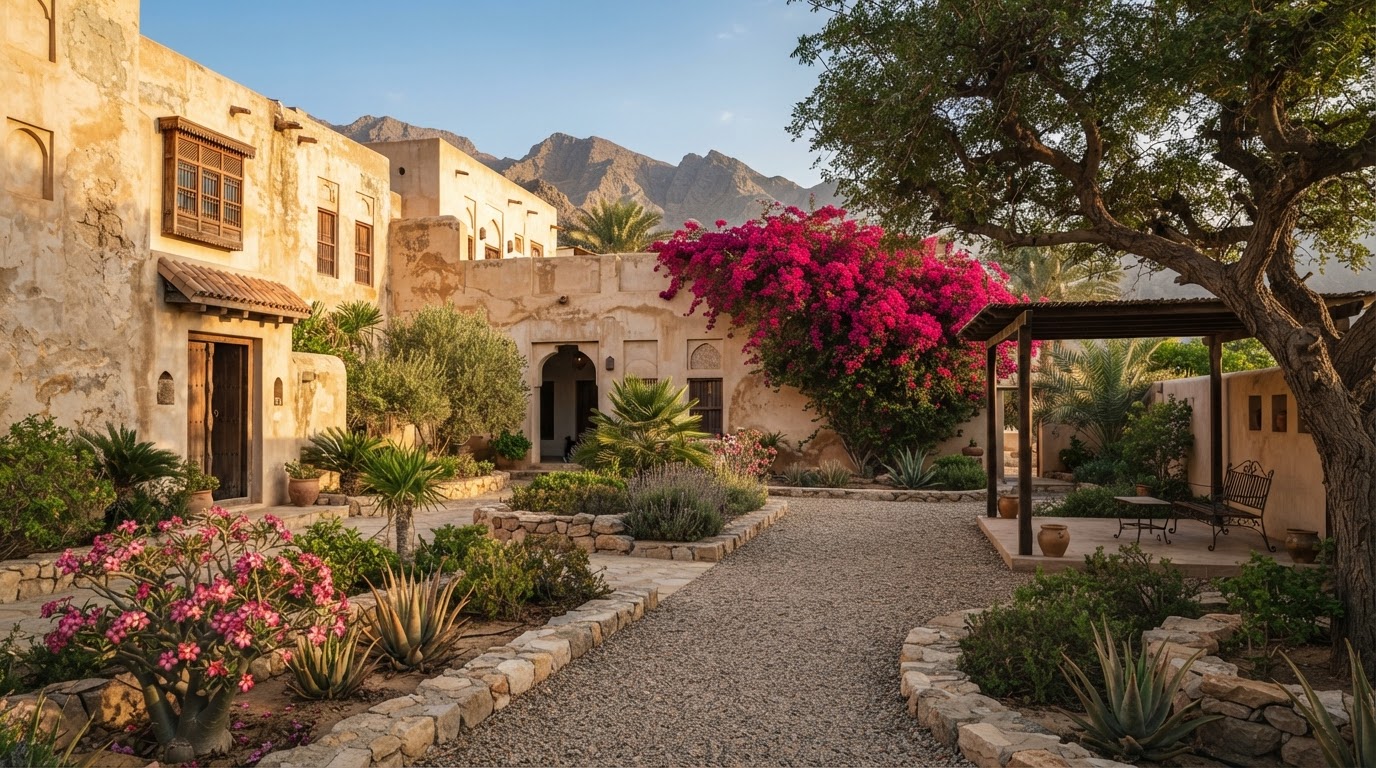
Finding the right low-maintenance plants for Muscat villas starts with accepting one thing: temperatures climb past 45°C for months, groundwater runs salty, and most homeowners aren't home during the day to fuss over a flower bed.
A garden should add to life, not become another chore competing with work and family. The good news is simple: a lush villa garden and a low-maintenance one are not opposites in Oman. They just require plants already built for this climate, instead of species that expect gentler weather.
This guide covers the best low-maintenance plants for Muscat villas, why each one works, and the small habits around irrigation, soil, and layout that keep a low-water garden looking intentional rather than neglected. By the end, you'll have a short list of low-maintenance plants for Muscat villas that you can hand straight to a landscaper — or plant yourself this weekend.
In this guide
Why Muscat's climate changes the rules
Most conventional gardening advice comes from temperate climates, so it doesn't translate well here. Summer daytime temperatures regularly sit above 40°C for four to five months. Humidity spikes sharply in coastal neighbourhoods like Qurum, Shatti Al Qurum, and Al Mouj, and annual rainfall rarely exceeds 100mm.
Groundwater used for irrigation is often naturally saline, which stresses plants that expect fresh, neutral soil. Add strong midday sun that scorches leaves, plus dust that settles quickly on foliage, and it's clear why villa gardens built around imported, water-hungry species tend to struggle by their second summer.
Fortunately, plants native to the Arabian Peninsula, or naturalised from similarly arid parts of Africa, India, and the Mediterranean, have already solved these problems — many are documented in Oman Botanic Garden's native plant collection. They store water in thick leaves or stems, keep fewer but tougher leaves that lose less moisture, and root deep in search of water instead of needing constant surface watering. In short, choosing from this pool of plants is the real secret behind every low-maintenance villa garden in Muscat.
What "low-maintenance" actually means here
In a Muscat villa garden, a genuinely low-maintenance plant should tick most of these boxes:
- Tolerates full sun and high heat without leaf burn
- Survives on drip irrigation two to three times a week once established
- Copes with slightly saline soil and water
- Needs pruning once or twice a year at most
- Resists common local pests, such as mealybugs and red palm weevil where relevant
- Keeps its shape or blooms without heavy fertilising
None of the plants below demand daily watering, constant feeding, or specialist knowledge. Most need attentive care only in their first few months while roots establish. After that, they become genuinely self-sufficient — which is exactly the point of choosing low-maintenance plants for Muscat villas in the first place.
10 best low-maintenance plants for Muscat villas
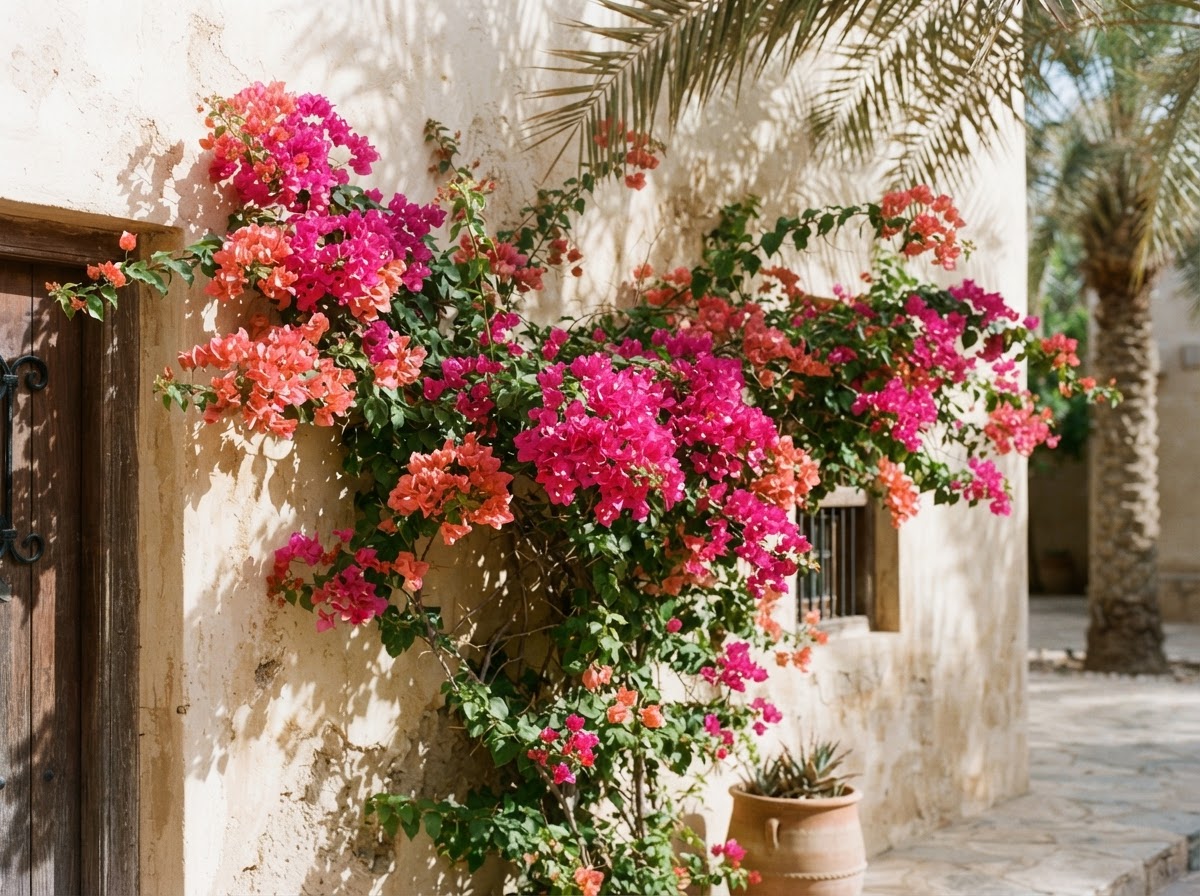
Bougainvillea
Bougainvillea spp.If one plant defines low-maintenance landscaping across Oman, it's bougainvillea. This vigorous, thorny climber produces papery pink, purple, orange, or white bracts for most of the year and barely asks for anything once rooted. It handles full sun, reflected heat off villa walls, and long gaps between watering better than almost any flowering plant available here. It's ideal for boundary walls, trellises, and car-shade structures. A light trim once or twice a year keeps it in shape. The main mistakes are over-watering and over-feeding — bougainvillea flowers best when mildly stressed for water, not pampered.
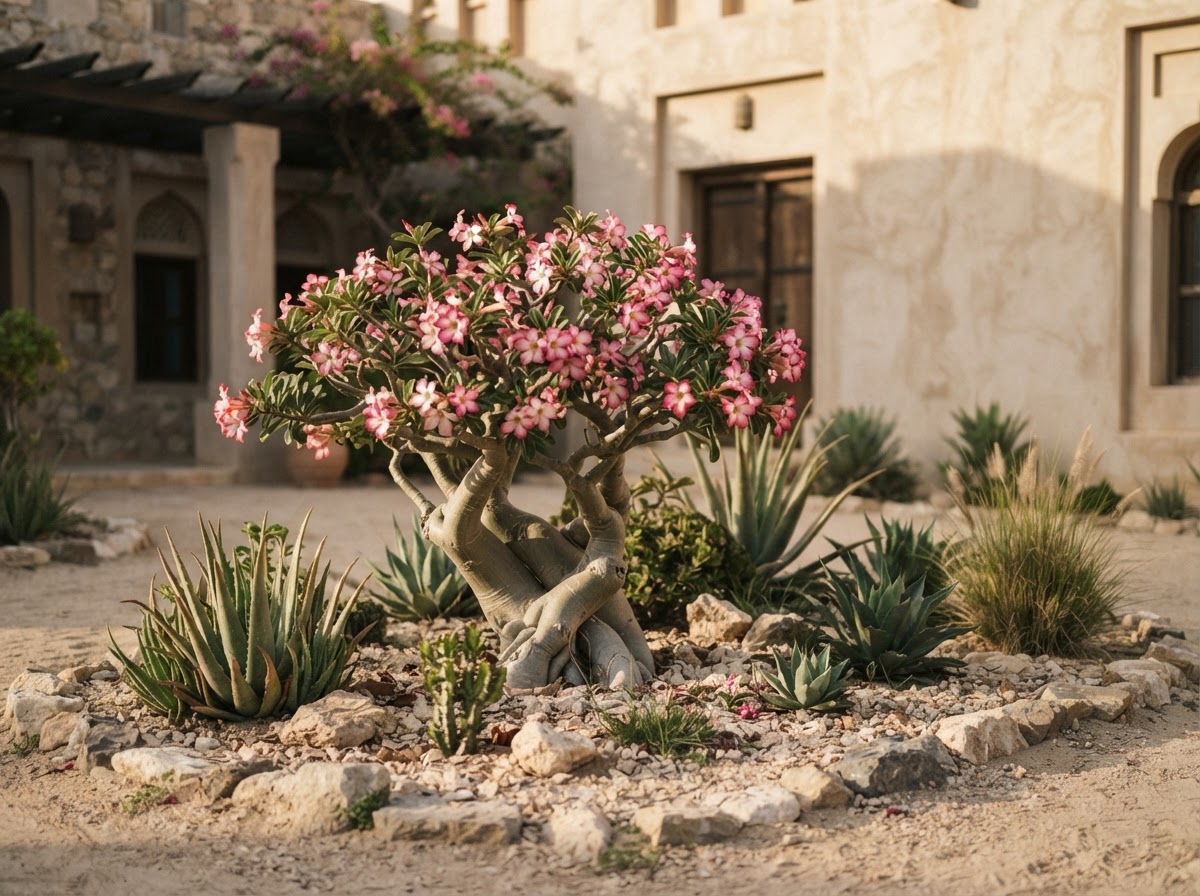
Desert rose
Adenium obesumDesert rose is a small, sculptural succulent shrub with a swollen, water-storing trunk topped by clusters of trumpet-shaped pink or red flowers. It's practically made for Muscat's climate — full sun, minimal water, and poor rocky soil all suit it. It works well in courtyards, entrance planters, and gravel gardens, where its unusual shape becomes a feature rather than something to hide. The one real requirement is well-draining soil, since its thick roots rot quickly if water sits around them.
Ghaf tree
Prosopis cinerariaThe ghaf is the Gulf's answer to a shade tree that needs almost no intervention. It survives on deep groundwater once mature and tolerates extreme heat, wind, and poor soil without complaint. For larger villa plots, a single ghaf near a seating area or driveway can provide real shade within a few years. It needs regular watering only while young. Established trees go long stretches with minimal irrigation, and their fine, feathery foliage causes far less mess than broad-leafed shade trees.
Frangipani
Plumeria spp.Frangipani brings a resort-like feel to a villa garden with fragrant white, yellow, or pink flowers and a naturally sculptural branching habit. It thrives in full sun and prefers occasional deep watering over frequent light watering. It drops its leaves briefly in cooler months — a normal dormancy period, not dieback. It suits poolside planting, entrances, and large pots, and rarely needs pruning beyond removing the odd damaged branch.
Arabian jasmine
Jasminum sambacFor fragrance without fuss, Arabian jasmine is hard to beat. It tolerates Muscat's heat once established, does well in partial shade near walls or pergolas, and rewards minimal care with a strong evening scent. Many villa owners plant it deliberately near majlis seating or bedroom windows. A light prune after its main flowering flush is usually all it needs, and drip irrigation two to three times a week is generally sufficient.
Aloe vera and succulents
Aloe vera, Agave, SansevieriaAloe vera and its succulent relatives are the definition of self-sufficient planting. Their thick, water-storing leaves mean they can go weeks without irrigation, and they actively prefer the dry, well-draining soil common in gravel and rock gardens. Aloe also offers usable gel for minor burns and skin care, which many Muscat households already grow it for. Group succulents together in raised beds or large pots so their watering needs stay separate from thirstier plants nearby.
Lantana
Lantana camaraLantana is a tough, fast-spreading shrub that produces clusters of small orange, yellow, pink, or purple flowers almost year-round. It handles heat, poor soil, and irregular watering with ease, making it reliable for borders, slopes, and gaps in a villa garden without ongoing attention. An occasional trim keeps it compact, but left alone it still flowers reliably, and it attracts butterflies as a bonus.
Croton
Codiaeum variegatumFor colour without flowers, croton delivers with bold, multicoloured leaves in red, orange, yellow, and green. It prefers some afternoon shade in Muscat's harshest months, since intense direct sun can scorch its leaves, but otherwise needs little beyond periodic watering. It works well as a structural, year-round backdrop near entrances or shaded walkways, holding its colour with virtually no seasonal upkeep.
Ornamental palms
Phoenix, Washingtonia, ArecaPalms are a natural fit for Gulf villa gardens, and several varieties tolerate Muscat's heat and wind with minimal care once established. Beyond aesthetics, they provide vertical structure and dappled shade without the dense leaf-drop of broader trees. The main task is an annual trim of dead fronds and periodic monitoring for red palm weevil, a regional pest. A reputable gardening service can handle both in a single seasonal visit.
Vinca and ground covers
Catharanthus roseus and relativesFor covering bare soil without a lawn's water demands, vinca (periwinkle), ice plant, and creeping thyme all handle Muscat's heat while suppressing weeds and dust. Vinca in particular flowers continuously in pink, white, or purple with almost no attention, making it a practical substitute for grass in courtyards or narrow side gardens where mowing isn't practical. These ground covers also help retain soil moisture, which indirectly reduces how often nearby plants need watering.
Where to plant what: a quick placement guide
Not every low-maintenance plant belongs in the same spot. Matching each species to the right zone in your villa is what makes the whole garden look designed instead of scattered, so here's a fast reference for common areas:
- Boundary walls and fences: bougainvillea for colour and privacy, planted where it gets full sun most of the day.
- Entrance and driveway: desert rose or croton in raised planters — both stay compact and don't block sightlines.
- Poolside and seating areas: frangipani and ornamental palms for shade and fragrance without heavy leaf-drop.
- Courtyards and gravel gardens: aloe vera, agave, and other succulents that thrive in reflected heat and poor soil.
- Near windows and majlis seating: Arabian jasmine, for evening fragrance without daily attention.
- Bare soil, slopes, and gaps: lantana or vinca as ground cover instead of a water-hungry lawn.
Smart irrigation and soil habits
Even the toughest plants establish faster and look better with a few smart habits. Drip irrigation, rather than sprinklers, delivers water directly to root zones and avoids losing water to evaporation in Muscat's heat. That's why most villa gardens run drip systems on a timer. If your villa doesn't have one yet, professional drip irrigation installation usually pays for itself in lower water bills within a season. For best results, water early morning or after sunset — this reduces evaporation loss and lowers the risk of leaf scorch from wet foliage under direct sun.
A 5–7cm layer of mulch or gravel around plant bases keeps roots cooler and noticeably cuts watering frequency. Where groundwater salinity is a concern, mixing organic compost in at planting time improves the soil's ability to buffer salts. Alternatively, simply leaning on salt-tolerant species from this list sidesteps the issue altogether. Most importantly, resist the urge to over-water newly planted arid species — in practice, more villa garden plants die from root rot than from drought.
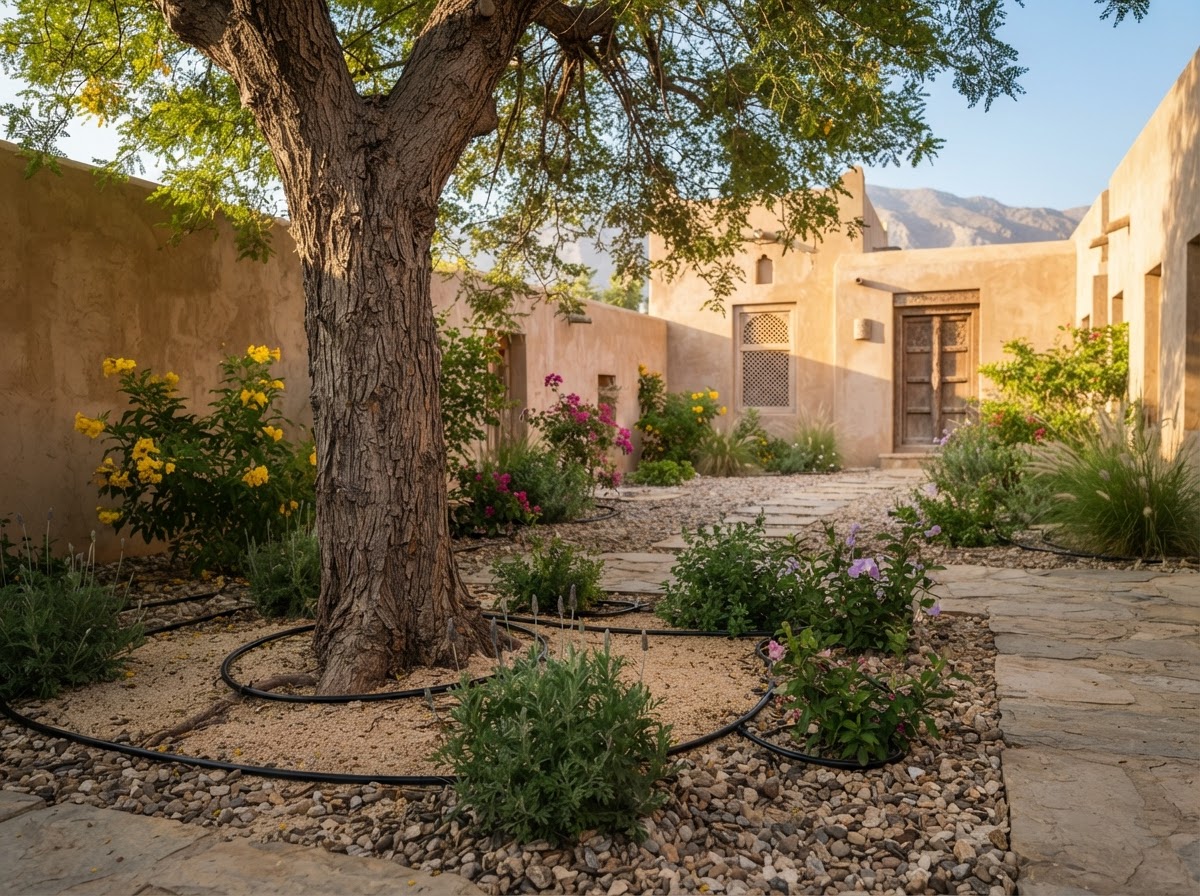
Quick rule of thumb: if a plant on this list is wilting, check the drainage before adding more water. In Muscat, soggy roots kill far more plants than dry ones.
Designing a garden that stays easy
A villa garden stays low-maintenance when its layout matches its plants. Grouping species by water needs — succulents and desert rose together, jasmine and croton in a separate, slightly shadier zone — lets irrigation be tailored per zone instead of compromised for everyone. Using gravel, paving, or decomposed granite for pathways and open areas also reduces how much living ground cover needs tending, while still looking intentional rather than bare. A villa garden design consultation is usually the fastest way to get this zoning right from day one, especially on a new-build plot with no existing landscaping.
Positioning a shade tree like ghaf, or a cluster of palms, near outdoor seating makes the garden usable during cooler evening hours — which is when most Muscat households actually spend time outdoors. In the end, a garden designed around real climate and real usage patterns, rather than a layout borrowed from a different climate, is what keeps low-maintenance plants for Muscat villas looking good for years, not just the first season.
Frequently asked questions
What is the easiest low-maintenance plant to grow in a Muscat villa?
Bougainvillea is generally the easiest, since it tolerates full sun, heat, and irregular watering while flowering for most of the year with only occasional trimming.
How often should low-maintenance plants be watered in Muscat?
Most established drought-tolerant plants need drip irrigation two to three times a week, with succulents and desert rose needing even less once mature.
Can I have a green villa garden without grass in Muscat?
Yes. Ground covers such as vinca, gravel landscaping, and shrubs like lantana and croton create a green, finished look without a lawn's high water demand and mowing needs.
Do low-maintenance plants still need a gardener?
Occasional professional care, such as seasonal pruning, pest checks for red palm weevil, and irrigation adjustments, keeps even hardy plants healthier, though far less often than a conventional garden needs.
Which plants tolerate Muscat's salty water and soil?
Bougainvillea, ghaf trees, desert rose, and most succulents tolerate salinity well, making them dependable choices where groundwater quality is a known issue.
Final thoughts on low-maintenance plants for Muscat villas
Building a low-maintenance villa garden in Muscat isn't about giving up on greenery — it's about choosing plants that already belong here. Bougainvillea, desert rose, ghaf, frangipani, jasmine, succulents, lantana, croton, palms, and ground covers like vinca cover almost every landscaping need, from privacy screening to shaded seating to colour at the entrance. All of them ask for a fraction of the water and attention conventional plants demand. With the right layout and a simple drip-irrigation routine, low-maintenance plants for Muscat villas can look established and cared for all year, with just a weekend or two of attention each month.
Want this planted and maintained for you?
Mariam Gardening Oman designs, plants, and maintains low-maintenance villa gardens across Muscat using species suited to Oman's climate — so your garden stays green without becoming a second job.
Get a free garden consultation