

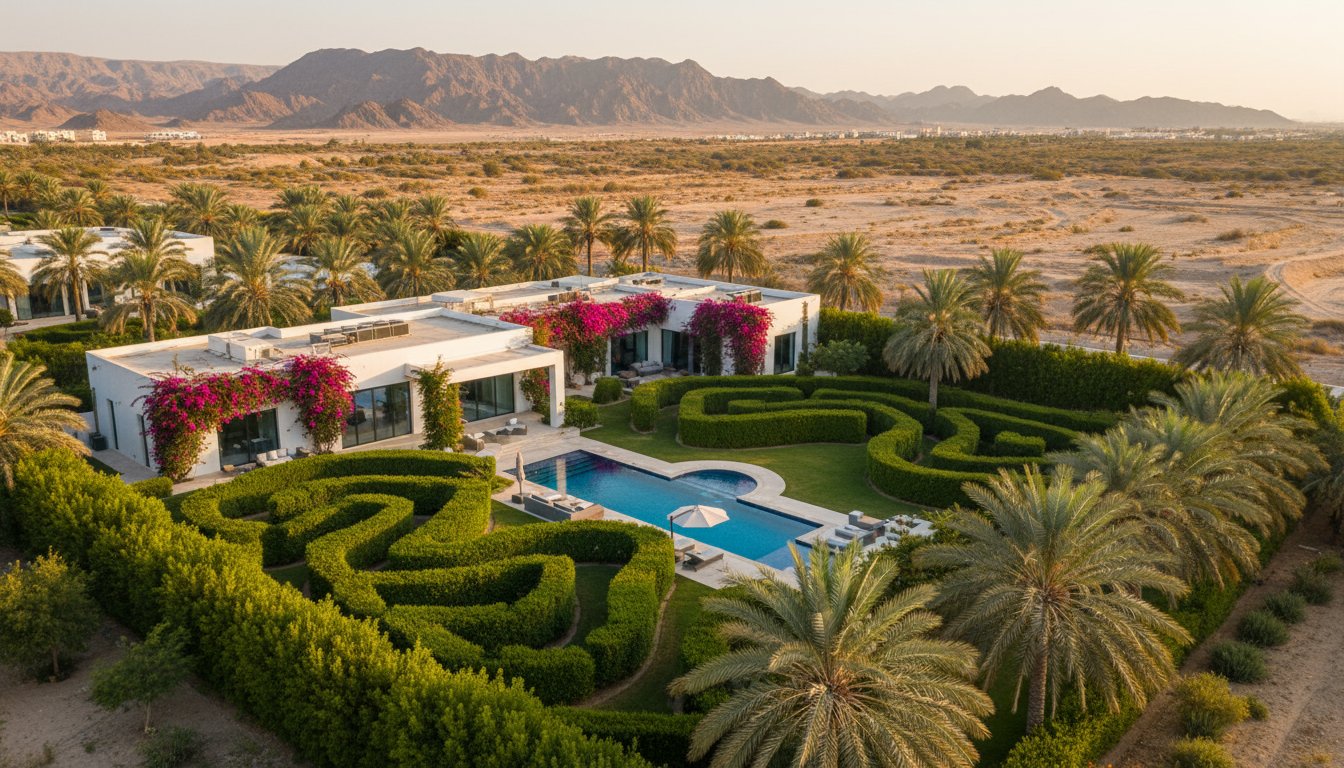
How to Create a Privacy Garden for Your Villa in Oman
Quick Answer
The best way to create a privacy garden for your villa in Oman is to combine layered landscaping — tall palms, dense hedges like Ficus nitida, and flowering climbers such as bougainvillea — with pergolas, trellises, and smart drip irrigation.
Villa life in Oman means generous outdoor space, year-round sunshine, and a garden that can be enjoyed almost every day of the year — but with neighbouring villas, busy roads, and low boundary walls all around, that open space can quickly feel exposed. A thoughtfully designed privacy garden lets you reclaim your majlis, pool deck, and family lawn as a true outdoor retreat, without losing the light, airflow, and views that make villa living so appealing.
In this guide, we’ll walk through everything you need to know to plan and build a privacy garden suited to Oman’s climate — from the best plants and layered planting techniques to pergolas, irrigation, and the mistakes worth avoiding along the way.
Table of Contents
01. What Is a Privacy Garden?
A privacy garden uses living and structural elements — trees, hedges, climbing plants, pergolas, and screens — arranged strategically around a villa’s perimeter, pool area, majlis, or terrace to block sightlines from neighbouring properties, roads, and passers-by. Unlike a plain concrete wall, a privacy garden stays green and inviting while still doing the job of shielding your family’s everyday life from view.
The goal is balance: enough screening to feel secluded, but without sacrificing natural light, airflow, or the sense of openness that makes a villa garden enjoyable. In Oman, that usually means combining several layers of planting with a few well-placed structures, rather than relying on a single tall hedge or wall alone.
Pro Tip
Think of privacy as a “layer cake” — tall canopy, mid-height hedges, low shrubs, and structures like pergolas each play a different role, working together rather than relying on one single barrier.
“In Oman, your garden isn’t just an extension of your home — it’s the heart of your outdoor lifestyle.”
02. Why Villas in Oman Need Privacy Gardens
Most villa compounds in Muscat and across Oman are built close together, often separated by relatively low perimeter walls or fencing. Combined with a cultural emphasis on family privacy — especially around majlis areas, pools, and gardens used by women and children — this makes screening from neighbouring properties and the street a priority for almost every villa household.
Oman’s climate also plays a big role. Because the weather encourages outdoor living for much of the year, families spend more time in their gardens, on terraces, and around pools — and that means more exposure to view from upper-floor windows next door or passing traffic. A well-planned privacy garden addresses both the cultural need for seclusion and the practical reality of living outdoors in a warm climate.
- Close-set villa compounds in areas like Al Mouj, Qurum, and Madinat Sultan Qaboos mean overlooking windows and shared boundary walls are common.
- Cultural privacy expectations mean family areas, majlis spaces, and pools benefit from being shielded from outside view.
- Outdoor-focused lifestyle driven by Oman’s warm climate means more time spent in gardens, terraces, and pool areas that need shade and seclusion.
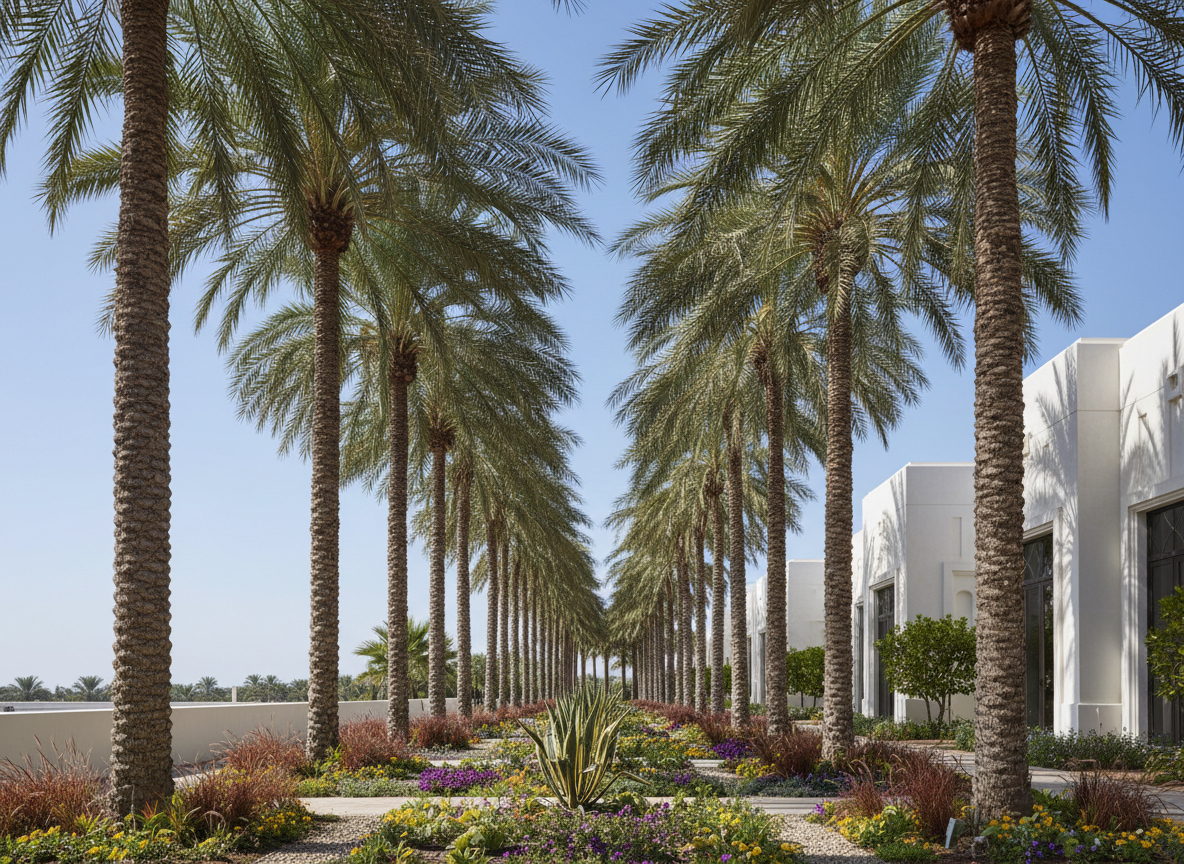 Tall, open-canopy palms along a boundary wall add height and privacy without blocking the breeze.
03. Benefits of a Privacy Garden
A privacy garden does far more than block views. Done well, it improves comfort, lowers maintenance headaches, and even adds measurable value to your property.
- True outdoor privacy for family gatherings, majlis evenings, and pool time, free from prying eyes.
- Natural cooling — shaded planting can lower garden surface temperatures by around 6–8°C compared with bare paving or walls.
- Reduced dust and noise from streets, thanks to dense hedges and trees acting as a natural filter.
- Higher property value — a well-designed privacy garden can increase a villa’s value by around 10–20%.
- Better curb appeal and an attractive, green frontage that stands out from plain block walls.
- Wind buffering from seasonal shamal winds, protecting outdoor furniture, pools, and delicate plants.
04. Best Plants for Privacy in Oman
The right plant choices make or break a privacy garden in Oman’s hot, dry, and often saline conditions. The plants below are proven performers for villa gardens across Muscat and other parts of the Sultanate.
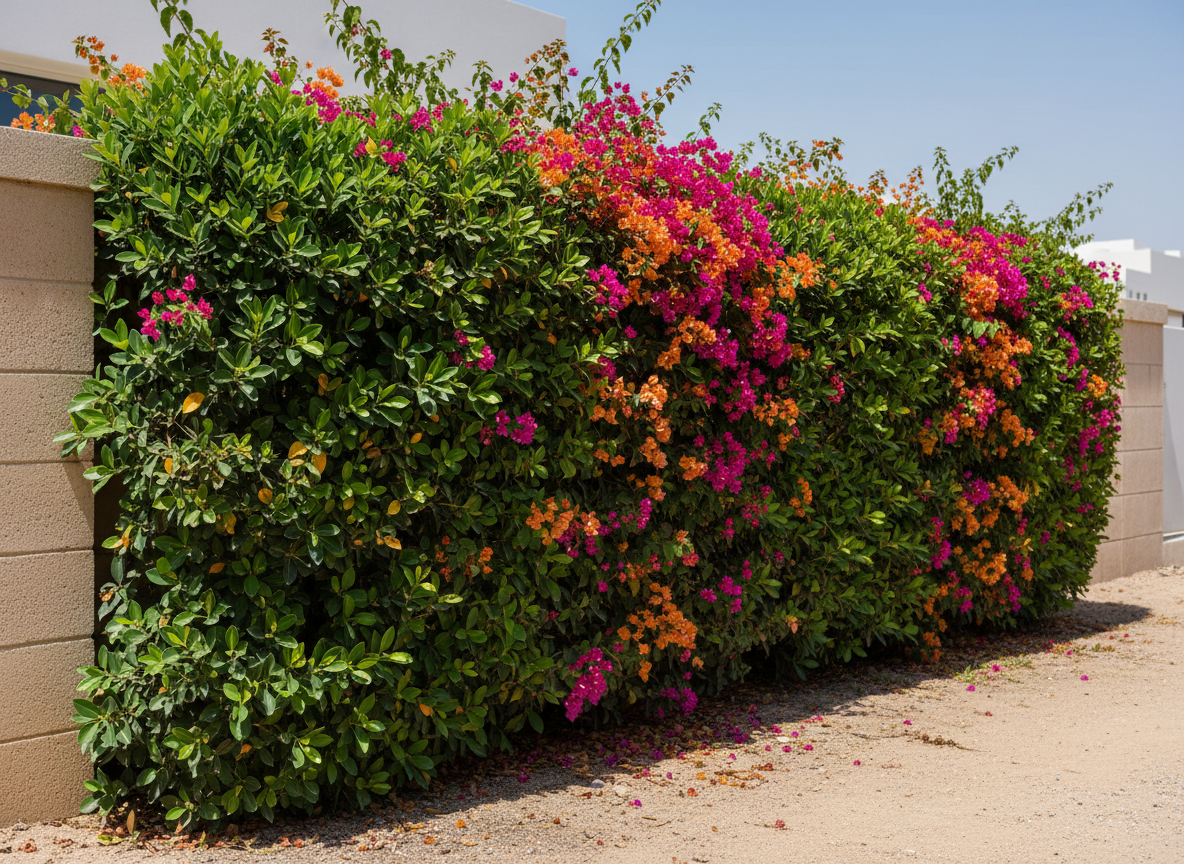 A dense Ficus nitida hedge forms a fast-growing, year-round green screen.
Ficus Nitida (Indian Laurel)
The most popular hedging plant in Oman — fast growing, dense, evergreen, and tolerant of heat, pruning, and poor soil.
Conocarpus
Extremely drought tolerant and fast growing, available in green and silver varieties for quick screening along boundaries.
Washingtonia & Date Palms
Add vertical height and screen upper-floor sightlines from neighbouring villas without blocking airflow at ground level.
Bougainvillea
A vigorous flowering climber, ideal for covering pergolas, trellises, and walls with vibrant colour and dense cover.
Neem Trees
Fast-growing shade trees that filter dust and provide a natural windbreak along larger boundaries.
Ghaf Tree
A native, drought-resistant tree that adds character, shade, and a natural look while needing minimal irrigation once established.
Local Insight
Choose plant stock that has already been acclimatised to Oman’s climate and irrigation water quality — locally grown nursery plants generally establish faster than imported ones.
05. How to Design a Privacy Garden
A successful privacy garden starts with a plan, not a plant list. Follow these steps to design a layout that suits your villa’s layout, climate, and lifestyle.
- 1
Walk the property and map sightlines
Identify exactly where neighbours, roads, or upper-floor windows can see into your garden, pool, or majlis — these are the priority zones for screening.
- 2
Define your outdoor zones
Decide where the majlis, pool deck, dining area, and children’s play space will go, so planting and structures can be planned around how the space will actually be used.
- 3
Plan layered planting
Pair tall trees or palms with mid-height hedges and lower shrubs so privacy is built up gradually, with no awkward gaps as plants mature.
- 4
Add structures for instant privacy
Pergolas, trellises, and screens give immediate screening in key spots while hedges and trees fill in over the following seasons.
- 5
Design the irrigation layout first
Plan drip lines and zones before planting, grouping plants with similar water needs together to keep the system efficient.
- 6
Leave room for maintenance access
Keep pathways and gaps for pruning, irrigation servicing, and seasonal care so the garden stays healthy long term.
Pro Tip
If your budget is limited, prioritise screening the areas used most — pool decks and majlis seating — first, then expand the planting plan to the rest of the boundary over time.
06. Layered Landscaping Techniques
Layered landscaping is the backbone of an effective privacy garden. Instead of one tall hedge, privacy is built up across several heights so there are no gaps for sightlines to slip through — and the result looks far more natural than a single wall of greenery.
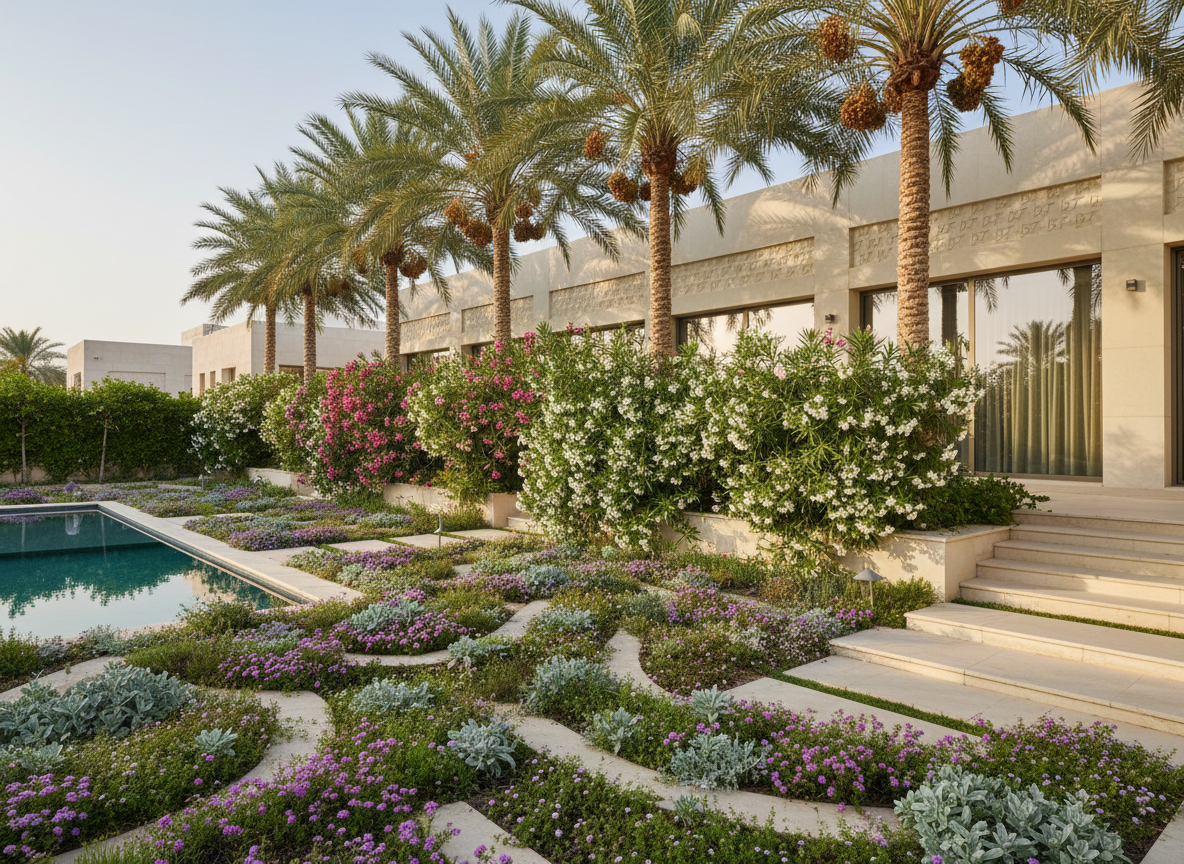 Tall palms, mid-height hedges, and low shrubs work together as a layered privacy screen.
- Canopy layer (4–8m): Palms, neem, or Ghaf trees provide height and shade, and screen upper-floor views.
- Mid layer (2–3m): Ficus nitida or Conocarpus hedges form the main privacy screen at eye level.
- Shrub layer (1–1.5m): Flowering shrubs like oleander or hibiscus fill gaps and add seasonal colour.
- Ground cover: Low groundcover plants and mulch finish the look, retain soil moisture, and suppress weeds.
07. Pergolas and Outdoor Structures
While plants mature, structures provide instant privacy and shade — and many remain a key part of the garden long after the planting fills in. They’re especially useful around majlis seating, dining areas, and pool decks where year-round screening is needed.
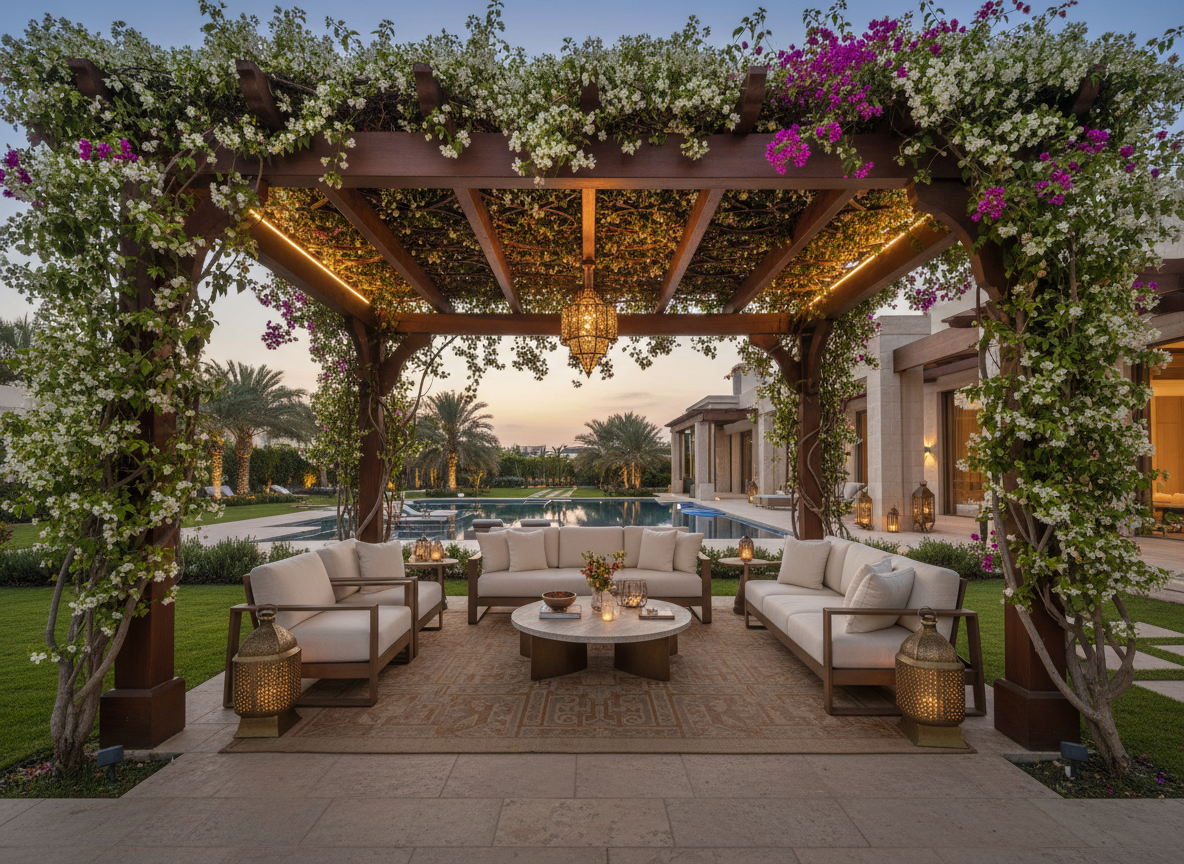 A pergola covered in bougainvillea or jasmine adds shade and screening to a seating area.
- Pergolas with climbers such as bougainvillea or jasmine create a shaded, fragrant, semi-private seating area.
- Lattice and timber screens let in airflow and light while blocking direct views from outside.
- Decorative GRC or panel walls add instant boundary privacy with a finished, architectural look.
- Shade sails are a quick, affordable way to add overhead privacy and reduce heat over pool decks.
08. Smart Irrigation Solutions
Privacy planting only works if it survives Oman’s summer heat — and that depends on getting irrigation right from the start. A smart, efficient system keeps hedges, palms, and climbers healthy while keeping water bills under control.
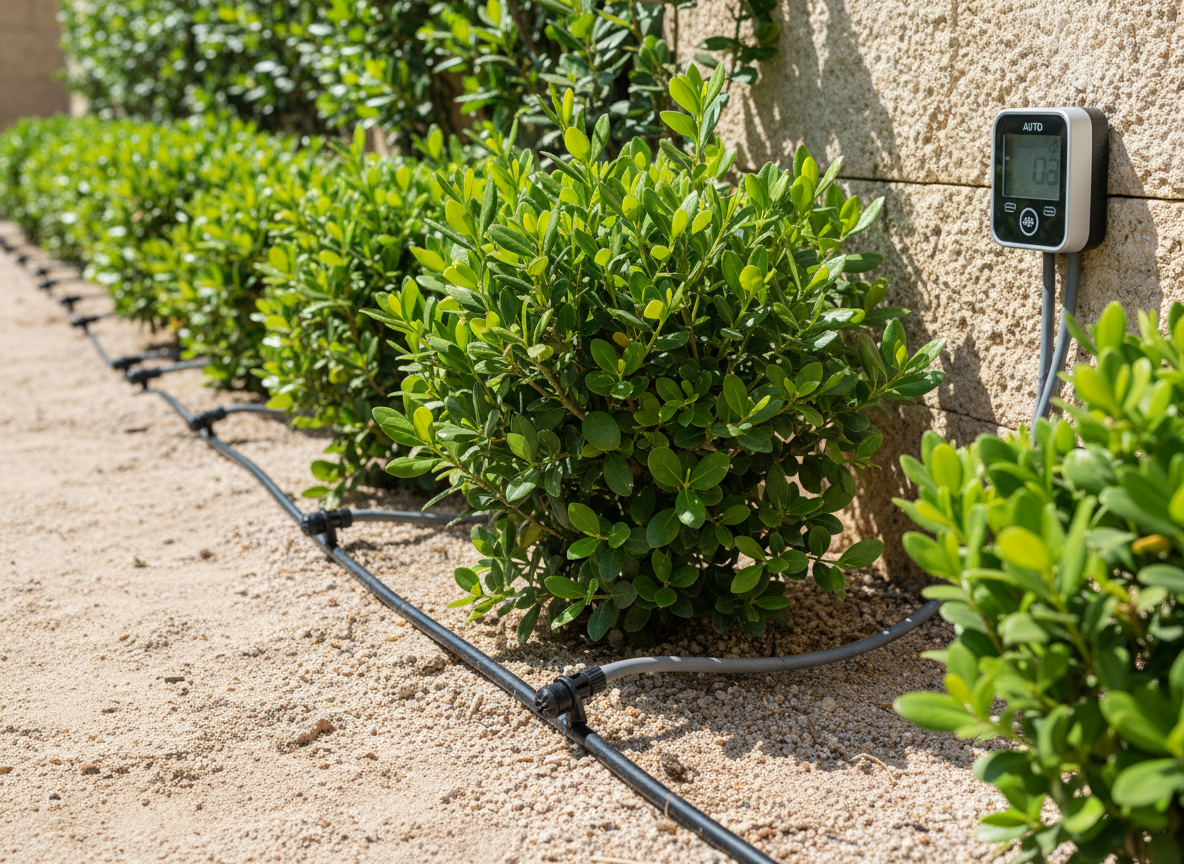 Drip irrigation delivers water directly to the root zone of hedges and trees.
- Drip irrigation reduces water use by up to 70% compared with sprinklers, with minimal evaporation loss.
- Smart, weather-based controllers automatically adjust watering schedules during heatwaves or cooler months.
- Hydrozoning — grouping plants with similar water needs — keeps both drought-tolerant and thirstier plants healthy.
- Mulching on top of irrigated beds retains soil moisture and reduces root-zone temperature significantly.
Eco Tip
Water early in the morning or after sunset to minimise evaporation — irrigating during the hottest part of the day wastes a significant amount of water in Oman’s climate.
09. Common Privacy Garden Mistakes
Even with the best intentions, a few common mistakes can leave a privacy garden patchy, struggling, or expensive to maintain. Here’s what to watch out for.
- Planting too close to walls and foundations, which restricts root growth and can damage structures as plants mature.
- Choosing plants that aren’t drought tolerant, leading to constant stress and high water bills in summer.
- Ignoring mature size when spacing plants, resulting in overcrowding and constant heavy pruning later on.
- Skipping the irrigation plan until after planting, which often means plants struggle or die during their first summer.
- Blocking airflow completely with solid walls or dense planting on all sides, which can trap humidity around the garden.
- Neglecting ongoing maintenance — without regular pruning and feeding, even the best layout can quickly look overgrown or untidy.
Important
Always check mature width and height before planting along boundaries — a hedge that looks neat at 2 metres can easily reach 4–5 metres without regular trimming.
10. Best Privacy Garden Ideas
Looking for inspiration? These ideas work particularly well for villa gardens in Oman and can be adapted to almost any plot size or layout.
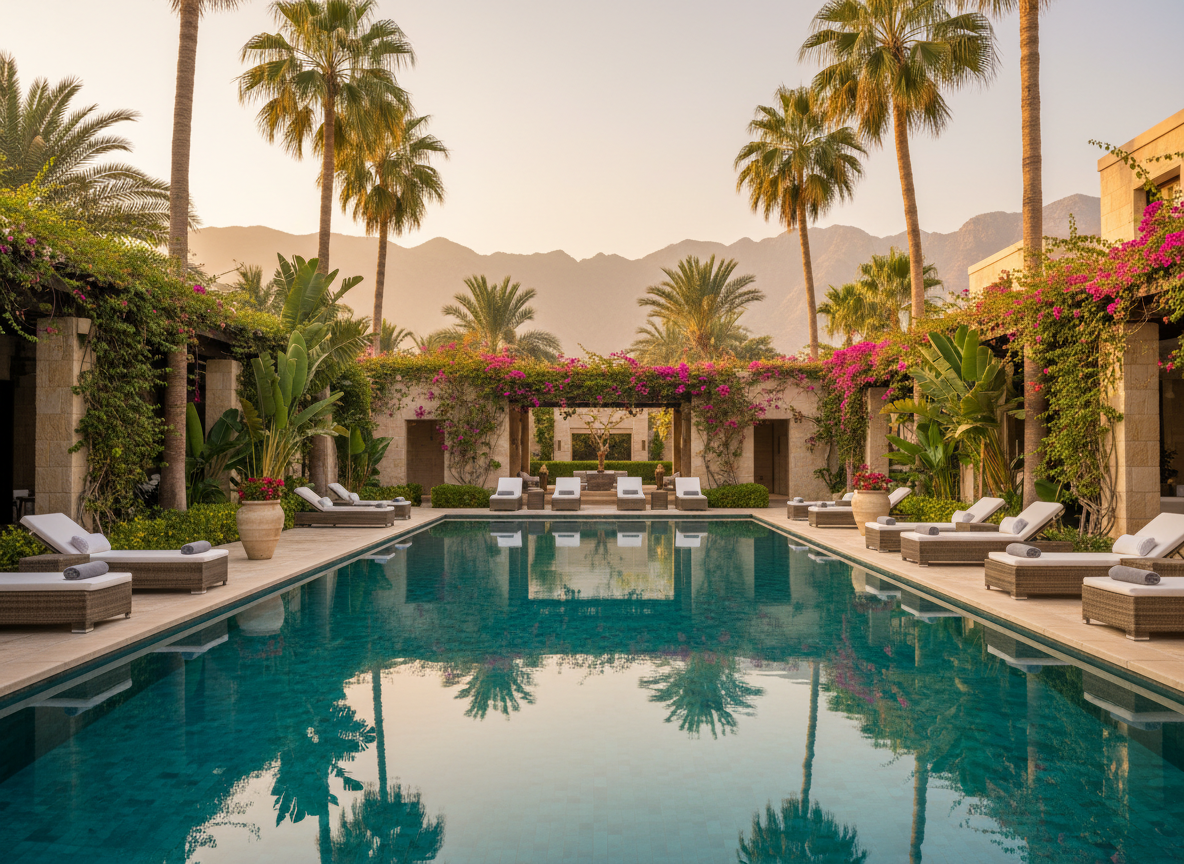
Poolside Privacy Screen
Surround the pool deck with a mix of palms and dense hedging to create a secluded swimming area shaded from neighbouring views.
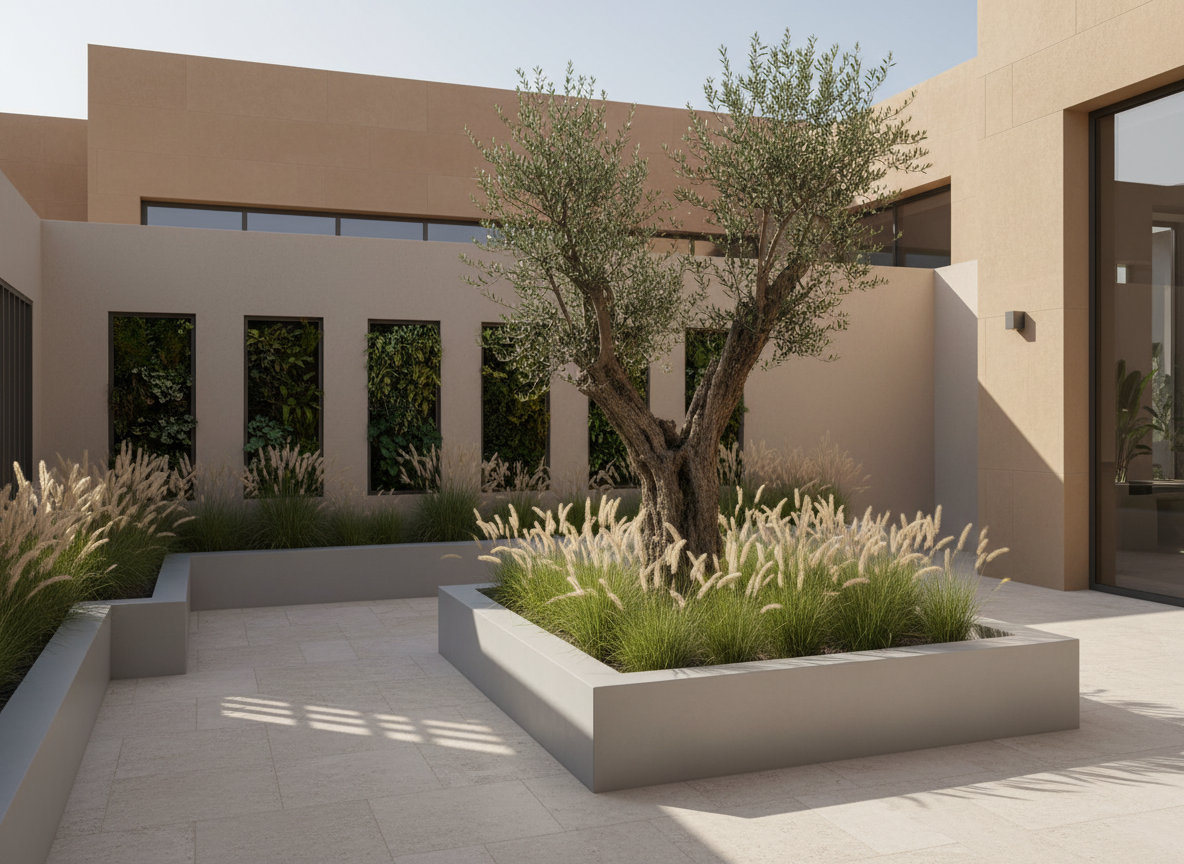
Private Courtyard Garden
Enclose a central courtyard with potted palms, climbers on trellises, and a pergola for a self-contained outdoor room.
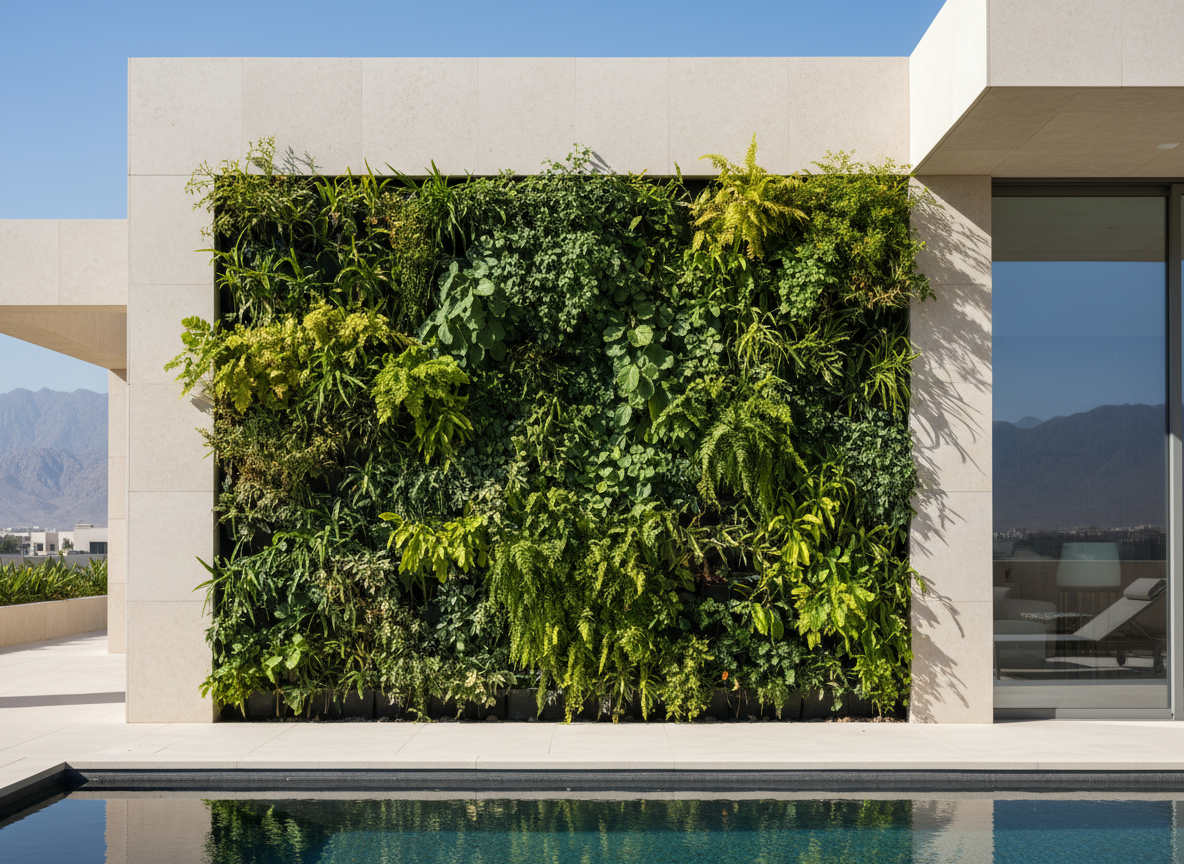
Vertical Green Wall
For smaller plots, a living green wall delivers instant, space-saving privacy along a boundary or balcony without sacrificing floor area.
11. Expert Tips
A few practical habits make a noticeable difference to how quickly — and how well — a privacy garden establishes in Oman’s climate.
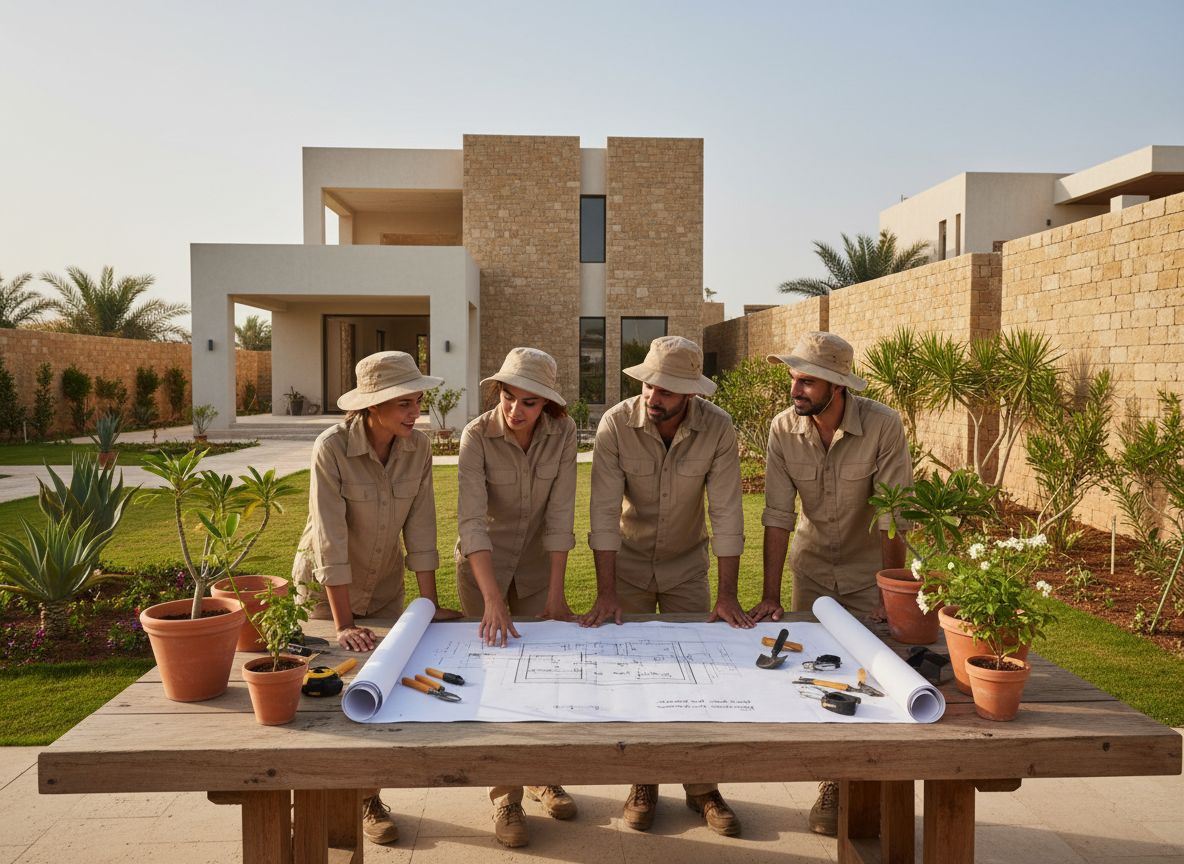 Regular pruning and seasonal care keep privacy hedges dense and healthy year-round.
- Plant during cooler months (roughly October to February) so roots establish before peak summer heat.
- Improve the soil before planting — adding organic matter helps hedges and palms establish faster in Oman’s sandy, low-fertility soils.
- Set up a pruning schedule from the start, rather than waiting until hedges are overgrown.
- Get a professional design consultation for larger plots — a clear plan saves money by avoiding replanting and reworking irrigation later.
Frequently Asked Questions
Common questions about creating a privacy garden for your villa in Oman.
Ficus nitida (Indian laurel fig) is the most popular privacy plant for villas in Oman thanks to its fast growth, dense evergreen foliage, and tolerance of heat and poor soil. Conocarpus is also widely used for a fast screen, while Washingtonia palms add vertical height without blocking airflow.
A basic privacy garden using fast-growing hedges and simple irrigation typically costs between 500–2,000 OMR, depending on plot size, plant maturity at planting, and whether structures like pergolas or screens are included. Larger villas with mature palms, custom carpentry, and smart irrigation can cost more.
Most fast-growing hedges such as Ficus nitida or Conocarpus reach a usable screening height of 1.5–2 metres within 6–12 months when well irrigated, with full maturity for complete privacy taking around 12–24 months. Planting more mature stock or adding screens and trellises gives privacy from day one.
Yes. Use layered landscaping with open-canopy palms and trees that filter rather than block light, combined with lower hedges or screens only where direct sightlines need to be cut off. Pergolas with climbers and slatted timber screens also let in dappled light while still shielding the garden from view.
Drip irrigation is the best system for privacy gardens in Muscat because it delivers water directly to the root zone, reduces evaporation loss in the heat, and can cut water use by up to 70% compared with sprinklers. Pairing drip lines with a smart, weather-based controller helps keep plants healthy through summer without overwatering.
Yes. A well-designed privacy garden can increase a villa’s value by around 10–20% by improving curb appeal, creating usable outdoor living space, and offering the kind of seclusion that buyers and tenants in Muscat actively look for.
Washingtonia palms, Ficus nitida, and Conocarpus are among the best trees for privacy in Muscat because they tolerate heat, wind, and saline soils while growing quickly into dense screens. Neem and Ghaf trees are also good native or naturalised options that provide shade and a windbreak alongside privacy.
Increase irrigation frequency during peak summer, apply a thick layer of mulch to retain soil moisture and reduce root temperature, and prune lightly to remove stressed growth without shocking the plants. Watering in the early morning or evening, rather than midday, also reduces water loss to evaporation.
Yes. Use vertical solutions like green walls, trellis panels with climbing plants such as bougainvillea or jasmine, and tall planters with palms or bamboo to create privacy without taking up valuable floor space. A few well-placed vertical elements combined with a pergola can transform even a compact courtyard into a private retreat.
Yes. Mariam Gardening offers complete privacy garden design and installation services across Muscat, including site assessment, planting plans, pergolas and screens, and drip irrigation systems tailored to your villa’s layout and budget.
13. Final Thoughts
Creating a privacy garden for your villa in Oman doesn’t mean choosing between seclusion and a beautiful outdoor space — with the right mix of layered planting, hedges, structures, and smart irrigation, you can have both. Start by identifying the areas that matter most to your family, plan your planting around Oman’s climate, and build in screening that will only get better as it matures.
Whether you’re starting from scratch or improving an existing garden, planning ahead — especially around irrigation and plant selection — will save time, water, and money for years to come.
Need Professional Privacy Garden Design in Oman?
Mariam Gardening is a trusted landscaping company serving Muscat with expert landscape design, irrigation systems, garden maintenance, tree & shrub care, and luxury villa landscaping services.