

Choosing the right fertilizer for Muscat gardens isn't just about making plants grow faster. With Oman's intense heat, sandy soils and limited rainfall, it's about keeping your plants alive, healthy and beautiful in a climate that few plants are built for. If you've ever stood in a garden centre staring at rows of fertilizer bags, you're not alone.
At Mariam Gardening, we've worked with hundreds of gardens across Muscat, from rooftop oases in Al Mouj to lush villa courtyards in Madinat Al Sultan Qaboos. One question comes up again and again: should I use organic or chemical fertilizer?
This guide answers exactly that, with practical advice tailored to Muscat's growing conditions.
Why Fertilizer for Muscat Gardens Is Different
Before we compare organic and chemical options, it helps to understand what makes Muscat's soil challenging.
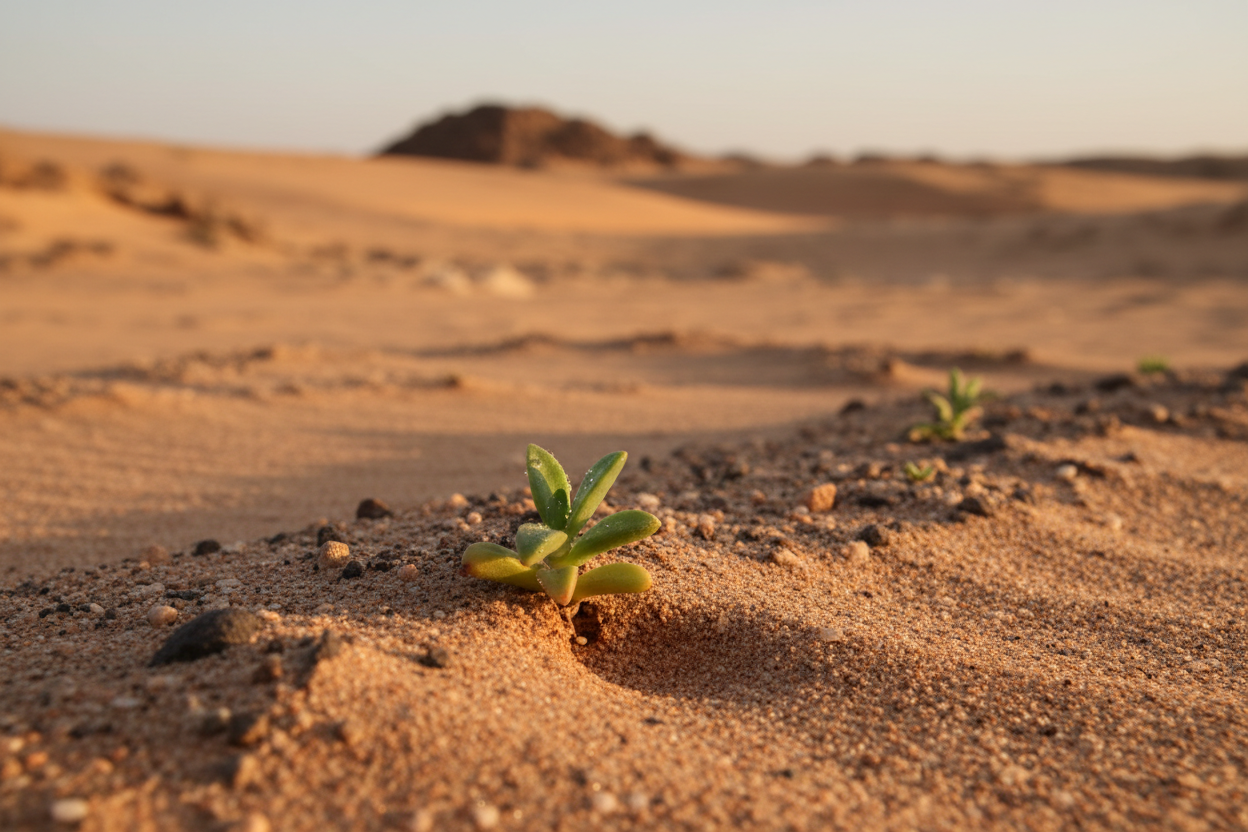
🏜️ Muscat Soil Challenges
This means your garden needs more frequent and more targeted nutrition than gardens in milder climates. Understanding your soil is the first step, and if you're preparing soil for new gardens in Muscat, getting the foundation right makes all the difference.
Organic Fertilizer for Muscat Gardens: Nature's Slow Feed
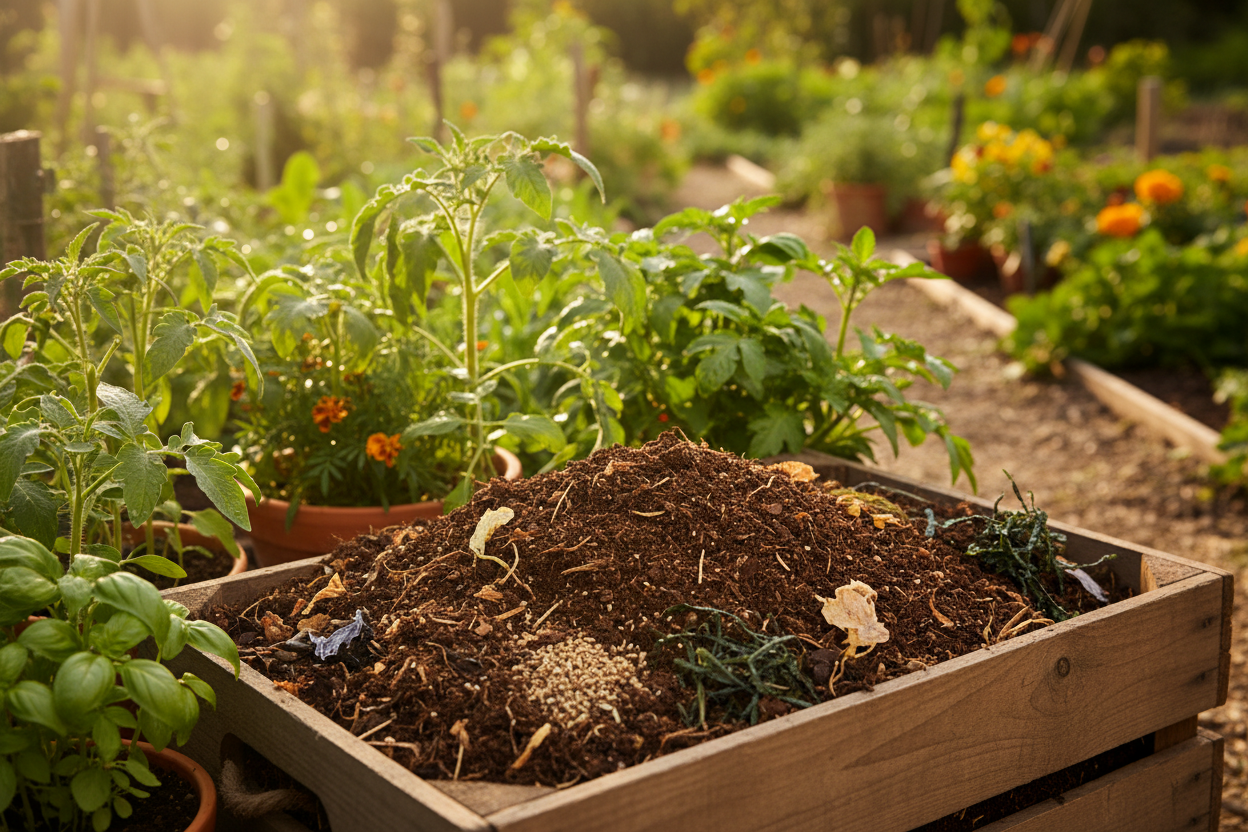
Organic fertilizers come from natural sources such as compost, animal manure, bone meal, seaweed and vermicompost (worm castings). They release nutrients slowly as soil microbes break them down.
Benefits of Organic Fertilizer
Improves soil structure over time
In sandy Muscat soil, organic matter acts like a sponge, helping soil hold both moisture and nutrients longer. This is especially valuable during Oman's dry months.
Gentler on plants
Because nutrients release slowly, there's no risk of burning roots with a sudden surge of nitrogen, a common problem in summer heat.
Feeds the soil ecosystem
Organic fertilizers support beneficial microbes and earthworms, gradually turning poor desert soil into something richer and more productive.
Environmentally friendly
No chemical runoff into your irrigation system or nearby groundwater.
Best Organic Fertilizer Options for Muscat
| Fertilizer | Best For | Application |
|---|---|---|
| Compost | All plants, soil improvement | Mix into soil before planting |
| Vermicompost | Potted plants, flower beds | Top-dress monthly |
| Seaweed extract | Lawns, stressed plants | Liquid form, dilute and water in |
| Bone meal | Root vegetables, bulbs | Apply at planting time |
| Chicken manure (composted) | Shrubs, trees | Apply in cooler months (Oct–Mar) |
The Downside of Organic Fertilizer
Organic fertilizers work slowly. If your plants already show deficiency signs such as yellowing leaves, stunted growth or pale colour, organic options alone won't give you a quick fix. They work best as part of a long-term soil improvement strategy, not as an emergency rescue.
Pairing organic feeding with proper mulching strategies for Muscat gardens can dramatically boost your results.
Chemical Fertilizer for Muscat Gardens: Fast Results, Careful Use
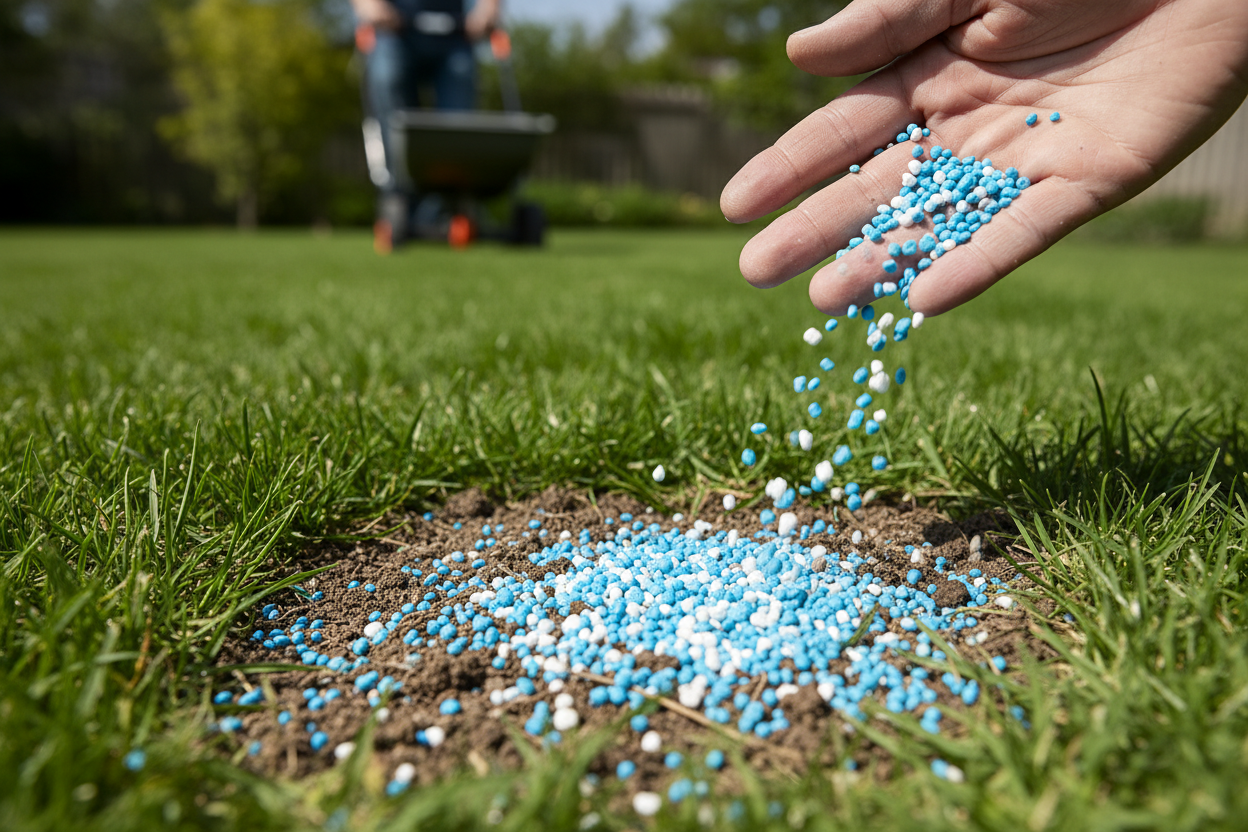
Chemical (synthetic) fertilizers are manufactured mineral salts that deliver concentrated nutrients directly to plants. You'll see them labelled with an NPK ratio. For example, 20-10-10 means 20% nitrogen, 10% phosphorus and 10% potassium.
Benefits of Chemical Fertilizer
Fast-acting
Plants can absorb synthetic nutrients within days, ideal when your lawn is yellowing before an Eid gathering or your flower beds need a quick boost.
Precise nutrient ratios
Target exactly what your plants need: more nitrogen for lush lawns, more phosphorus for flowers, more potassium for root health.
Cost-effective for large areas
For extensive lawns or commercial properties, chemical fertilizers cover more ground at lower cost.
Risks of Chemical Fertilizer in Muscat's Climate
Applying too much during hot weather (above 35°C) can scorch roots and leaves.
Repeated use increases soil salinity, already a risk in coastal Muscat areas. High salt levels stop roots from absorbing water properly.
In sandy soil with frequent irrigation, synthetic nutrients wash away quickly, wasting money and potentially harming groundwater. Proper irrigation systems in Muscat help manage this risk.
Never apply chemical fertilizers during peak summer (June–August). The heat amplifies the risk of burn. Stick to the cooler growing season between October and April.
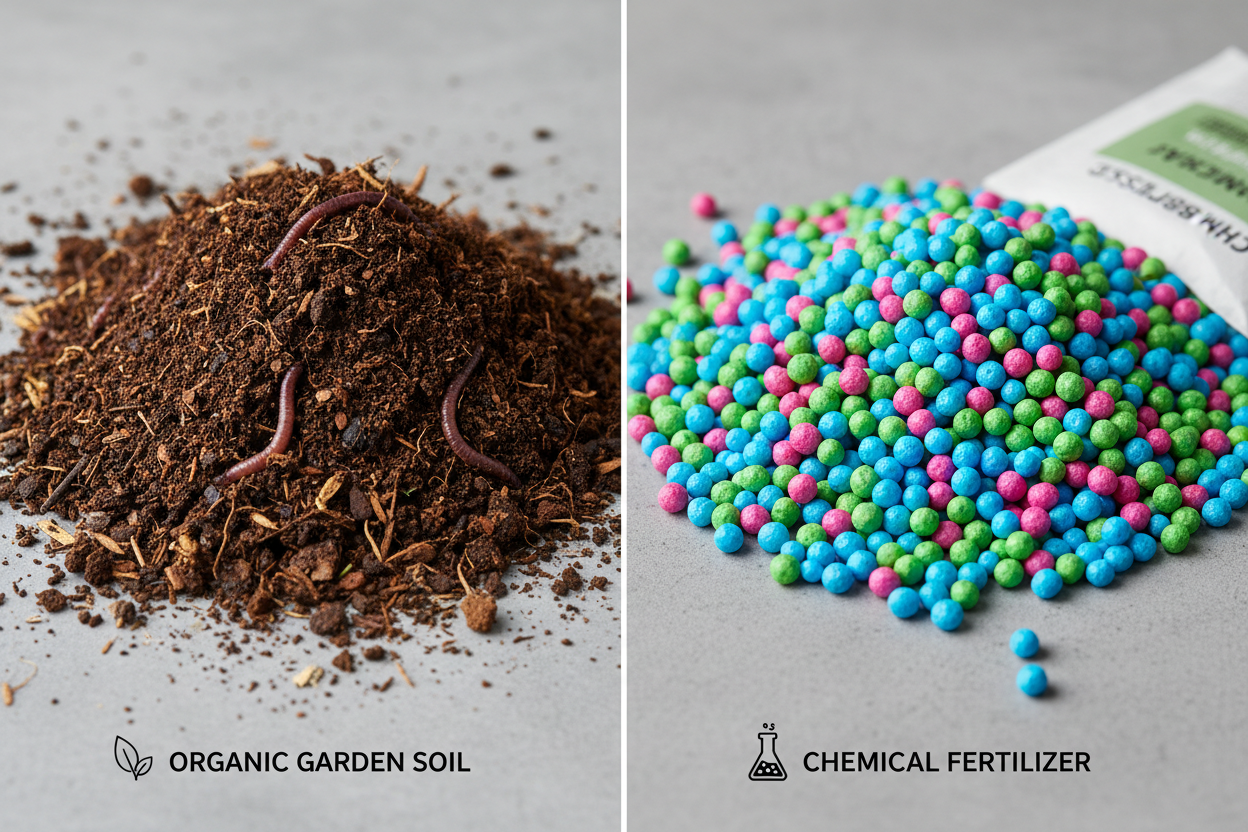
Organic vs Chemical Fertilizer: Side-by-Side Comparison
Here's how the two types compare for a typical Muscat garden.
| Factor | Organic | Chemical |
|---|---|---|
| Speed of results | Slow (weeks to months) | Fast (days to weeks) |
| Soil health | Improves over time | No long-term benefit |
| Risk of burn | Very low | High if over-applied |
| Cost | Moderate | Low to moderate |
| Salt build-up | None | Risk with long-term use |
| Best season in Muscat | Year-round | October to April only |
| Ideal for | Long-term garden health | Quick fixes and specific deficiencies |
Best Fertilizer for Muscat Gardens: The Combined Seasonal Plan
After 11+ years of maintaining Muscat gardens, our honest advice is this: the best results come from combining both. Here is the seasonal strategy we use for our clients.
October to March
Growing Season- Start with compost or vermicompost to improve the soil.
- Use a balanced slow-release chemical fertilizer (like 14-14-14) at the start of the season.
- Follow up with liquid seaweed extract monthly to support plant immunity and stress tolerance.
April to May
Pre-Summer- Switch fully to organic options.
- Apply a potassium-rich organic fertilizer to strengthen plants before the heat arrives.
- Reduce nitrogen to avoid soft, heat-sensitive new growth.
June to September
Peak Summer- No chemical fertilizers. Full stop.
- If plants struggle, use diluted liquid seaweed or humic acid. They support roots without adding nutrient stress.
- Focus on hydration and mulching instead.
Signs Your Muscat Garden Needs Fertilizer
Not sure if your plants actually need feeding? Look for these signs.
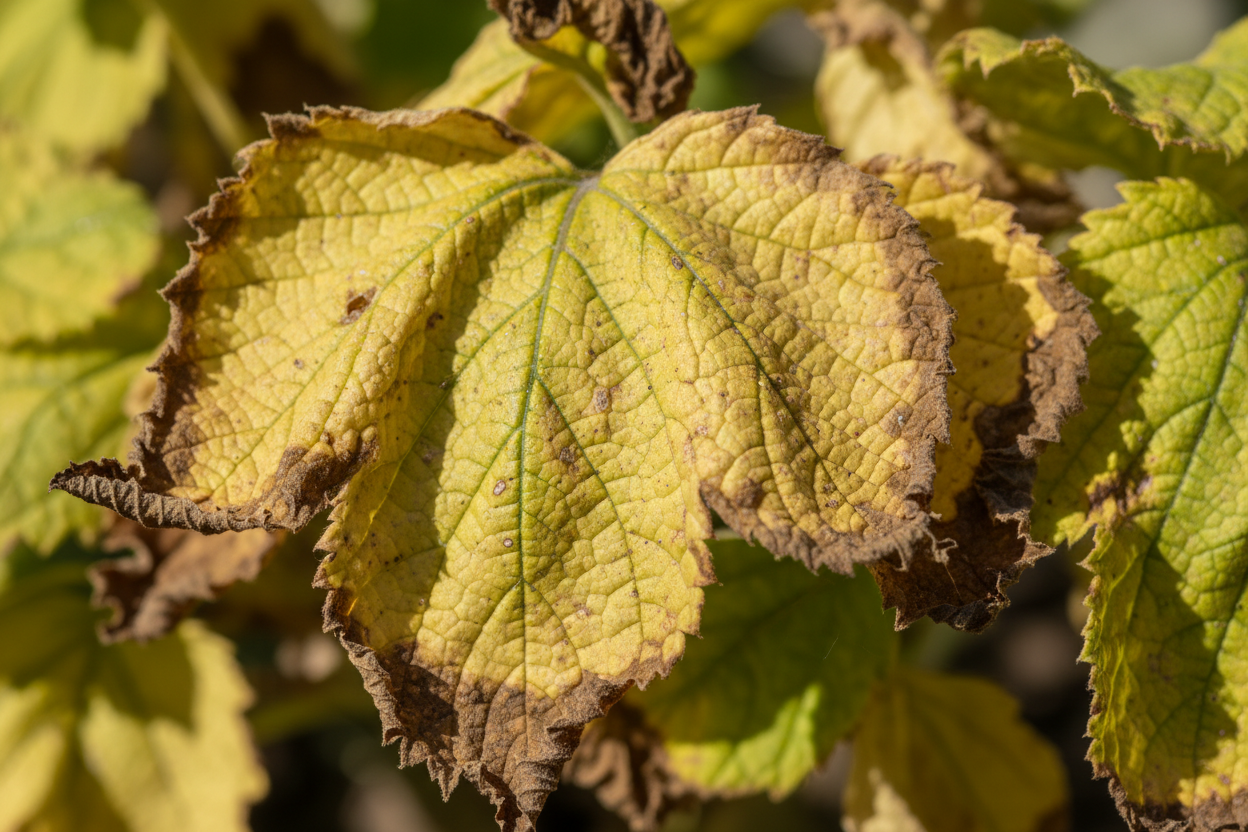
Likely nitrogen deficiency
Often phosphorus deficiency
Could be potassium deficiency or salt stress
General nutrient deficiency or poor soil
Iron deficiency, common in Muscat's alkaline soils
Iron Deficiency in Muscat: The Fertilizer Fix
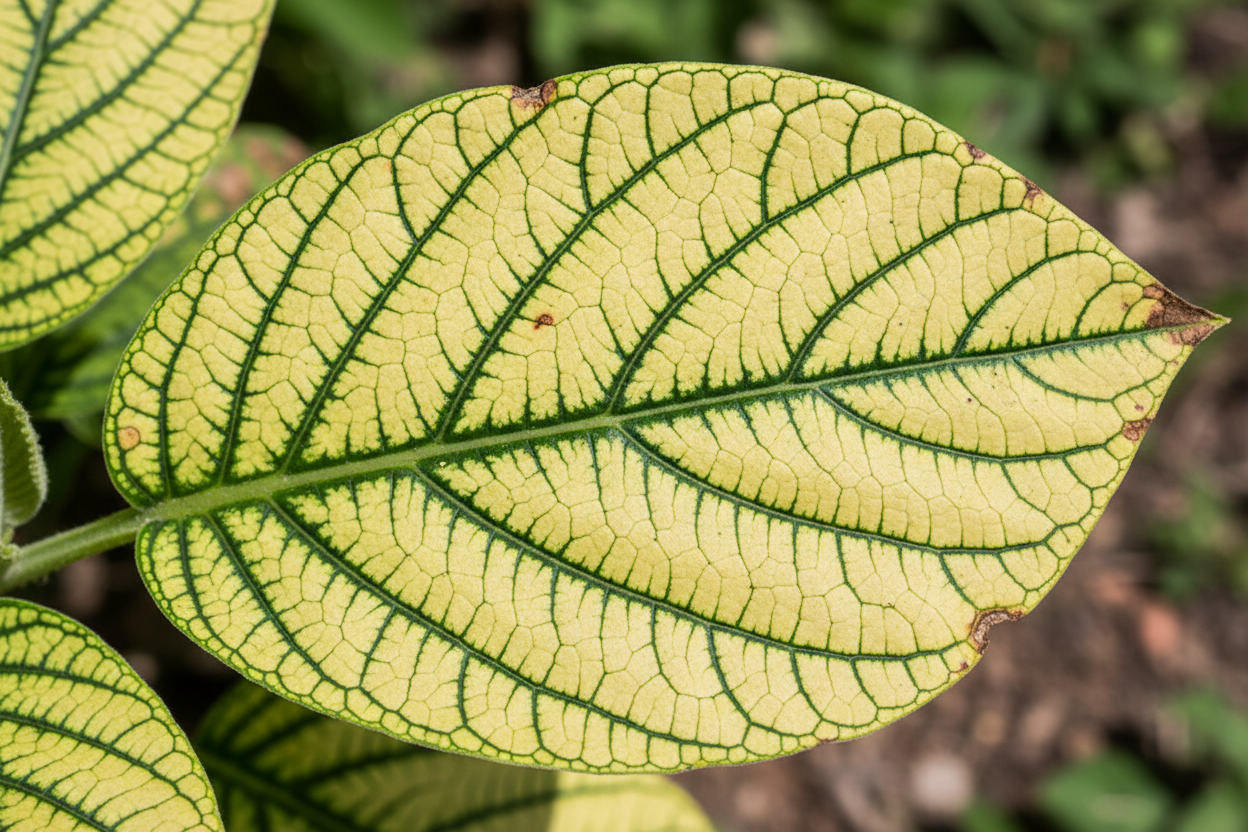
This deserves special mention. Muscat's alkaline soil frequently causes iron chlorosis: plants can't absorb iron properly, even when it's present in the soil. The result is yellowing between leaf veins while the veins stay green.
The fix is chelated iron fertilizer, a form of iron that stays available even in high-pH conditions. This is one case where a chemical fertilizer is genuinely the best solution, regardless of your organic preferences. For lawns, choosing the best grass types for Oman can also reduce susceptibility.
Frequently Asked Questions About Fertilizer for Muscat Gardens
What is the best fertilizer for Muscat gardens?
A combined approach works best: compost or vermicompost to improve sandy soil, a balanced slow-release fertilizer such as 14-14-14 between October and March, and chelated iron where alkaline soil causes yellowing.
Can I use chemical fertilizer in summer in Muscat?
No. From June to September, heat above 35°C greatly increases the risk of fertilizer burn. Use diluted liquid seaweed or humic acid instead and focus on watering and mulching.
How often should I fertilize a garden in Muscat?
Apply a slow-release fertilizer once at the start of the growing season, top up with liquid seaweed monthly, and add organic compost every few months. Sandy soil drains fast, so lighter, more frequent feeding beats one heavy dose.
Why are my plant leaves turning yellow in Muscat?
Yellow leaves can mean nitrogen deficiency, over or under-watering, or iron chlorosis from alkaline soil. If the veins stay green while the rest turns yellow, use chelated iron.
Final Thoughts on Fertilizer for Muscat Gardens
There's no single best fertilizer for every Muscat garden. The right choice depends on your soil, your plants, the time of year and your long-term goals. But one thing is always true: healthy soil comes first. Feed your soil, and your soil will feed your plants.
If you're unsure where to start, our team at Mariam Gardening offers soil assessment and personalized fertilizer plans as part of our garden maintenance service. We'll test your soil, identify what's missing and build a feeding schedule for your specific garden, with no guesswork and no wasted product.
Ready to Give Your Garden the Nutrition It Deserves?
At Mariam Gardening, we've spent over 11 years helping Muscat homeowners build healthier, more beautiful gardens. From soil testing and fertilizer planning to full garden maintenance, we handle it all.
Contact us today to book your free consultation.
Contact Mariam Gardening Oman →