
MARIAM GARDENING GARDEN CARE GUIDE
How to Improve Garden Drainage Around a Muscat Villa
A practical guide to finding the source of standing water—and choosing a solution that works with your garden, not just around it.
A beautiful villa garden in Muscat should feel fresh, comfortable, and easy to maintain. But when water starts collecting in one area, that same outdoor space can quickly become muddy, unhealthy, and difficult to use.
You may notice standing water after rain, soft patches of soil, yellowing grass, plants that keep dying in the same location, or water collecting close to a villa wall. Sometimes the problem becomes more noticeable when irrigation is running regularly.
The right solution begins with understanding where the water is coming from and where it should go. Garden slope, soil condition, irrigation, and surface or underground drainage may all play a part.
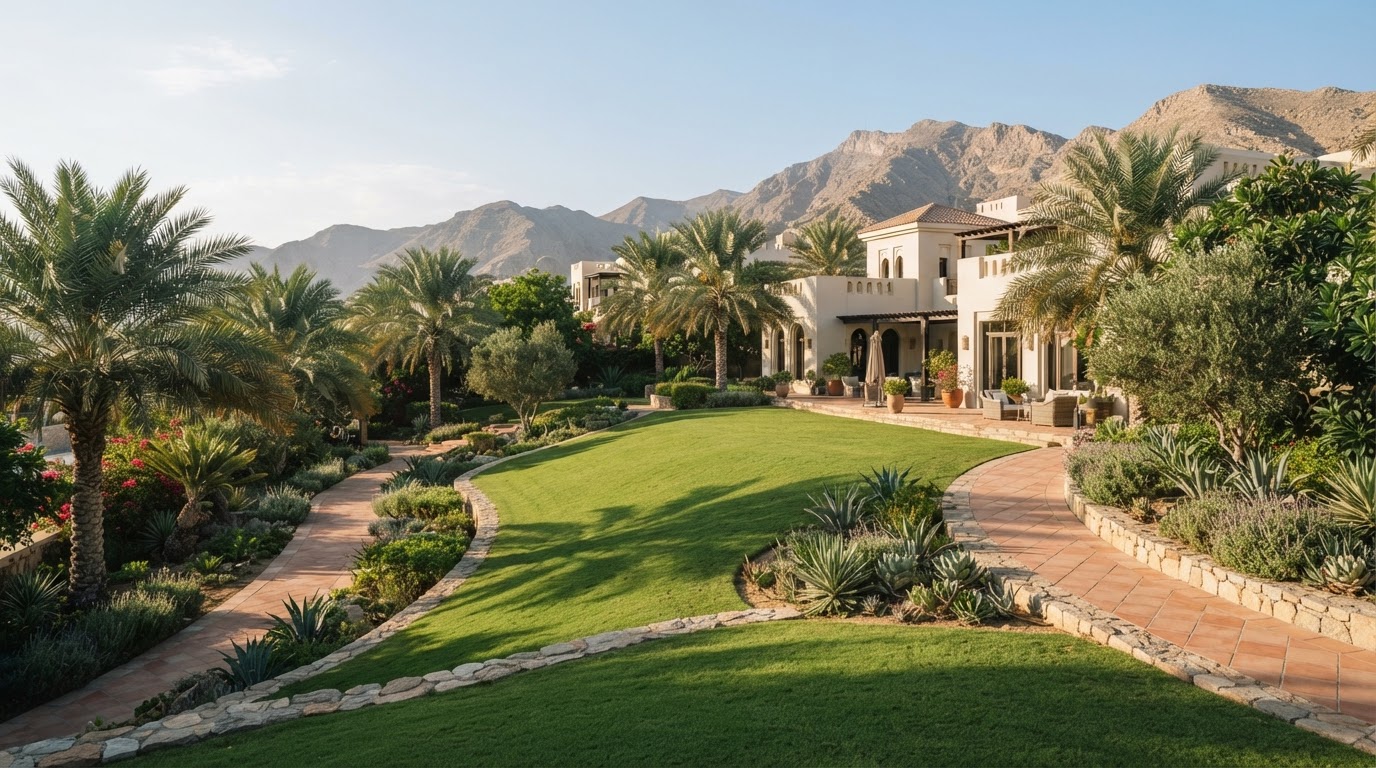
Why drainage matters around a Muscat villa
Muscat gardens often combine lawns, planting beds, patios, walkways, walls, driveways, and irrigation. If these spaces are not planned to manage water, it collects in low points rather than moving away naturally.
Standing water can weaken or yellow grass, stress plant roots, turn soil muddy and compacted, and wash soil or mulch out of beds. Repeated water accumulation beside a villa wall can also create long-term moisture concerns.
Good drainage does more than remove water quickly. It guides water to an appropriate location without damaging the garden, building, paths, or neighboring property.
What causes poor garden drainage?
Before installing a drain, identify the actual source of the problem. Several common conditions can create the same wet patch.
Poor garden grading
A flat area or a slope toward the villa allows rain and irrigation water to collect by the building instead of flowing to a safe drainage point. Even small changes in elevation matter.
Compacted soil
Construction, foot traffic, vehicles, or landscaping work can compress soil. Water then struggles to soak in and remains on the surface after watering or rainfall.
Low areas
Natural or construction-related dips can stay wet long after the rest of a garden dries. These may need regrading or a connection to suitable drainage.
Too much irrigation
Long watering cycles, leaking emitters, damaged pipes, and sprinkler overspray can saturate soil and send water onto walls or paving.
Blocked or misplaced drains
Soil, roots, leaves, and debris can block an existing drain. A drain set too high or sized poorly may also fail to collect water effectively.
Runoff from hard surfaces
Tiles, concrete, and driveways do not absorb water like soil. Their slope may send rain or cleaning water directly toward a planting bed or villa wall.
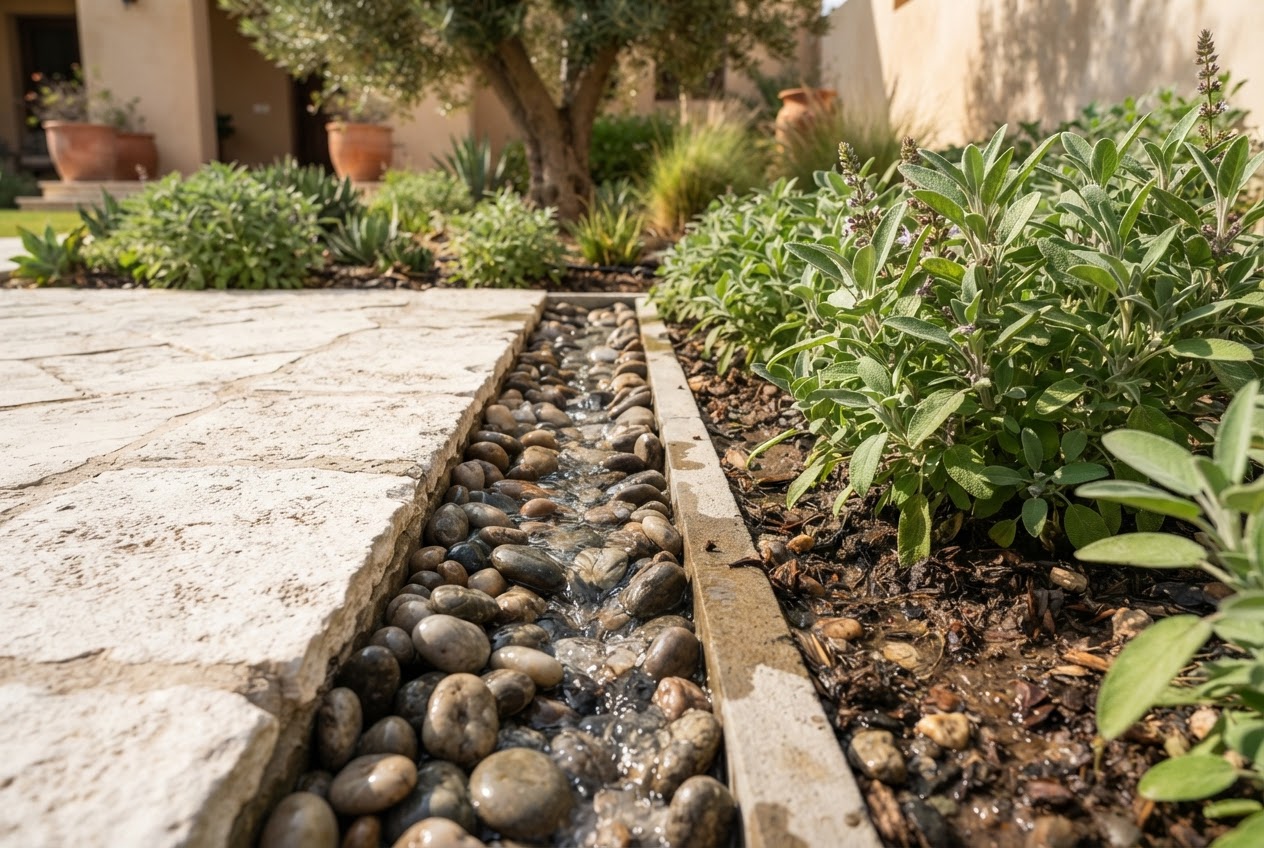
How to improve garden drainage around a Muscat villa
Work from observation to action. The best solution is the one that addresses the cause and provides a safe route for the water.
Find where the water comes from
Observe the garden after rain and while irrigation runs. Note where water first appears, which spots stay wet longest, whether roof, patio, or driveway runoff is involved, and whether it moves toward the villa. Check existing drains before spending money on a new one.
Improve the garden slope
Where the ground directs water toward the villa, careful regrading can create a suitable flow away from the building. Plan the final drainage path first; moving soil without an outlet can create a new problem elsewhere.
Improve compacted soil
Aeration, appropriate organic matter, soil conditioning, or replacement of unsuitable soil can help in some planting areas. Adding sand is not a universal fix; the right approach depends on the existing soil.
Check the irrigation system
Look for leaks, damaged emitters, blocked sprinklers, excess watering, and an unsuitable schedule. Correcting uneven or excessive watering can sometimes reduce standing water without excavation.
Consider surface drains
Channel drains and catch basins can collect runoff from patios, walkways, and driveways before it reaches vulnerable areas. Their placement and outlet should suit the size and layout of the garden.
Use a French drain when appropriate
A gravel-filled trench with a perforated pipe can collect and redirect excess water below the surface. It is useful for some persistent problems, but only when the water source and suitable outlet are understood.
Protect the villa perimeter
Pay attention to the relationship between walls, planting beds, paving, and the building. If water repeatedly collects beside the villa after irrigation or rainfall, assess the drainage arrangement rather than simply adding soil or plants.
Give the water somewhere to go
Collecting water is only half the solution. Direct it to an appropriate outlet or drainage system—never onto a neighboring property, pedestrian route, or public area.
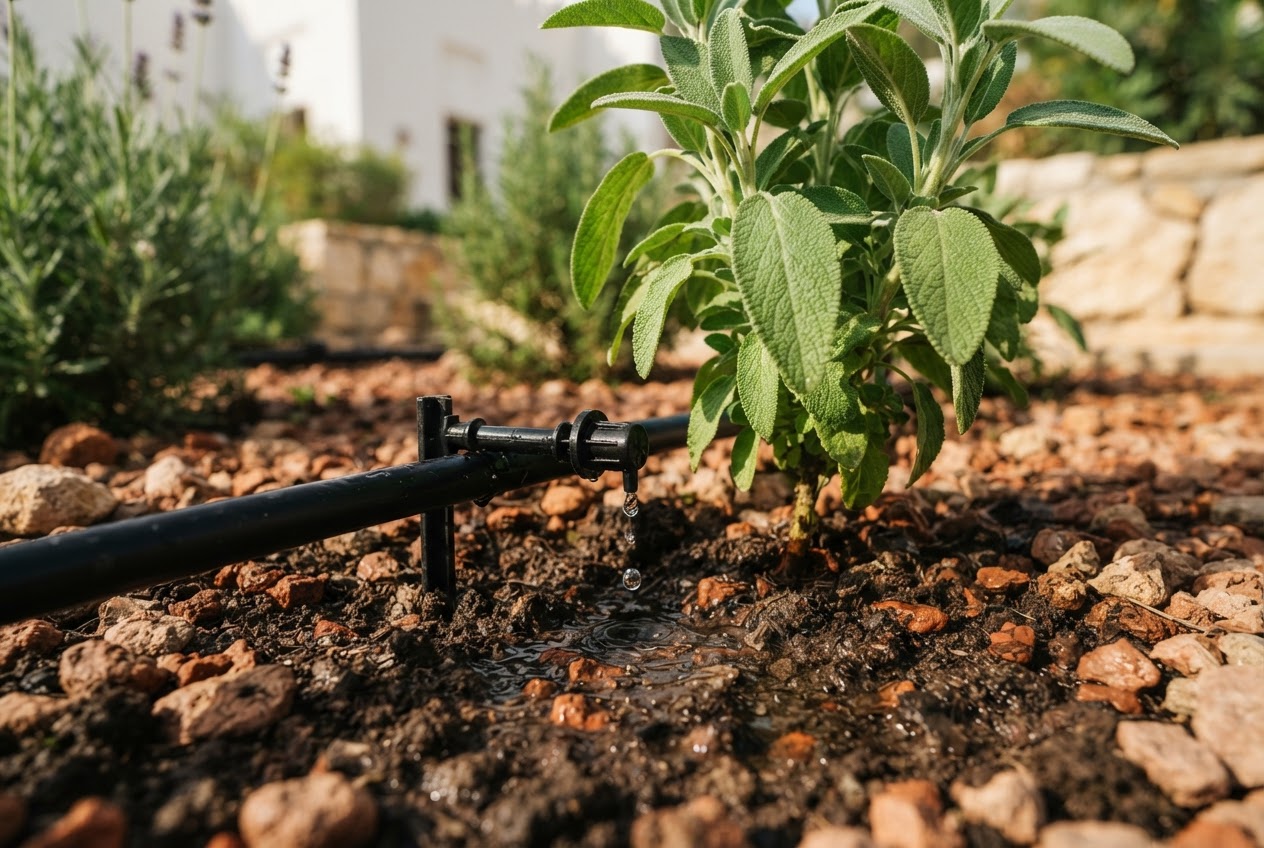
Drainage and irrigation should work together
These systems are closely connected. Too much irrigation makes even a good drain work harder than necessary; changing the watering schedule alone will not solve serious grading or drainage issues.
For a Muscat villa, the aim is a balanced system: plants receive what they need while excess water can move away safely. Drip irrigation can deliver water directly to many planting areas, while sprinklers should be checked for unnecessary spray onto walls, paving, and places that do not need watering.
Signs your garden needs better drainage
Consider a drainage assessment if you regularly notice:
- Water sitting on the lawn long after rain
- Muddy patches that repeatedly return
- Yellow or unhealthy grass in wet locations
- Plants dying in the same area
- Soft, saturated soil or eroded planting beds
- Water collecting by villa walls or flowing toward the house
- Excess runoff from patios and driveways
- Irrigated areas becoming saturated
- One corner remaining wet while the rest dries normally
One isolated wet spot does not necessarily call for a complete drainage system. Find the cause first.
When are DIY improvements not enough?
Small issues may improve after adjusting irrigation, clearing drains, or correcting minor soil problems. Professional assessment is worthwhile when water keeps returning, collects close to the villa, or affects a large area.
It is also useful when the project involves significant regrading, excavation, underground pipes, multiple water sources, faulty existing drains, or changes to patios and other hard landscaping.
Look at the whole outdoor space
A landscaping team can assess slope, soil, irrigation, existing drains, paved areas, planting beds, water flow, and villa boundaries together. At Mariam Gardening, drainage is considered as part of the wider landscape—not an isolated installation. The right answer may be a simple irrigation correction or a more structured system, depending on the site.
Frequently asked questions
How can I improve drainage around my villa in Muscat?
Identify where water comes from and where it collects. Check grading, soil compaction, irrigation, existing drains, and nearby paved surfaces. The right response may be soil improvement, slope correction, irrigation changes, or surface or subsurface drainage.
Why does water collect in my garden after rain?
Poor grading, compacted soil, low spots, blocked drains, or runoff from paving can all cause ponding. An existing drain may also be too small, poorly placed, or blocked.
Does overwatering cause drainage problems?
Yes. Excess irrigation can create standing water, especially in compacted soil and low areas. Check how much water the system applies before installing more drainage.
Is a French drain right for a Muscat villa garden?
It can help where water must be collected below the surface, but it needs to be designed around the actual source, soil, garden layout, and available outlet.
How do I stop water collecting near my villa wall?
First establish whether the cause is grading, sprinkler overspray, patio runoff, or a low planting bed. The remedy may be a slope correction, irrigation adjustment, surface water diversion, or suitable drainage.
Can improving soil help garden drainage?
Yes, particularly where compacted or unsuitable soil slows infiltration. But soil work alone will not solve major grading issues or heavy runoff from a paved area.
When does a garden need professional drainage?
Seek an assessment when saturation repeatedly returns, covers a large area, approaches the villa, or requires excavation, grading, underground pipes, or several drainage components.
How do drainage and irrigation work together?
Irrigation gives plants the water they need without saturating the soil unnecessarily; drainage manages the excess. Checking both reveals whether the cause is watering, landscape design, drainage, or a combination.
Start with the source, not the drain
Improving garden drainage is not simply about installing more drains. Find how water enters the garden, where it collects, and why it does not move away naturally. Better grading or soil may be enough in some gardens; an irrigation adjustment may make a significant difference in others. Persistent problems may require a properly designed surface or underground system.
The most effective approach considers the whole villa garden—landscape, soil, irrigation, and existing drainage—before deciding what to build.