

How to Reduce Garden Water Bills in Oman Without Losing Greenery
Reducing garden water bills in Oman is rarely about simply using less water. It is about using the right water, at the right time, in the right place, for the right plants, with the right irrigation system.
❓ Quick Answer
To reduce garden water bills in Oman, improve irrigation efficiency rather than blindly cutting watering time. Fix leaks and broken sprinkler heads, switch to drip irrigation for trees, shrubs and beds, water early in the morning, group plants by their water needs, choose climate-suitable drought-tolerant plants, mulch planting beds, reduce unnecessary lawn area, create separate irrigation zones, and inspect the system regularly. The aim is a healthy green garden that wastes less water — not a dry one.
Why Garden Water Use Matters in Oman
Oman's climate is hot and dry for much of the year, with strong sunlight and high summer temperatures that drive rapid evaporation. Villa gardens in Muscat often mix lawns, trees, shrubs and flower beds, and each has different water requirements.
When everything runs on a single irrigation schedule, some areas get too much and others too little — and the excess shows up on your water bill without producing healthier plants. Water-saving landscaping is about matching water delivery to what each part of the garden actually needs.
1. Start With an Irrigation Check
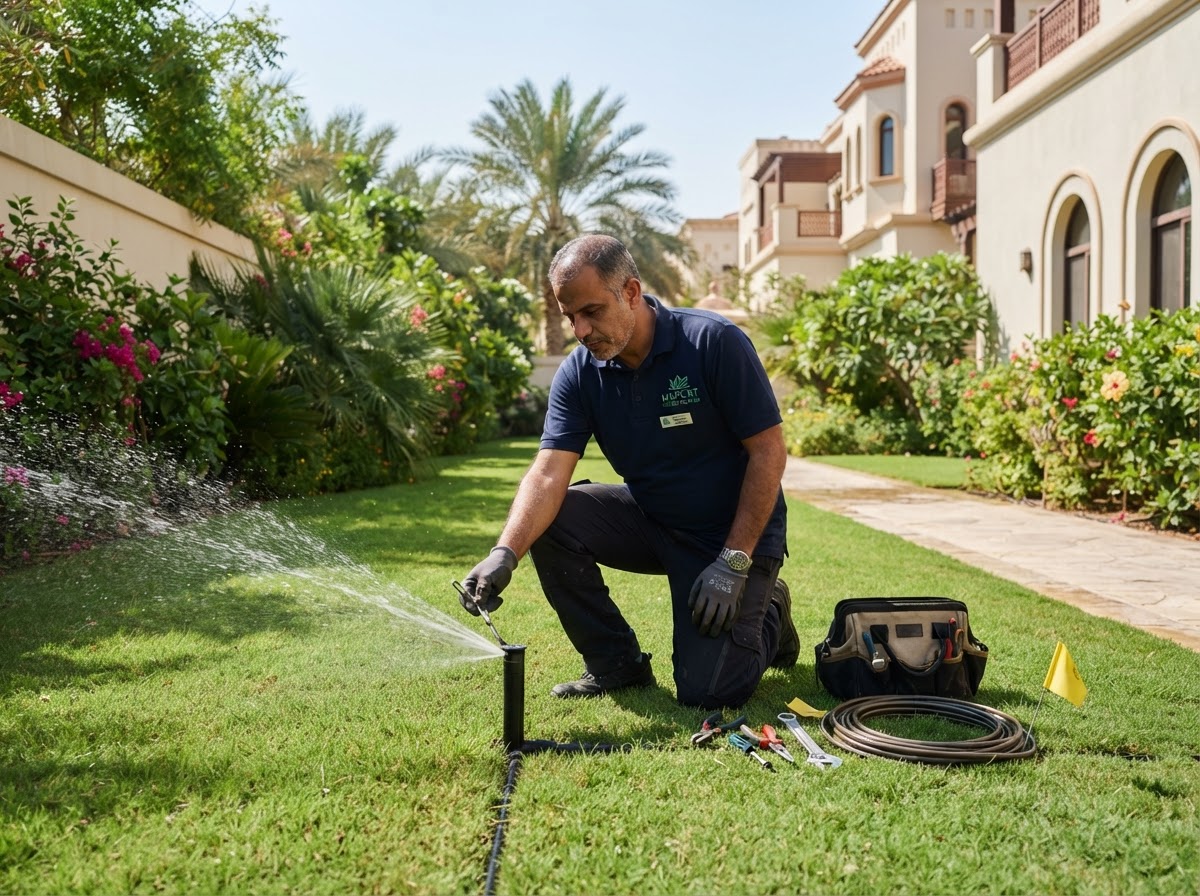
Before changing any settings, inspect where your water is actually going. A leaking pipe underground, a broken emitter, or a sprinkler head watering the driveway can waste a surprising amount of water before any plant benefits.
- Leaks at joints and valves
- Broken or tilted sprinkler heads
- Blocked or clogged drip emitters
- Uneven coverage and dry spots
- Excessive pressure causing misting
- Water flowing onto paths or paved areas
Dry patches and wet patches in the same garden often point to uneven irrigation rather than a lack of water. Fixing these issues usually improves plant health and reduces consumption at the same time.
2. Switch to Drip Irrigation Where It Makes Sense
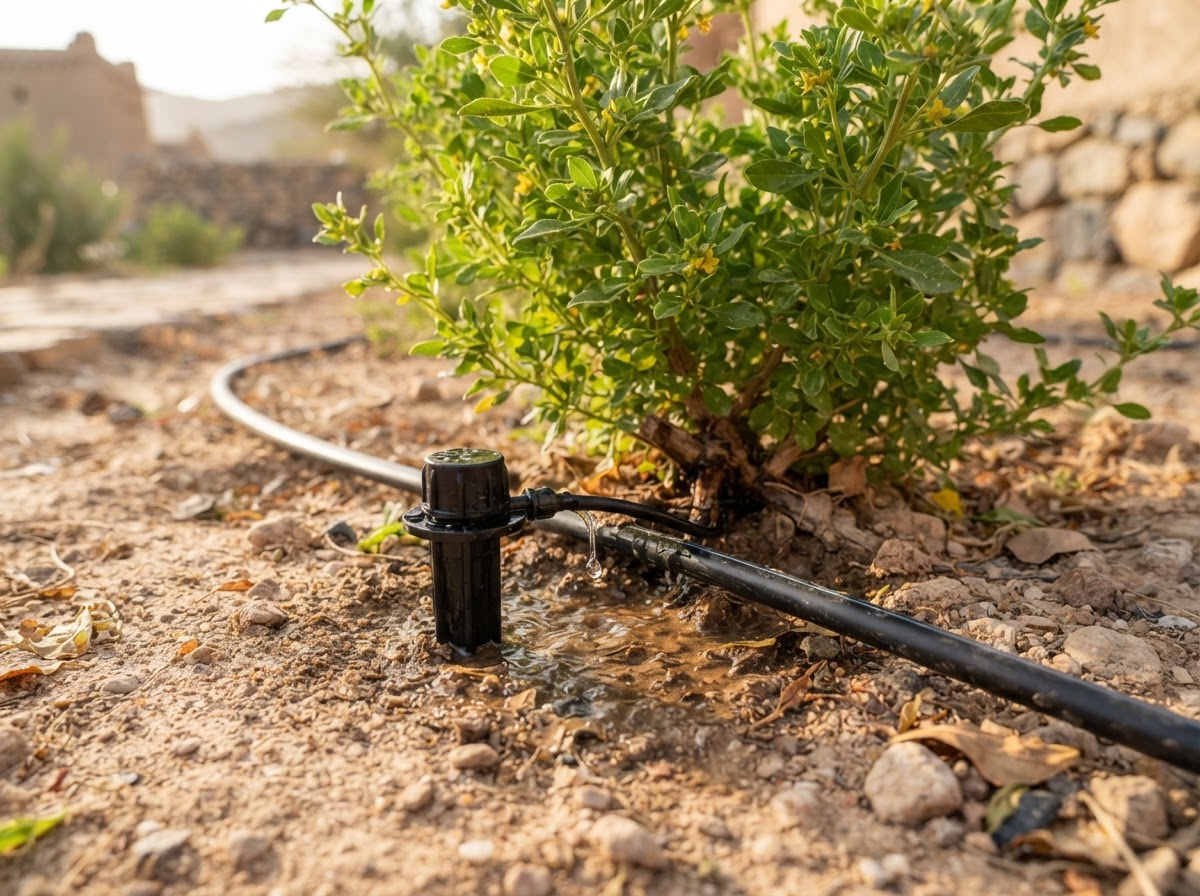
Drip irrigation delivers water slowly and directly to the root zone, where plants can use it, instead of spraying it into the air where much of it evaporates before reaching the soil. In Oman's heat, that matters. Drip works well for trees, shrubs, flower beds and planting beds.
That does not mean sprinklers have no place. Lawns generally need overhead coverage, and a well-adjusted sprinkler system on a correctly sized lawn can still be efficient. The key is matching the method to the area — drip where precision helps, sprinklers where broad coverage is genuinely needed.
3. Water at the Right Time
Watering in the cool early morning reduces evaporation and gives plants moisture before the heat of the day. Evening watering can also work for some beds, though it may increase disease risk on certain plants if foliage stays wet overnight. Midday watering in a Muscat summer loses a large share of water to evaporation before it reaches the roots.
There is no single schedule that is correct for every garden. Frequency depends on plant type, soil, season, sun exposure, the irrigation system itself, and the weather. The principle is simple: water deeply when needed rather than lightly every day, and adjust as the seasons change.
4. Stop Treating Every Plant the Same
Hydrozoning means grouping plants with similar water needs onto the same irrigation line, so each group gets the right amount. A common mistake in villa gardens is running the entire property on one valve — so the lawn, the drought-tolerant shrubs, and the thirsty flower beds all receive the same watering time.
Setting up separate irrigation zones for lawn, trees, shrubs, flower beds, and low-water planting lets you reduce water on the areas that need less without starving the areas that need more. This single change often lowers consumption while improving plant health.
5. Choose Plants That Fit Oman's Climate
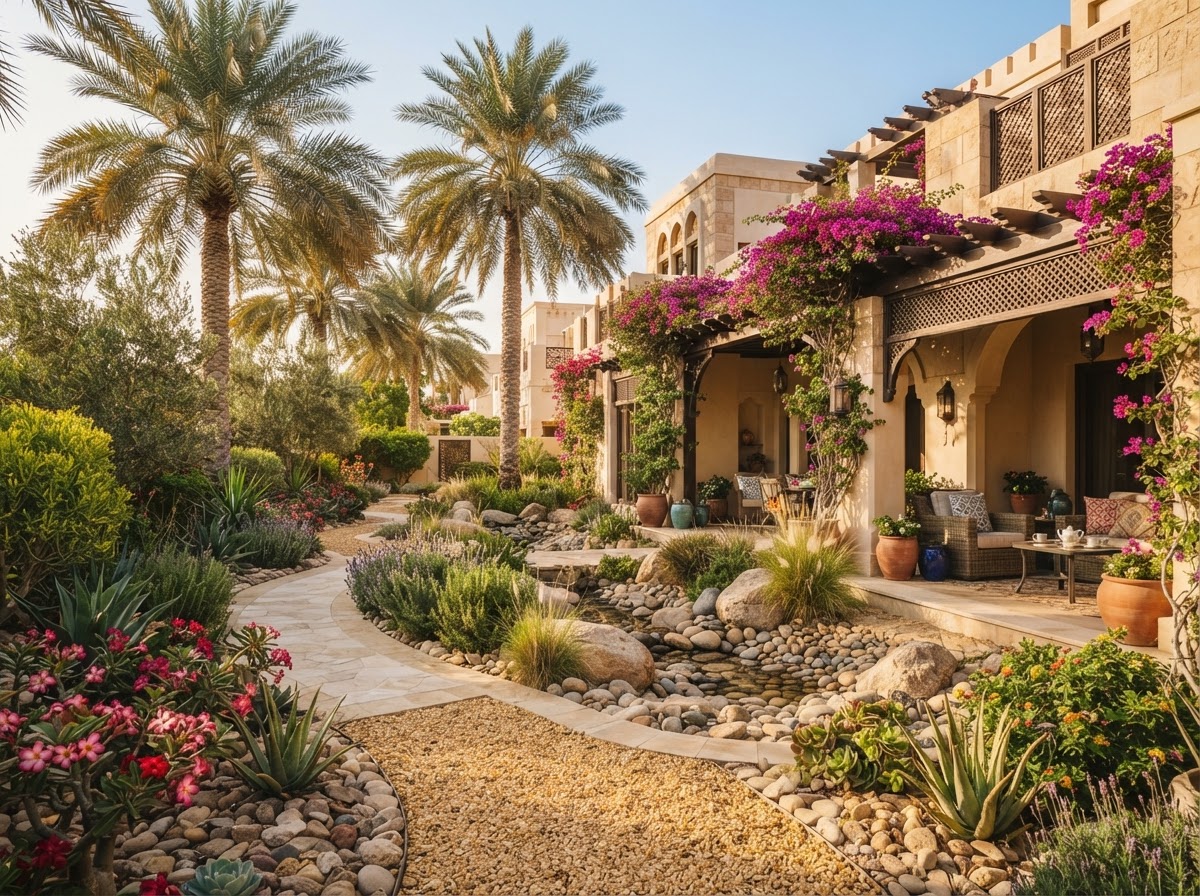
Plant selection has a large long-term effect on water use. Heat-tolerant and drought-tolerant species simply need less irrigation once established. Plants commonly used in Oman gardens include date palms, bougainvillea, desert rose, and a range of suitable palms and ornamental plants adapted to hot, dry conditions.
That said, no plant is suitable for every location. Suitability depends on soil, sunlight, salinity, wind, and the level of maintenance you can provide. A plant that thrives in one Muscat garden may struggle in another a few kilometres away. Choosing the right plant for the right spot reduces the need to compensate with extra water.
6. Use Mulch to Slow Evaporation
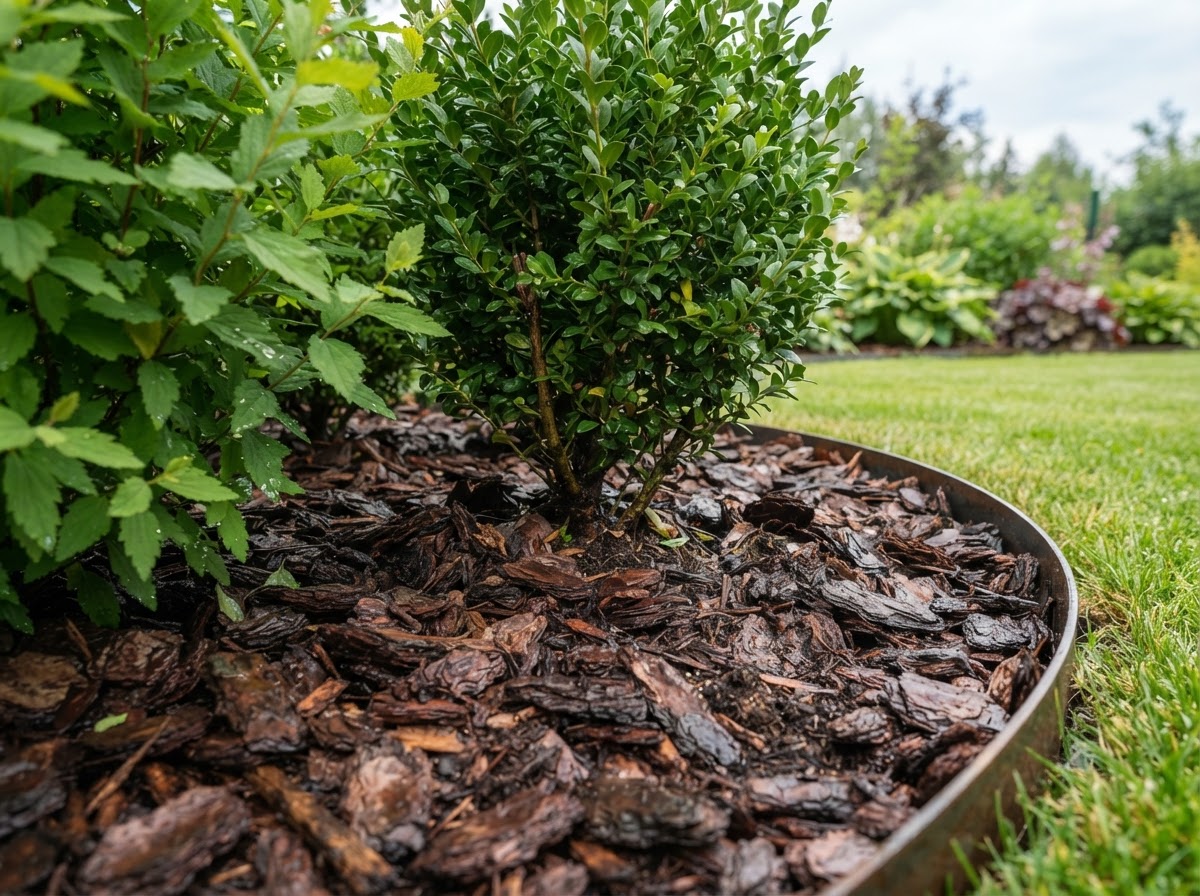
A layer of mulch on planting beds reduces evaporation from the soil surface, keeps the root zone cooler, and helps suppress weeds that compete for moisture. Organic mulch such as bark or compost works well for many beds, while decorative gravel or stone mulch can suit more arid-style landscapes.
Apply mulch in an even layer a few centimetres thick, but keep it clear of trunks and stems — piling mulch directly against a plant can trap moisture and encourage rot. Used correctly, mulch is one of the simplest ways to keep moisture in the soil longer.
7. Reduce Unnecessary Lawn Area
Lawns usually need more consistent irrigation than most other elements of a garden, because grass has a shallow root system and dries out quickly. A large lawn in full sun is often the biggest single water user on a Muscat property.
Reducing lawn to the area you actually use, and replacing the rest with planting beds, gravel, decorative stone, or drought-tolerant planting, can meaningfully cut consumption. Artificial grass is an option for some areas, particularly where natural grass struggles, but it is not a universal replacement — it has its own considerations around heat and drainage, and is best used selectively.
8. Improve Soil and Root-Zone Conditions
When plants look stressed, the instinct is often to water more. Sometimes the real issue is the soil. Compacted soil, poor drainage, or a thin top layer with little organic matter can prevent water from reaching the roots, so much of it runs off or evaporates.
Improving soil structure — with organic matter where appropriate, and by addressing compaction and drainage — helps water move into and stay within the root zone. Watering more is not always the solution to unhealthy plants; often it is watering better.
9. Use Smart Irrigation Controls
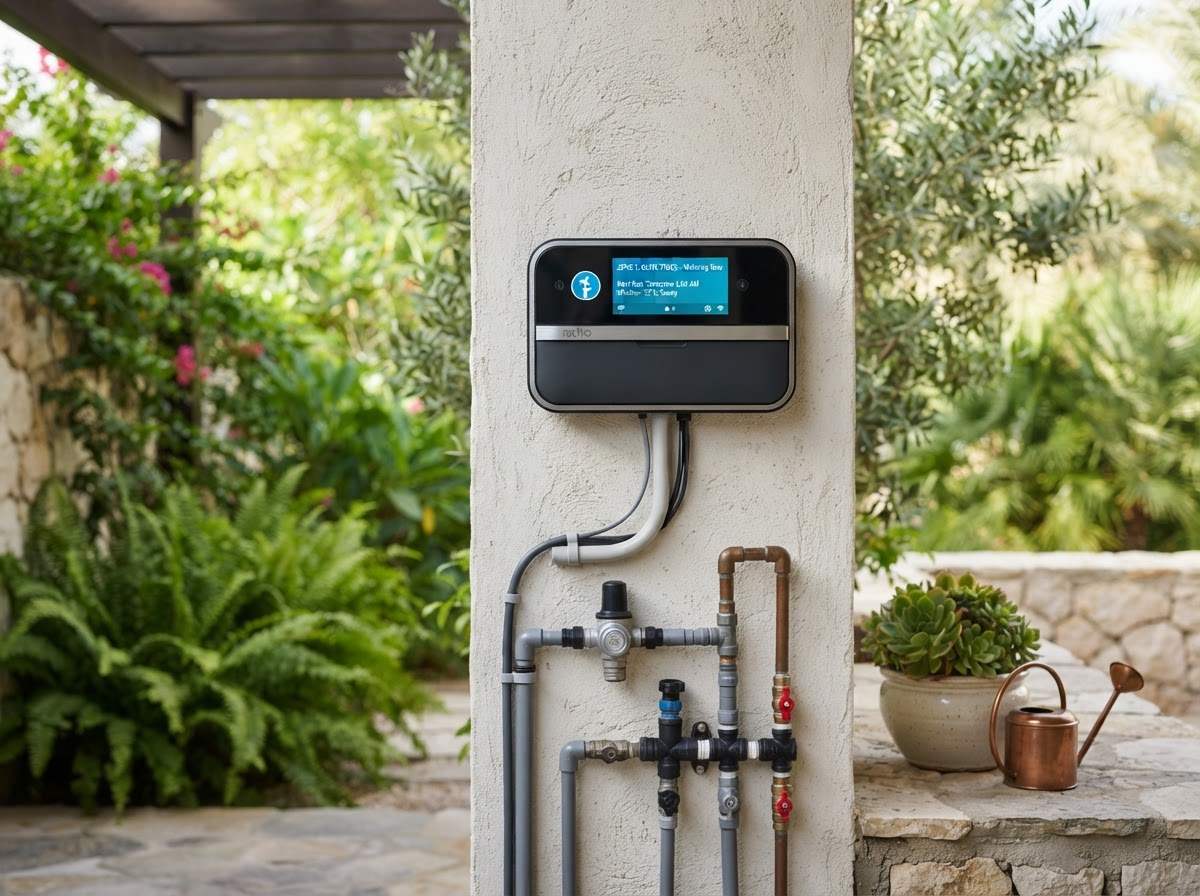
Smart irrigation controllers can adjust watering automatically based on schedules, zones, and — where sensors are suitable — weather or soil moisture. This helps avoid unnecessary cycles, such as watering during or just before rain, or running the same heavy schedule in winter as in July.
Technology works best when it supports a well-designed system. A smart controller on a leaking, poorly zoned irrigation layout will simply automate the waste. Get the design and condition right first, then let automation fine-tune it.
10. Inspect Your Irrigation System Regularly
Use this practical checklist each season to catch hidden waste before it shows on the bill:
📋 Seasonal Irrigation Checklist
- Check for leaks at joints and valves
- Inspect sprinkler heads for breaks or tilt
- Check drip emitters for blockages
- Check water pressure (misting = too high)
- Check for blocked or pinched lines
- Check for overspray onto paths and paving
- Check dry spots in the lawn
- Check unusually wet patches
- Check the irrigation controller settings
- Adjust schedules for the season
11. Protect Plants From Excessive Heat
Strategic shade can reduce water stress on sensitive plants. Pergolas, shade structures, and thoughtful planting placement can shield vulnerable plants from the harshest midday sun and reduce evaporation from the soil below.
Not every plant needs shade — many climate-suitable species thrive in full sun. Shade is a tool for the parts of the garden that genuinely struggle, not a blanket solution.
12. A Simple Water-Saving Garden Plan for a Muscat Villa
A practical approach is to divide the garden into zones with different irrigation needs. Each zone runs on its own schedule, so the lawn is not overwatered to keep the flower beds alive, and the drought-tolerant areas are not drowned to keep the lawn green.
| Zone | Area | Irrigation Approach |
|---|---|---|
| 1 | Lawn | Sprinklers, deep and less frequent |
| 2 | Trees | Drip, slow deep watering at root zone |
| 3 | Shrubs | Drip, moderate schedule |
| 4 | Flower beds | Drip or aimed sprinklers, controlled |
| 5 | Low-water planting | Minimal drip, mostly rainfall once established |
13. What NOT to Do If You Want a Lower Garden Water Bill
Frequently Asked Questions
How can I reduce my garden water bill in Oman?
Fix irrigation leaks, switch trees and shrubs to drip, water early morning, group plants by water need, choose climate-suitable plants, mulch beds, reduce unused lawn, and inspect the system regularly.
Is drip irrigation good for Muscat gardens?
Yes, for trees, shrubs and planting beds, because it delivers water to the root zone with low evaporation. Lawns still usually need sprinkler coverage.
What time should I water my garden in Oman?
Early morning is generally best, as evaporation is low and plants take up water before the heat. Avoid midday watering in summer. Frequency depends on plant type, soil and season.
Which garden plants use less water in Oman?
Heat- and drought-tolerant species such as date palms, bougainvillea, desert rose and suitable native ornamental plants. Suitability still depends on soil, sunlight and salinity in your specific garden.
Does mulch help reduce irrigation?
Yes. A mulch layer slows evaporation, keeps the root zone cooler and suppresses weeds. Keep mulch clear of trunks and stems to avoid rot.
How often should irrigation systems be checked?
At least once per season, and after any major change in weather. Check for leaks, blocked emitters, broken heads, pressure issues and overspray.
Can smart irrigation reduce water waste?
Yes, when it supports a well-designed system. Weather and moisture-based controls avoid unnecessary cycles, but they cannot fix leaks or poor zoning.
How can I keep my lawn green while using less water?
Water deeply rather than daily, keep the lawn to the area you use, repair broken heads, and avoid overspray onto paving. Reducing lawn area is often the biggest single saving.
Should I replace my lawn with artificial grass?
It is an option for areas where natural grass struggles, but not a universal replacement. Consider heat, drainage and how the space is used before deciding.
When should I get a professional irrigation assessment?
When you see rising consumption, dry or constantly wet patches, frequent repairs, or plants struggling despite watering — signs of hidden waste you cannot easily find yourself.
When Should You Get Professional Irrigation Help?
Some signs of water waste are hard to find on your own. Consider a professional irrigation assessment when you notice:
- Rising water consumption with no clear reason
- Dry patches alongside constantly wet areas
- Frequent irrigation repairs
- Plants dying despite regular watering
- Water running onto paved areas
- Inconsistent sprinkler coverage
- Difficulty managing multiple irrigation zones
A specialist can trace where the water is actually going, repair hidden leaks, and redesign zones so each part of the garden receives what it needs — and nothing more.
Not sure where your garden is losing water?
Mariam Gardening can assess your irrigation layout, identify inefficient watering areas and recommend a water-conscious solution for your Muscat garden.
Final Thoughts
A green garden in Oman does not have to mean a high water bill. The goal is not to use less water for its own sake, but to use the right water, at the right time, in the right place, for the right plants, with the right irrigation system.
Start by finding where water is being wasted — leaks, overspray, and a single schedule for every plant. Then improve the system: drip where it helps, separate zones, climate-suitable plants, mulch, and less lawn where you do not need it. Most villa gardens can stay lush while using noticeably less water, and a professional irrigation assessment can help when the source of the waste is not obvious.