

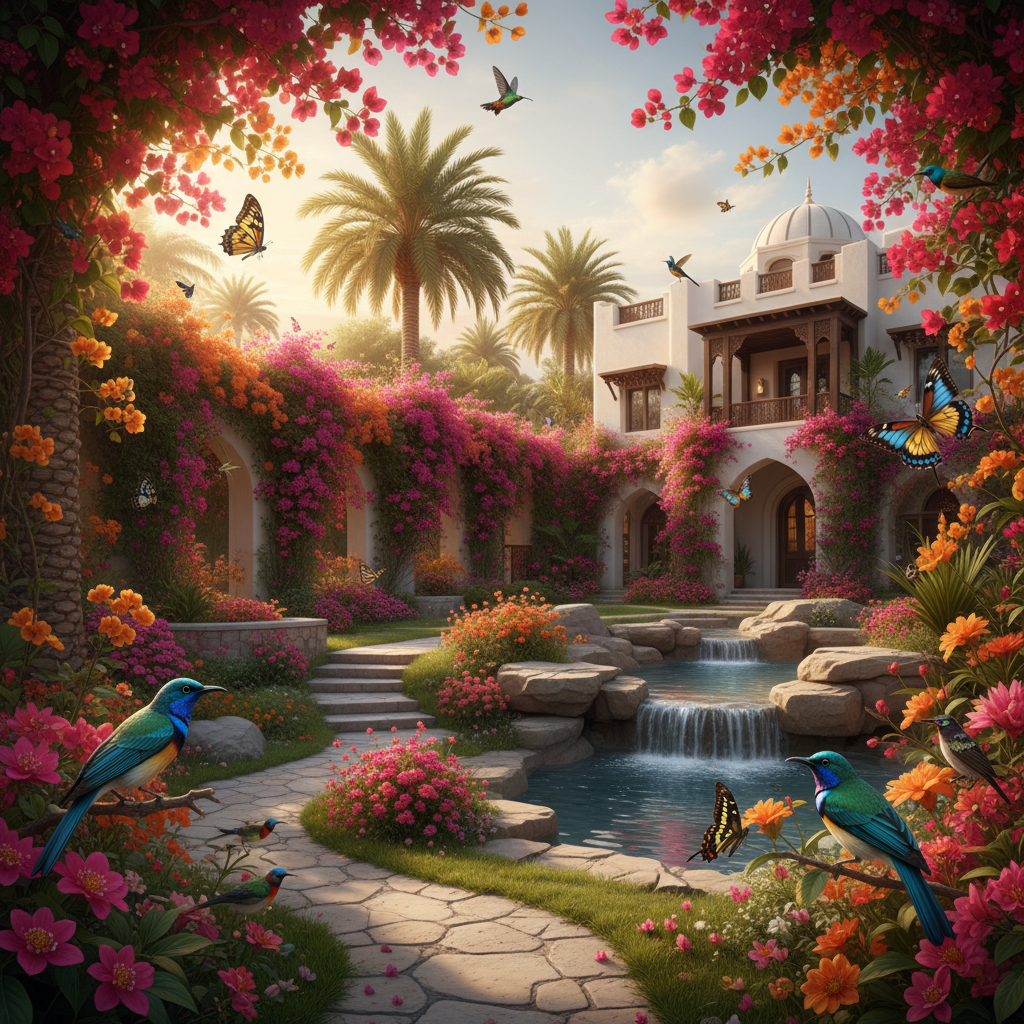
How to Attract Birds and Butterflies to Your Garden Naturally
Quick Answer
To attract birds and butterflies to your garden naturally, plant nectar-rich native flowers like bougainvillea, lantana, and jasmine; add a shallow bird bath; avoid pesticides; and provide natural shelter through trees and shrubs. In Oman's climate, native and drought-tolerant flowering plants combined with a clean water source are the most effective starting points for creating a thriving garden wildlife habitat.
Learning how to attract birds and butterflies to your garden naturally is one of the most rewarding steps you can take as a homeowner in Oman. Beyond the beauty these creatures bring, they play a vital role in maintaining a healthy, balanced garden ecosystem — pollinating flowering plants, controlling insect pests, and bringing life and movement to outdoor spaces that money simply can't buy.
Across Muscat — from the established villa communities of Al Mouj and Muscat Hills to residential gardens in Al Khuwair and Bousher — more homeowners are choosing to design their outdoor spaces with biodiversity in mind. A wildlife-friendly garden isn't just good for the environment; it's genuinely more beautiful, more interesting, and surprisingly easier to maintain than a sterile, chemical-dependent landscape.
In this guide, we cover everything you need to know about attracting birds and butterflies to your garden naturally — from the right plant choices and water features to shelter design and pesticide-free gardening. All advice is tailored specifically to Oman's climate, soil conditions, and locally available plants.
- 01Why Birds and Butterflies Matter in Your Garden
- 02Benefits of a Wildlife-Friendly Garden
- 03Understanding What Birds and Butterflies Need
- 04Best Plants for Attracting Birds in Oman
- 05Best Plants for Attracting Butterflies in Oman
- 06Creating Water Sources for Wildlife
- 07Natural Shelter and Nesting Areas
- 08Avoiding Chemicals and Pesticides
- 09Common Mistakes to Avoid
- 10Best Bird and Butterfly Garden Ideas
- 11Expert Tips from Landscaping Professionals
- 12FAQ
- 13Final Thoughts
"A garden that attracts birds and butterflies is not just more beautiful — it's a healthier, more balanced, and more joyful place to live."
01 — Why Birds and Butterflies Matter in Your Garden
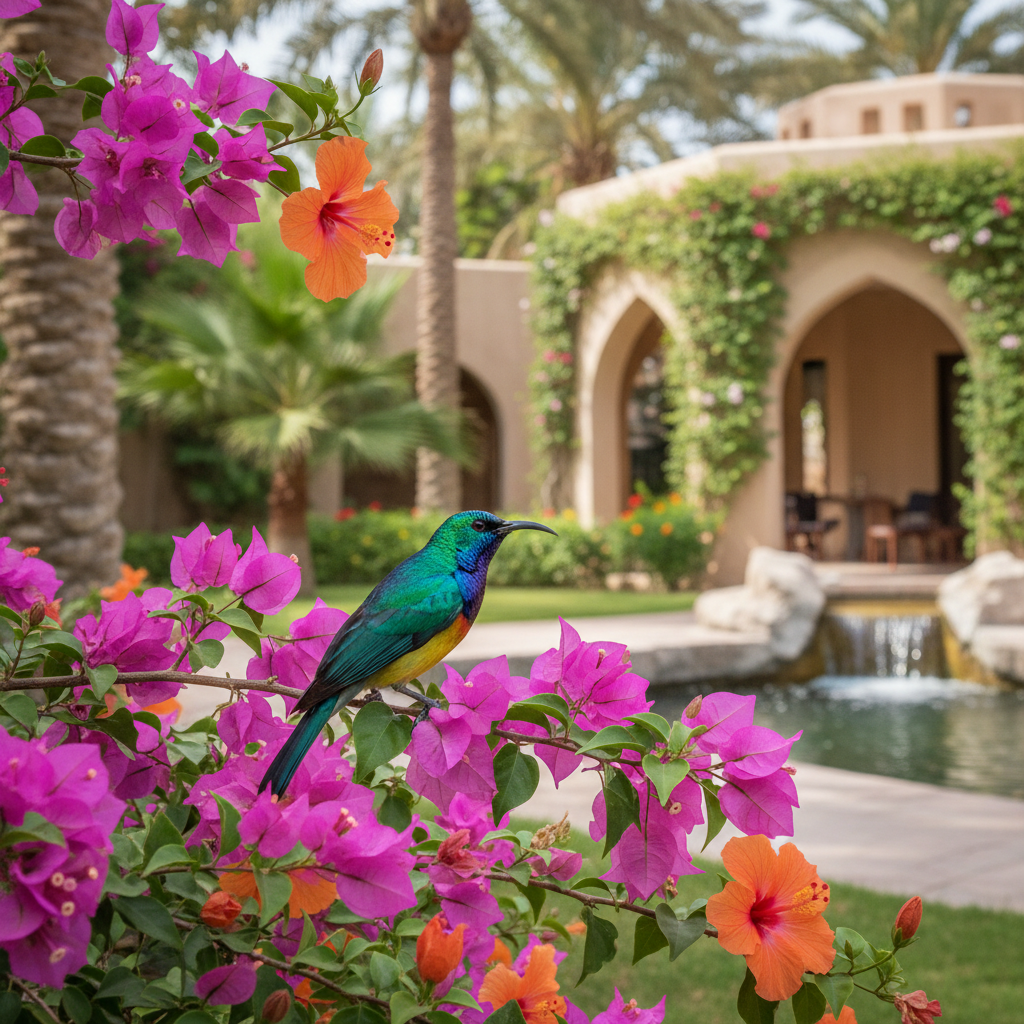
Birds and butterflies are far more than decorative visitors. They are active contributors to your garden's health and long-term productivity. Understanding their ecological role is the first step to appreciating why designing a wildlife-friendly garden makes such practical sense.
- Pollination: Butterflies and certain birds — particularly sunbirds, which are common visitors to Omani gardens — are efficient pollinators. They transfer pollen between flowering plants, directly supporting fruiting, seed production, and the health of your ornamental planting beds.
- Natural Pest Control: Insectivorous birds consume enormous quantities of garden pests — aphids, caterpillars, beetles, and mosquito larvae. A garden with a healthy bird population needs significantly fewer interventions to manage pest problems.
- Biodiversity: A garden that supports birds and butterflies supports a wider web of life — beneficial insects, soil microorganisms, and a balanced food chain that makes the entire ecosystem more resilient and self-sustaining.
- Ecosystem Stability: Diverse gardens are more resistant to disease outbreaks and pest explosions. Monoculture lawns and chemical-heavy gardens are vulnerable; biodiverse gardens are naturally more stable and require less ongoing intervention.
Even a single native flowering shrub added to your garden can attract butterflies and birds within days. You don't need to redesign your entire garden to start — small changes create visible results quickly.
02 — Benefits of a Wildlife-Friendly Garden
Choosing to attract wildlife into your garden delivers benefits that go well beyond aesthetics. For homeowners in Oman, a biodiversity-focused garden also happens to be one of the most sustainable and cost-effective choices you can make.
- Improved Biodiversity: More plant species and wildlife create a self-regulating ecosystem that becomes increasingly resilient over time — fewer interventions needed, healthier plants across the board.
- Better Pollination: Increased pollinator activity leads to more vibrant flowering, better fruit set on edible plants, and a garden that looks consistently more lush and colourful throughout the growing season.
- Reduced Pest Issues: Natural predators — birds, beneficial insects, and lizards — keep pest populations in check without any chemical input, reducing your maintenance costs and protecting plant health naturally.
- More Beautiful Landscapes: A garden filled with movement, colour, and wildlife is simply more engaging and enjoyable to spend time in — particularly in Oman's outdoor-focused lifestyle culture.
- Environmental Responsibility: Supporting local wildlife populations, reducing chemical use, and choosing native plants all contribute to Oman's broader environmental conservation goals.
Muscat's urban expansion has reduced natural habitat for many bird and butterfly species. Villa gardens in communities like Al Mouj and Muscat Hills now play a meaningful role in providing urban wildlife corridors — your garden can be part of that network with very little extra effort.
03 — Understanding What Birds and Butterflies Need
Before making any changes to your garden, it helps to understand exactly what attracts and sustains birds and butterflies. Their requirements are simple — but all five elements need to be present together for a garden to become a genuine wildlife habitat rather than just an occasional stopping point.
| Need | Why It Matters |
|---|---|
| Food | Nectar, seeds, berries, and insects are the primary food sources — the right plants provide all of these |
| Water | Birds and butterflies need clean, shallow water daily for drinking and bathing — especially in Oman's heat |
| Shelter | Dense shrubs, trees, and hedges provide safe refuge from predators and harsh sun during the hottest hours |
| Nesting Areas | Birds need safe, undisturbed spots to build nests and raise young — essential for resident species |
| Safe Habitat | A pesticide-free environment is non-negotiable — chemicals kill insects that birds and butterflies depend on |
The good news: meeting all five of these needs is entirely achievable in a standard Muscat villa garden. You don't need a large space — you need the right design choices made with wildlife in mind.
04 — Best Plants for Attracting Birds in Oman
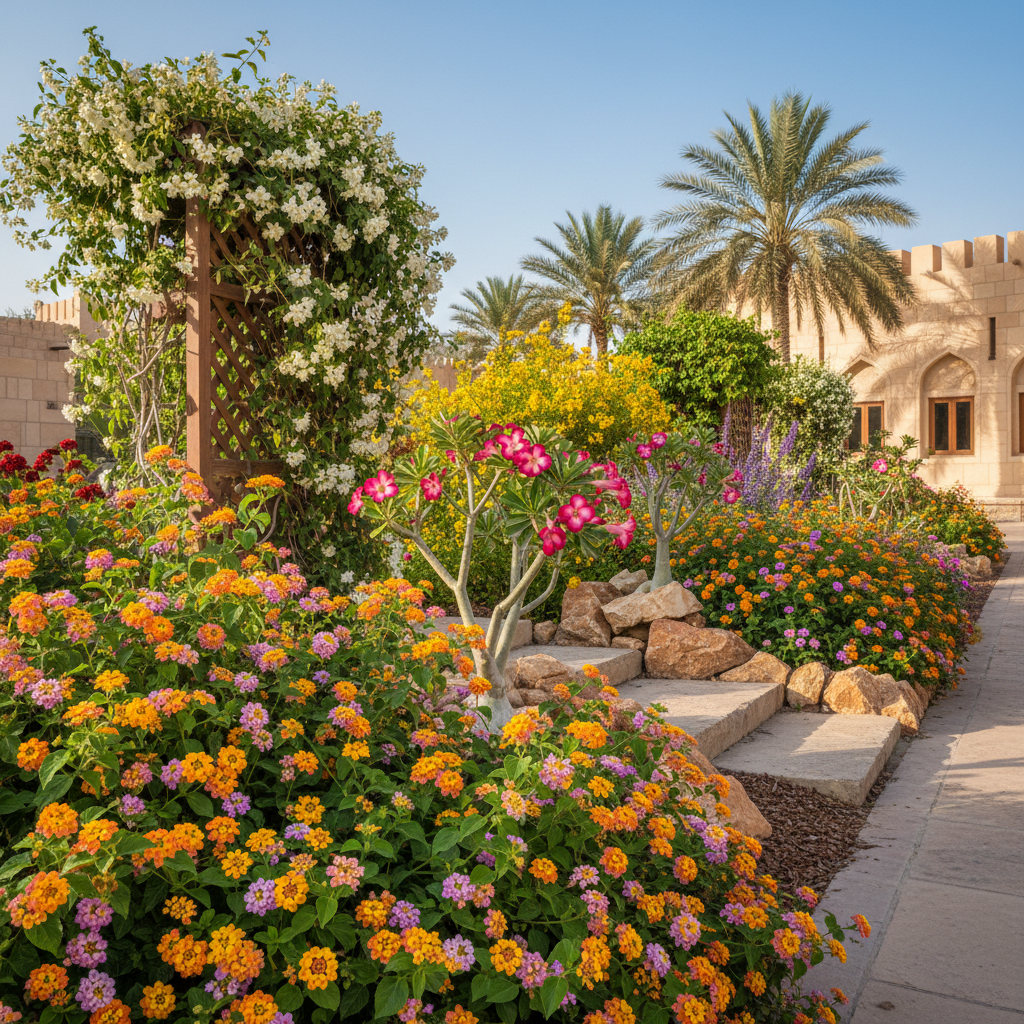
Plant selection is the foundation of a bird-friendly garden. The key is choosing species that provide food — directly through fruit, seeds, or nectar — or indirectly by supporting the insects that birds eat. Here are the most effective choices for Omani gardens:
Native Shrubs (Ghaf, Desert Rose)
Why it works: Ghaf trees provide excellent canopy cover and attract seed-eating birds. Desert roses offer year-round colour and insect activity that draws insectivorous birds.
Maintenance: Low — drought-tolerant once established
Oman suitability: Excellent — native to Arabia, thrives in Oman's climate with minimal irrigation
Fruiting Trees (Fig, Date Palm, Mulberry)
Why it works: Fruiting trees are among the strongest bird attractants. The fruit provides direct food; overripe fruit draws insects which in turn attract more bird species.
Maintenance: Medium — annual pruning and seasonal feeding
Oman suitability: Very good — dates and figs are well-adapted to Oman's heat and sun
Flowering Plants (Bougainvillea, Jasmine)
Why it works: Dense flower clusters support insects which feed birds. Jasmine's fragrance and nectar attract sunbirds directly.
Maintenance: Low to medium — bougainvillea needs occasional pruning; jasmine benefits from regular watering
Oman suitability: Excellent — bougainvillea is one of Oman's most resilient ornamental plants
Seed-Producing Plants (Sunflower, Cosmos)
Why it works: Seed heads left on plants after flowering provide a reliable food source for finches and sparrows through the cooler months.
Maintenance: Low — allow plants to go to seed naturally rather than deadheading
Oman suitability: Good — best during Oman's cooler season (November to March)
Shade Trees (Neem, Frangipani)
Why it works: Larger shade trees provide essential canopy for nesting, refuge from heat, and hunting perches for insectivorous birds.
Maintenance: Low once established — neem is particularly hardy
Oman suitability: Excellent — neem is one of the most resilient trees in Muscat's conditions
05 — Best Plants for Attracting Butterflies in Oman
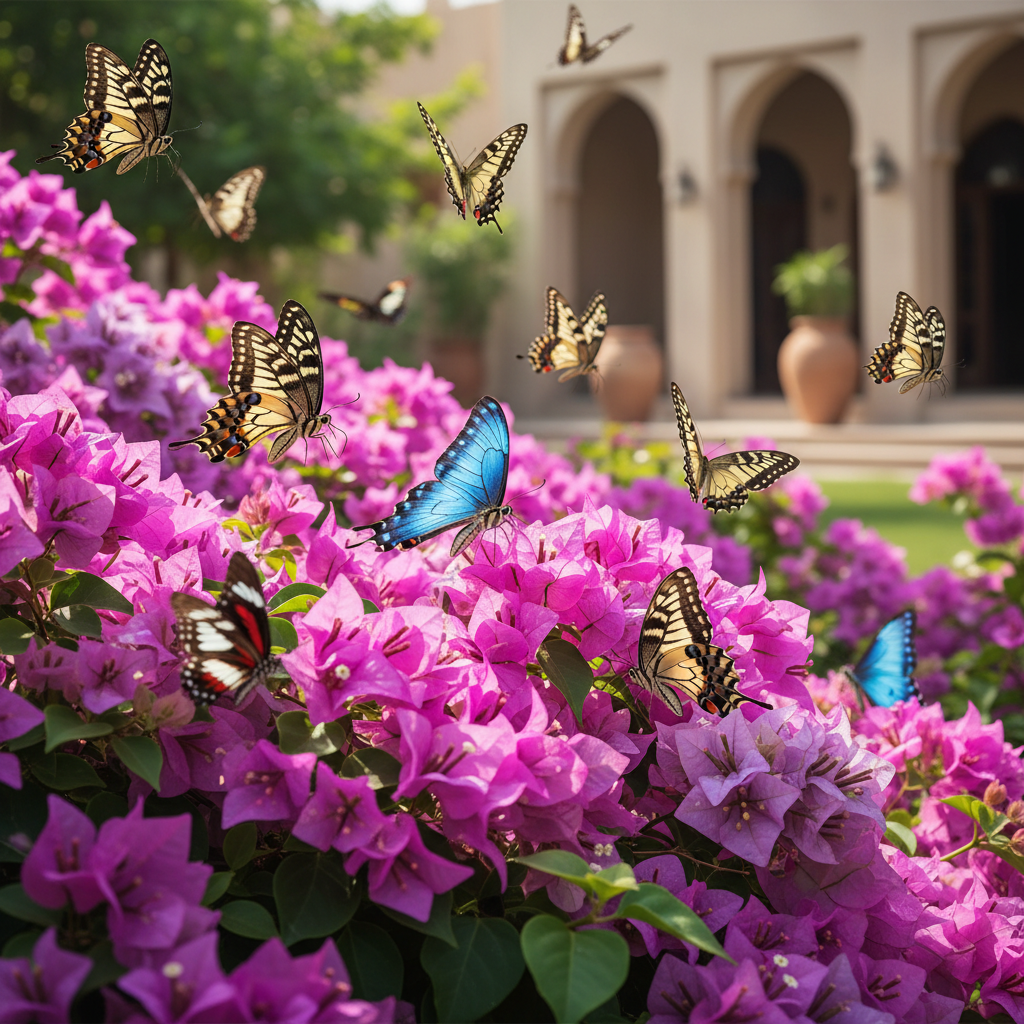
Butterflies are attracted primarily by nectar — the energy source they depend on as adults. They're also drawn to colour, particularly purple, pink, orange, and yellow flowers. To attract and retain butterflies in your Omani garden, you need a continuous supply of nectar-rich flowers throughout the season:
Bougainvillea
Why butterflies love it: The dense clusters of colourful bracts attract butterflies visually; the small true flowers at the centre of each bract are rich in nectar.
Climate suitability: Excellent — one of the most sun and heat tolerant plants in Oman; thrives with minimal water
Maintenance level: Low — prune after flowering; very drought-hardy once established
Lantana
Why butterflies love it: Lantana is possibly the single most effective butterfly-attracting plant available in Oman. Its multi-coloured flower clusters provide abundant nectar and are irresistible to a wide range of butterfly species.
Climate suitability: Excellent — heat and drought tolerant; flowers almost year-round in Muscat
Maintenance level: Very low — trim occasionally to encourage fresh flowering; self-sustaining in most gardens
Milkweed (Calotropis)
Why butterflies love it: The host plant for several butterfly species in Oman, including the Plain Tiger butterfly. Female butterflies lay eggs directly on milkweed leaves, and caterpillars feed on the plant.
Climate suitability: Excellent — native to the region; grows in poor soils and tolerates full sun
Maintenance level: Very low — essentially self-sufficient once established
Native Flowering Plants (Plumbago, Pentas)
Why butterflies love it: Both produce abundant small flowers with accessible nectar that suit butterfly feeding behaviour — particularly for smaller species.
Climate suitability: Good — both perform well in Muscat's climate with regular but moderate watering
Maintenance level: Low — occasional deadheading to encourage continuous flowering
Nectar-Rich Plants (Ixora, Allamanda)
Why butterflies love it: Ixora's tubular red flowers are particularly attractive to long-tongued butterfly species; allamanda's large yellow flowers are highly visible and nectar-rich.
Climate suitability: Good — both suit Muscat's climate; benefit from partial shade in peak summer
Maintenance level: Medium — regular watering and occasional feeding during the growing season
06 — Creating Water Sources for Wildlife
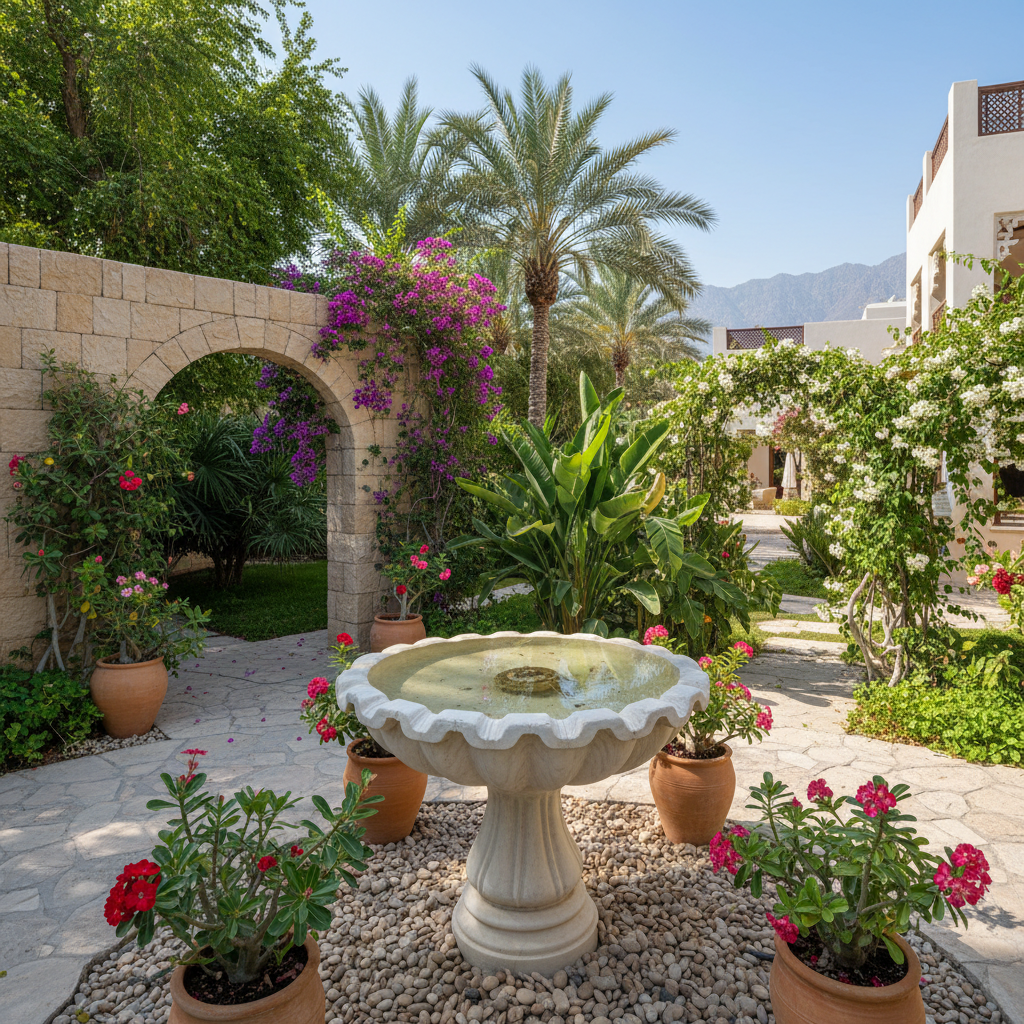
Water is arguably the most important element you can add to attract and retain wildlife in your garden — particularly in Oman, where clean, accessible water is genuinely scarce in natural environments. A reliable water source will draw birds and butterflies even when food plants are not yet established.
- Bird Baths: Position a classic bird bath in a shaded area of your garden, away from dense cover where cats can hide. Keep water fresh by changing it every 2–3 days — in Muscat's heat, standing water becomes unattractive quickly and can breed mosquitoes.
- Shallow Water Dishes: Place a shallow terracotta dish with a few pebbles on the ground for butterflies. Butterflies need shallow water they can land beside without risk of drowning — the pebbles provide safe landing platforms.
- Small Fountains: Moving water is far more attractive to birds than still water. A small solar-powered fountain in a bird bath increases bird visits dramatically — the sound of moving water carries and acts as an auditory signal.
- Garden Water Features: If your villa garden has a pond or water feature, ensure it includes a shallow beach or sloping edge where birds can safely access the water without risk of falling into deep areas.
In Muscat's summer heat, place bird baths in partial shade — full sun evaporates water rapidly and makes the bath too hot to use during peak hours. Change the water every 2 days and scrub the basin weekly to prevent algae and mosquito breeding.
07 — Natural Shelter and Nesting Areas
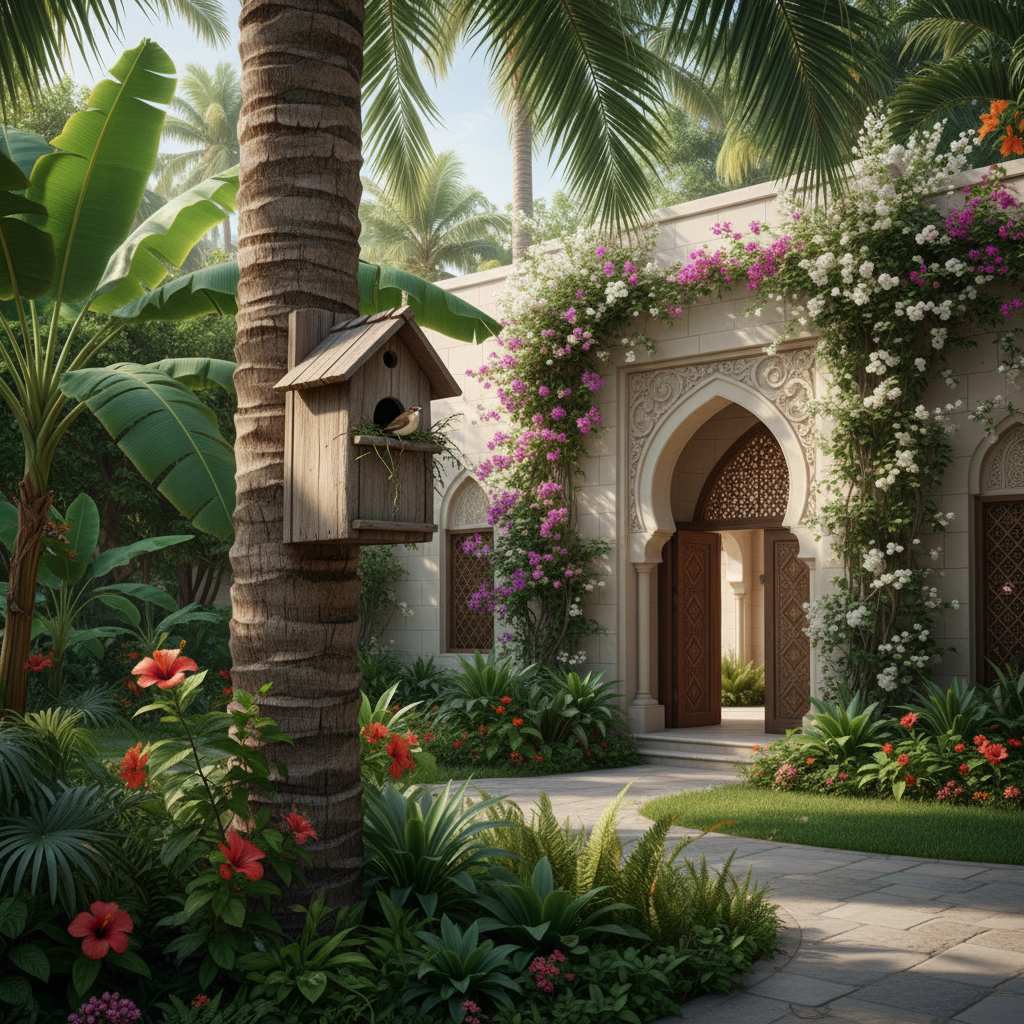
Shelter is what transforms a garden from a brief stopping point into a place where birds and butterflies actually live. Without adequate shelter, wildlife will feed in your garden but nest elsewhere — meaning you lose the full ecosystem benefits of a resident population.
Trees & Large Shrubs
Multi-layered canopy structure provides nesting sites, shade, and hunting perches. Aim for at least one large tree in any wildlife-friendly garden. Neem, frangipani, and date palms are excellent choices for Muscat villas.
Dense Hedges
Thick hedging plants like natal plum or bougainvillea create safe, predator-proof nesting habitat. Many small birds prefer dense thorny shrubs where cats and larger birds cannot easily reach nests.
Ground Cover
Low-growing ground covers and leaf litter areas provide habitat for ground-feeding birds, lizards, and the insects that birds hunt. Avoid obsessively clearing every fallen leaf.
Nesting Boxes
Supplement natural nesting in gardens with fewer mature trees. Install boxes at 2–4m height in a shaded position, facing east or north-east to avoid Oman's intense afternoon sun. Clean annually before the breeding season.
In luxury villa gardens in Al Mouj and Muscat Hills, layered planting — combining a shade tree canopy, mid-level shrubs, and low flowering groundcovers — creates the structural diversity that supports the most wildlife. It also happens to be the most aesthetically impressive garden design approach.
08 — Avoiding Chemicals and Pesticides
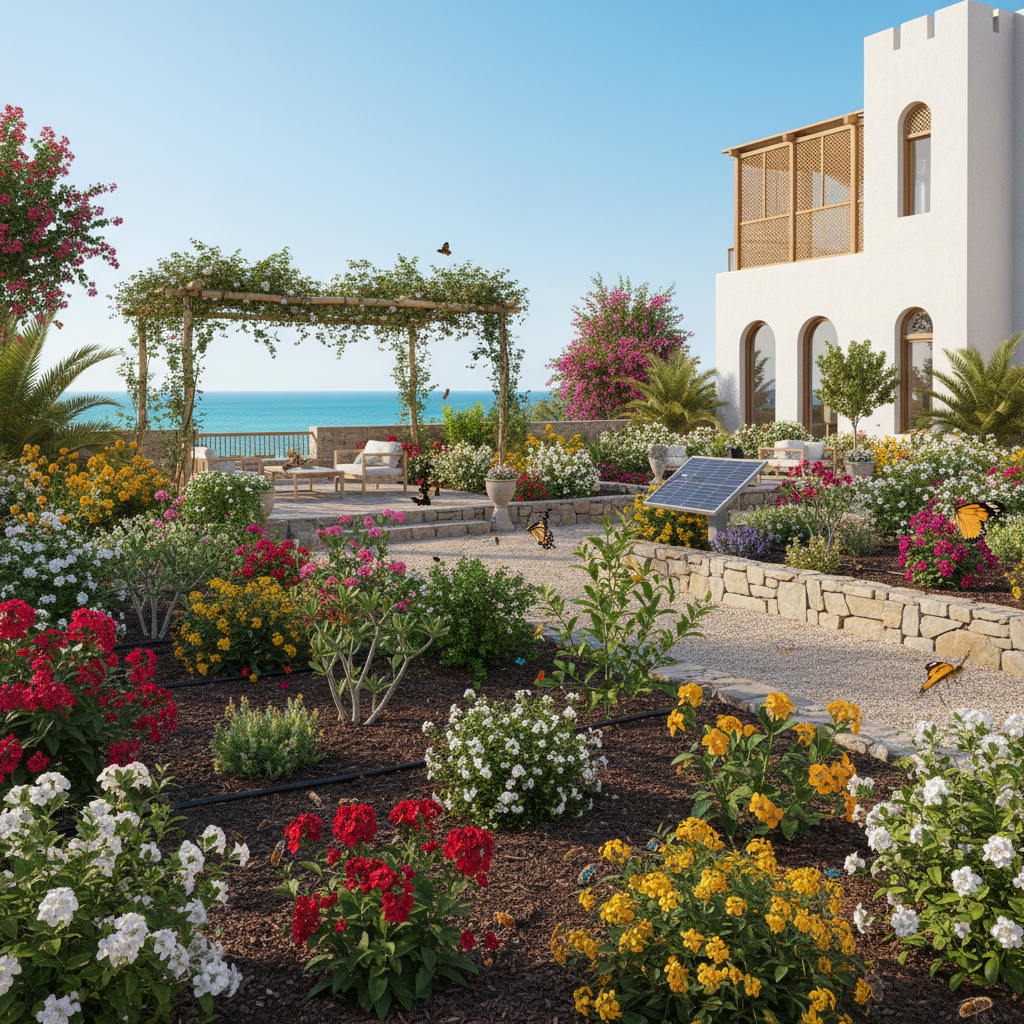
This is the single most impactful change you can make. Pesticides and systemic insecticides don't just kill the pests you're targeting — they eliminate the entire insect food web that birds and butterflies depend on. A single application of systemic insecticide can render your garden wildlife-hostile for weeks.
- Organic Pest Control: Use neem oil sprays, insecticidal soap, or physical removal for pest problems. These targeted solutions affect only the pest in question, not the wider insect population.
- Encourage Beneficial Insects: Ladybirds, lacewings, and predatory wasps control aphids and whitefly naturally. Planting umbellifers and native flowering herbs attracts these allies into your garden.
- Tolerate Minor Pest Levels: A garden completely free of pest insects has no food for birds. A low background level of insect activity is healthy and desirable — it feeds the wildlife you're trying to attract.
- Choose Organic Fertilisers: Synthetic fertilisers encourage lush, fast growth that is more susceptible to pest attack. Organic alternatives — compost, well-rotted manure — build long-term soil health and support a more balanced garden ecosystem.
If you do need to treat a specific pest problem, apply treatments in the early morning or late evening when birds and butterflies are least active, and choose targeted products with the shortest residual period. Always avoid systemic insecticides — they contaminate nectar and kill pollinators indiscriminately.
09 — Common Mistakes to Avoid
Many well-intentioned gardens in Muscat fail to attract wildlife because of a handful of avoidable mistakes. Here's what not to do — and exactly how to fix each one:
10 — Best Bird and Butterfly Garden Ideas for Villas in Oman
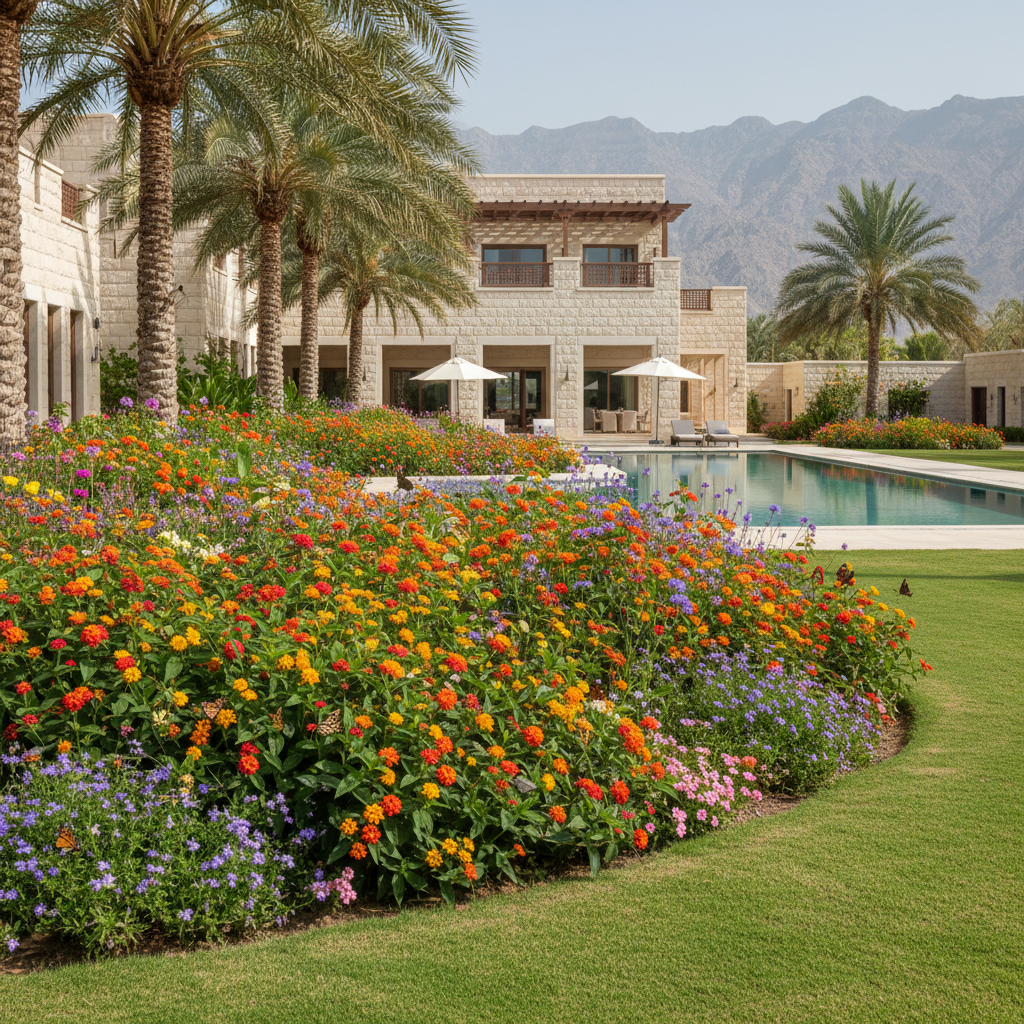
These design concepts work specifically well for residential gardens and villa properties across Muscat — each one balancing wildlife value with aesthetic quality:
Native Wildlife Gardens
Centre your garden design around Oman's native plant palette — Ghaf trees, desert roses, calotropis, and native grasses. These plants require minimal irrigation, provide maximum wildlife value, and create a landscape that genuinely belongs to the region.
Butterfly Flower Borders
Create a dedicated planting border of 2–3 metres wide combining lantana, pentas, bougainvillea, and ixora in graduating heights. Plant in drifts of single species rather than one of everything — butterflies are drawn to larger patches of the same flower more than a scattered mix.
Bird-Friendly Courtyard Gardens
Courtyard spaces in traditional Omani-style villas are ideal for bird watching. Include a central water feature or bird bath, surround with fragrant flowering shrubs like jasmine and plumeria, and add a small fig or mulberry tree for direct food provision.
Pollinator Gardens
Dedicate a section of your garden specifically to pollinators — a mix of nectar-rich flowering plants, host plants for butterfly larvae, and a water source. These compact garden zones are highly effective even in smaller gardens.
Water Feature Gardens
Incorporate a naturalistic water feature with planted margins — water plants, surrounding moisture-loving ferns, and a gently sloping edge. Moving water attracts the widest range of bird species and creates a genuinely tranquil garden experience.
Eco-Friendly Villa Landscapes
For the most comprehensive approach, design the entire garden with biodiversity as a principle — not an afterthought. This means native plants throughout, organic maintenance, layered planting structure, water features, and nesting provision built into the landscape design from the start.
11 — Expert Tips from Landscaping Professionals
These recommendations come from hands-on landscaping experience across Muscat villa gardens — practical, proven, and tailored specifically to Oman's climate and conditions:
The most wildlife-rich gardens combine canopy trees, mid-level shrubs, and low ground cover in overlapping layers. Each layer attracts different species and creates a self-regulating microclimate that supports more life than any single-level planting.
Ensure something is always flowering. In Oman, this means combining winter-flowering plants (pentas, alyssum) with summer-resilient species (bougainvillea, lantana) and evergreen nectar shrubs (ixora, plumbago) — creating a year-round food source without gaps.
Choosing native and drought-adapted plants for wildlife attraction is also your best water-saving strategy. Species like lantana, calotropis, bougainvillea, and ghaf provide maximum wildlife value while requiring a fraction of the water that exotic ornamentals demand.
You don't need to redesign your entire Muscat garden to see results. Add one bird bath, plant three lantana shrubs, and stop using systemic insecticides. Within a single growing season, you'll see a measurable increase in butterfly and bird visits — then build from there.
Frequently Asked Questions
Final Thoughts
Learning how to attract birds and butterflies to your garden naturally is one of the most satisfying and practical improvements you can make to your outdoor space in Oman. The changes don't need to be dramatic or expensive — often the most effective step is simply stopping the use of pesticides and adding a clean water source.
From there, a thoughtful plant selection — prioritising native species, nectar-rich flowers, and fruiting or seed-producing plants — combined with natural shelter and nesting provision transforms your Muscat villa garden into a genuine wildlife habitat. One that is not only more beautiful and lively to spend time in, but genuinely more resilient, more sustainable, and less demanding to maintain long-term.
Whether you're starting from scratch with a new garden design or improving an existing landscape, the principles are the same: provide food, water, shelter, and safety — and the birds and butterflies will come. In Oman's unique environment, with the right guidance and plant choices, results come faster than most homeowners expect. Don't wait — your garden's natural ecosystem is ready to flourish.
Create a Beautiful Bird and Butterfly Garden in Oman
Mariam Gardening is Muscat's trusted landscaping company specialising in sustainable garden design, native plant selection, luxury villa landscaping, and eco-friendly outdoor spaces. We design gardens that are beautiful, low-maintenance, and alive with nature.
Contact Mariam Gardening today for a free consultation and transform your garden into a thriving natural habitat for birds and butterflies.