

Mulching in Muscat Gardens: A Complete Guide to Soil Health
A comprehensive guide to mulching strategies that protect and enrich your Muscat garden in Oman's extreme climate.
Understanding Mulch and Its Importance in Muscat's Climate
When it comes to maintaining thriving gardens in Muscat's challenging climate, mulching is one of the most powerful and underutilized tools at your disposal. The intense heat, low humidity, and sandy soils of Oman's capital city create unique gardening challenges, but the right mulching strategy can transform your garden into a lush, healthy space while minimizing water waste and labor.
Mulch is any material spread over the soil surface, and in Muscat, it's far more than a cosmetic addition to your garden beds. The Muscat climate presents several challenges: temperatures regularly exceed 45°C in summer, moisture evaporates rapidly from exposed soil, and the intense UV radiation can stress both plants and soil structure.
Applying a 5–10 cm layer of mulch acts as a protective barrier between your soil and the harsh environment. This simple but effective practice can reduce soil temperature fluctuations by up to 8–10°C, retain moisture for longer periods, and create a more stable environment for beneficial soil organisms. For a broader foundation, you may also want to explore soil improvement techniques in Oman to prepare the ground before implementing these strategies.
Benefits of Mulching for Muscat Gardens
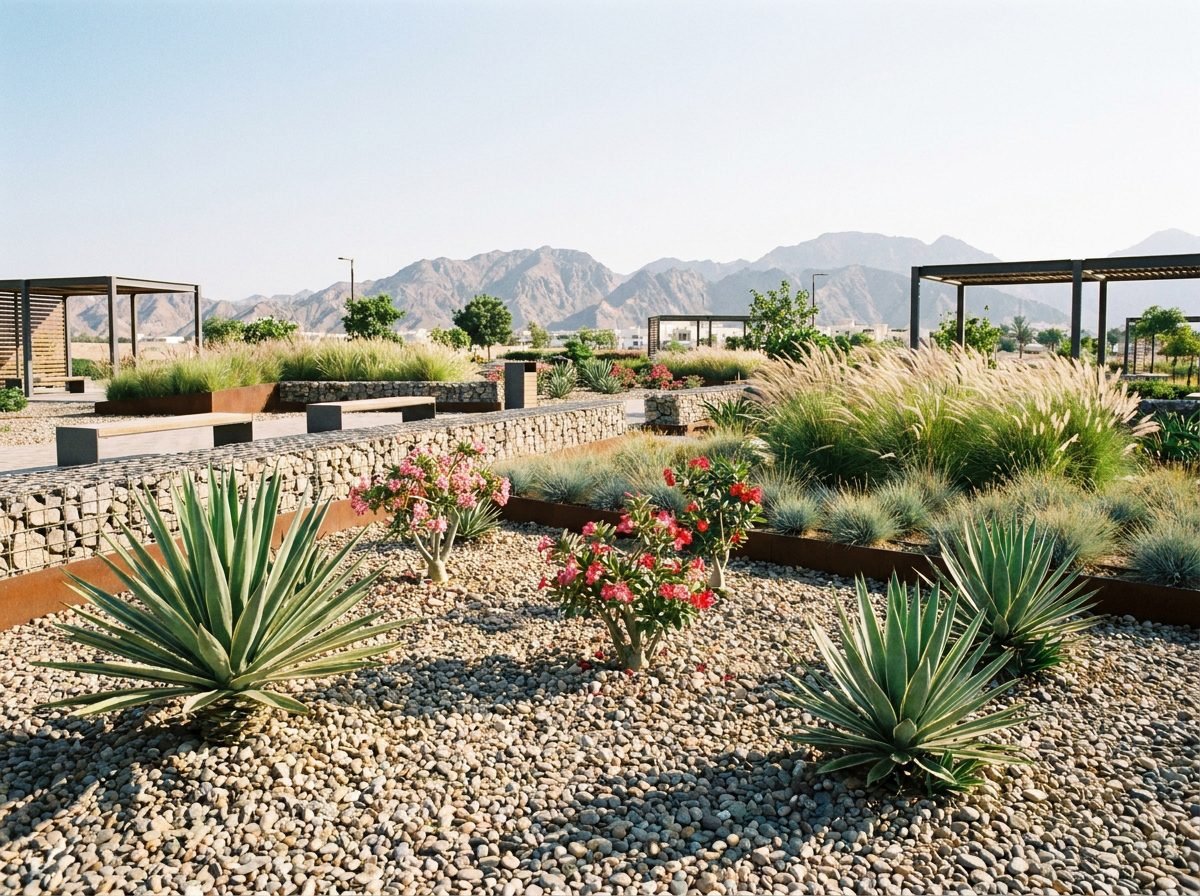
A properly mulched garden bed retains moisture and keeps soil temperatures stable — critical for plant health in Muscat's extreme heat.
Water Conservation is perhaps mulching's most vital benefit in Muscat. In an arid region where water is precious, mulch reduces evaporation from the soil surface by up to 70%, meaning you'll water less frequently while maintaining consistent soil moisture. This is particularly important during Muscat's scorching summers, where daily watering can quickly become unsustainable and wasteful.
Temperature Regulation
Mulch insulates soil — keeping it cooler in summer and warmer in winter — encouraging deeper roots and protecting beneficial microorganisms.
Weed Suppression
A proper mulch layer blocks sunlight needed for weed germination, reducing weeding time and the need for chemical herbicides.
Soil Structure Improvement
As organic mulches break down, they enrich Muscat's sandy soils with organic matter, improving water-holding capacity and nutrient availability.
Soil Structure Improvement is crucial in Muscat's naturally poor, sandy soils. As organic mulches break down over time, they enrich the soil with organic matter. Increased organic matter improves soil structure, water-holding capacity, nutrient availability, and encourages earthworms and microbial activity — all of which contribute to a healthier, more disease-resistant garden. Understanding your soil is the first step toward success — choosing the best grass types for Oman can dramatically improve your results.
"In Muscat's harsh climate, smart mulching isn't just good gardening practice — it's essential stewardship of your garden and the precious resources of our region."
Types of Mulch Suitable for Muscat Gardens
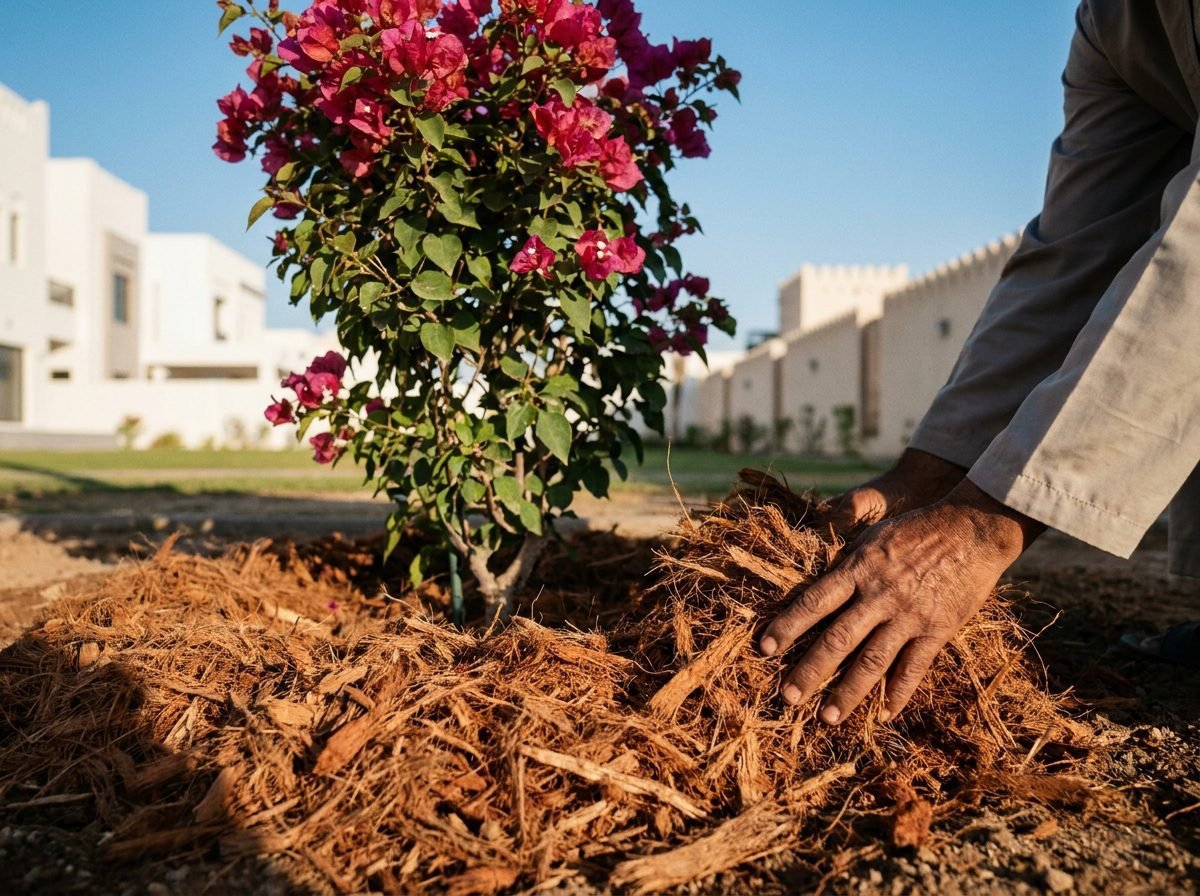
1. Organic Mulch Options
Wood chips, compost, palm fronds, and coconut coir are all excellent organic choices for Muscat. They improve soil structure as they decompose and provide excellent moisture retention.
- ✓ Improves soil quality as it breaks down
- ✓ Locally available — palm fronds are abundant in Oman
Wood Chips and Shredded Bark are widely available in Muscat and provide excellent water retention. They break down gradually, adding organic matter to the soil. A 5–7 cm layer is ideal. Avoid freshly chipped wood, which can steal nitrogen from soil as it decomposes — let it age for several months first, or choose composted wood products.
Palm Fronds and Date Palm Byproducts represent a locally-sourced mulch opportunity unique to Oman. Given the country's abundant date palms, dried palm fronds make an excellent, sustainable mulch option. They provide decent coverage and break down to improve soil. Coconut coir — increasingly available due to the region's coconut imports — is another excellent choice that retains moisture well, doesn't compact, and provides good insulation, making it particularly effective in Muscat's sandy soils.
For a comprehensive irrigation system in Muscat, pairing organic mulch with a smart drip system delivers the best results — reducing water usage while maintaining the consistent soil moisture that plants need to thrive.
Step-by-Step Mulching Guide for Muscat Gardens
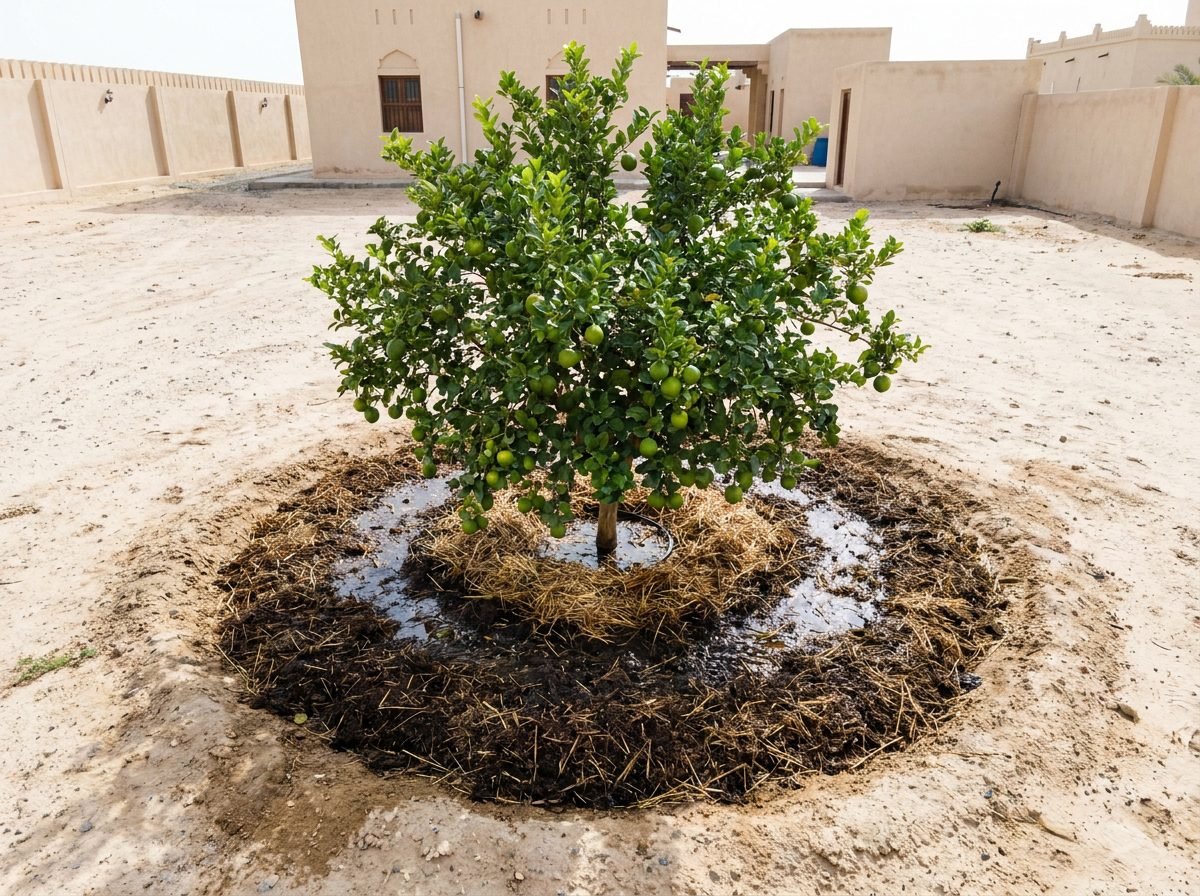
2. Application Best Practices
Correct application is just as important as choosing the right mulch. The depth, placement, and soil preparation all determine how effective your mulch will be in Muscat's environment.
Begin by preparing your garden beds thoroughly. Clear the area of weeds, debris, and dead vegetation, then gently loosen the top 2–3 cm of soil with a hand cultivator. This improves contact between mulch and soil. Next, water your garden beds thoroughly before mulching — mulch works best when applied to moist soil, helping retain existing moisture and supporting beneficial microbial activity during decomposition.
Apply the correct depth for Muscat's climate: 5–10 cm of organic mulch, depending on the type. Finer materials like compost can be 5 cm, while wood chips work best at 7–10 cm. The most critical rule is keeping mulch away from plant stems — piling mulch against stems creates a moist environment that encourages rot, fungal diseases, and pest problems. In Muscat's heat, organic mulches may break down faster than in temperate climates, so check your mulch layer every 2–3 months and top it up as needed.
Combine your mulching strategy with proven lawn disease prevention techniques to create a comprehensive defence system for your entire garden.
Mulching Schedule for Muscat's Seasons
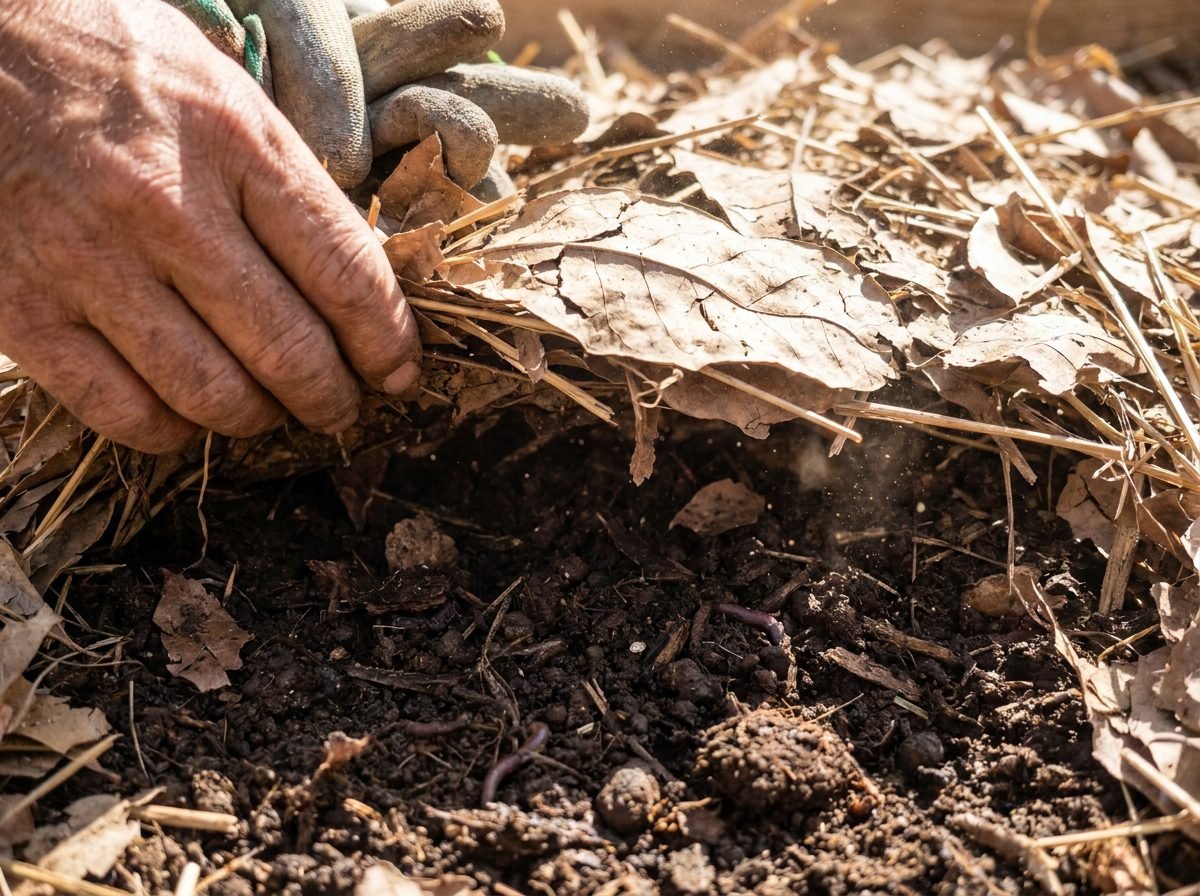
Timing your mulch applications to Muscat's seasons maximises effectiveness and minimises waste throughout the year.
Spring (March–May) is the ideal time to apply fresh mulch before the hottest months arrive. Installing or refreshing mulch during this window prepares your garden for the intense heat ahead, locking in soil moisture just as water demand starts climbing. This is also the best season to incorporate compost into your mulch layer for added nutrient benefit as the growing season ramps up.
During summer (June–August), monitor mulch depth closely during these intense months. Organic mulches break down faster in extreme heat, so consider increasing depth slightly if materials are available. The priority is maintaining that 5–10 cm protective layer without interruption. By autumn (October–November), summer mulch may be significantly depleted — refresh beds in early fall to prepare for the slightly milder winter months and improve soil structure before the next growing cycle.
For a complete approach to building better soil year-round, review our guide to soil improvement techniques in Oman.
Cost-Effective Mulching in Muscat
Palm fronds are one of Muscat's most abundant and cost-effective mulching materials — free, sustainable, and perfectly suited to the local climate.
Mulching can be remarkably affordable for budget-conscious gardeners in Muscat. The most cost-effective approach starts with collecting free materials: fallen palm fronds, composted garden waste, and autumn leaf litter from larger trees are all readily available at no cost. Given Oman's abundance of date palms, this alone can cover much of your mulching needs without any expenditure.
Partnering with local nurseries is another smart strategy — many have excess compost or wood chips they'll sell inexpensively or even give away. Creating your own compost from kitchen scraps and garden waste is perhaps the most sustainable option, producing rich mulch material for free while reducing household waste. Whatever organic material you choose, buying in bulk significantly reduces the per-cubic-metre cost compared to purchasing in small bags.
Every garden is unique. Pay attention to how your plants respond: soil should be consistently moist but not waterlogged, healthy growth indicates your mulching strategy is working, and noting how quickly your chosen mulch breaks down helps you plan replacement schedules more efficiently. Whatever variety of plants you're growing, always source quality mulch materials from reputable nurseries. Read our detailed comparison of the best grass types for Oman to find the ideal match for your lawn alongside your mulching programme.
Muscat Garden Mulching Seasonal Schedule
| Season | Core Action | Key Focus |
|---|---|---|
| Spring (Mar - May) | Apply fresh mulch & incorporate compost | Prepare soil before peak heat arrives |
| Summer (Jun - Aug) | Monitor depth & top up frequently | Combat rapid decomposition in extreme heat |
| Autumn (Oct - Nov) | Refresh depleted mulch beds | Improve soil structure before next growing cycle |
Common Mistakes to Avoid
The most frequently seen mulching mistake in Muscat gardens is piling mulch directly against plant stems — creating what gardeners call a "mulch volcano." This traps moisture against the stem, encouraging rot, fungal disease, and attracting pests. Always maintain a clear 10–15 cm gap around plant stems regardless of the mulch type you're using. If you notice disease symptoms appearing at the base of plants, this is often the first culprit to investigate.
Over-mulching is equally problematic. More than 15 cm of mulch compacts over time, restricts airflow to the soil, and creates ideal conditions for pests and diseases — the exact opposite of what you're trying to achieve. Equally, using fresh wood chips without ageing them first robs nitrogen from your soil as microorganisms work to break them down, leaving your plants nutrient-deficient. In Muscat's sandy soils which already struggle with nutrient retention, this can seriously set back garden health.
Don't hesitate to contact Mariam Gardening Oman if you're unsure which mulch type suits your specific garden conditions. Our team specialises in Muscat's unique growing environment and can identify whether mulching issues, soil problems, or watering practices are affecting your plants.
Transform Your Muscat Garden with Smart Mulching
Mulching is one of the most practical investments you can make in your Muscat garden. By protecting your soil from the region's extreme conditions, retaining precious water, improving soil health, and reducing maintenance labour, mulch transforms gardening in Oman's capital from a gruelling challenge into a manageable and rewarding pursuit.
Start with a 5–7 cm layer of quality organic mulch, maintain proper spacing around plant stems, and refresh your mulch every season. Pair these techniques with proven lawn disease prevention strategies and a well-designed irrigation system in Muscat for a comprehensive garden care programme.
Ready to transform your garden? Contact our team today for expert mulching advice tailored to your property's specific needs and conditions.