

Lawn Aeration in Muscat: The Fix Your Compacted Soil Has Been Waiting For
If your lawn feels hard and lifeless despite daily watering, compacted soil is likely the silent culprit. Here's exactly how lawn aeration transforms Muscat gardens — and why it might be the single best thing you do this season.
What is lawn aeration and why is it important in Muscat?
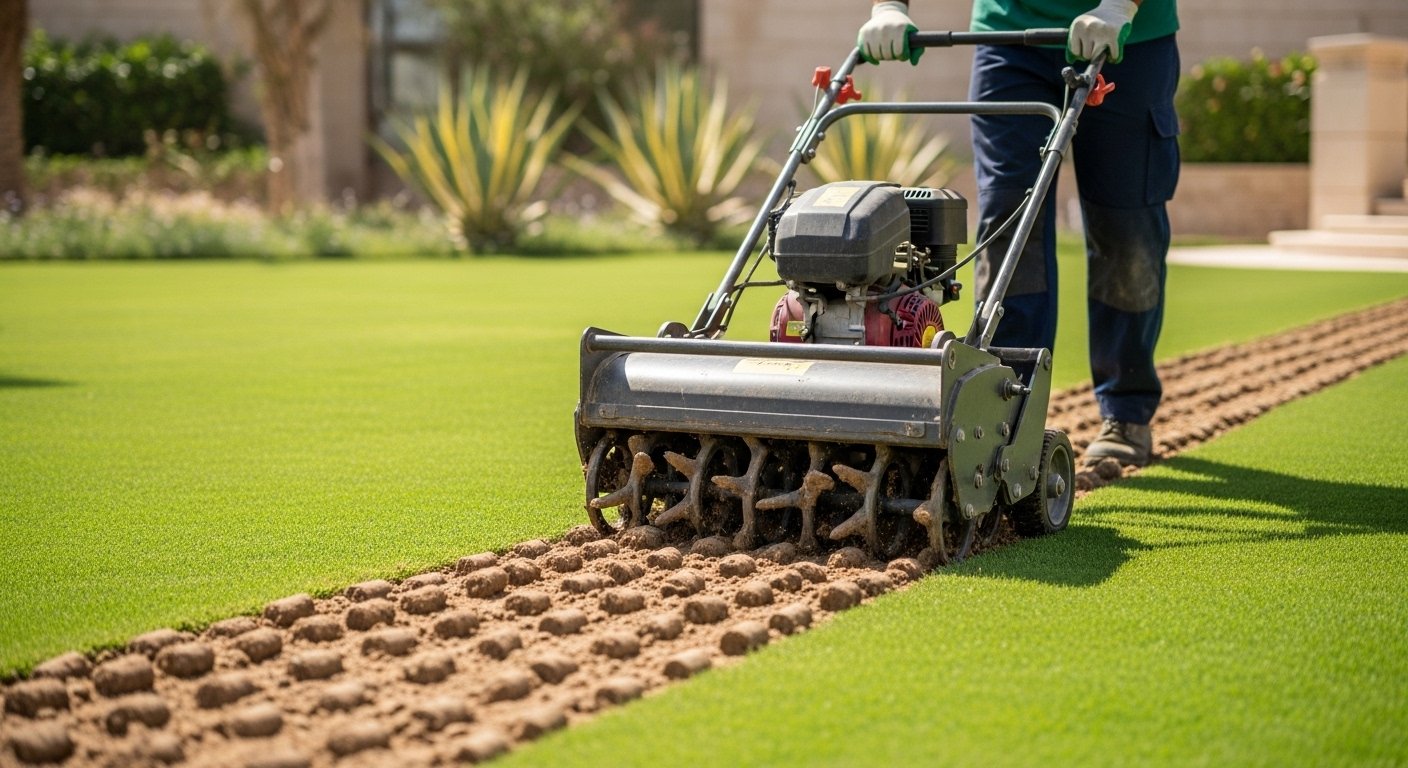
Lawn aeration is the process of creating small holes in compacted soil to allow air, water, and nutrients to reach grass roots. In Muscat, where extreme heat and sandy/clay soils cause severe compaction, aeration is essential — it's often the single most effective way to transform a struggling lawn into a thriving green garden.
What Is Lawn Aeration?
Lawn aeration is the process of creating small holes or channels in your soil to allow air, water, and nutrients to penetrate deeply into the root zone.
Think of it as giving your garden soil a chance to breathe again after months — sometimes years — of being compressed and hardened.
Two Main Methods
Uses a machine or hand tool to pull out small plugs of soil, leaving behind open holes roughly 5–10 cm deep. This is the most effective method and the one professionals typically use.
Uses solid spikes to poke holes into the soil without removing material. Less effective than core aeration but useful for light maintenance between seasons.
For most residential gardens in Muscat — especially those with clay-heavy or sandy-packed soil — core aeration gives far better results. Always ask your garden service specifically about hollow tine aeration.
Why Muscat Gardens Need Aeration More Than Most
Here's something that most generic gardening advice misses entirely: Muscat's soil conditions make compaction worse than in most parts of the world.
The combination of intense summer heat, minimal rainfall, heavy foot traffic on brittle dried soil, and the type of fill material used in many residential developments across areas like Al Mouj, Ghubra, and Bausher means that soil compaction happens fast and runs deep.

What Happens When Soil Compacts in Muscat
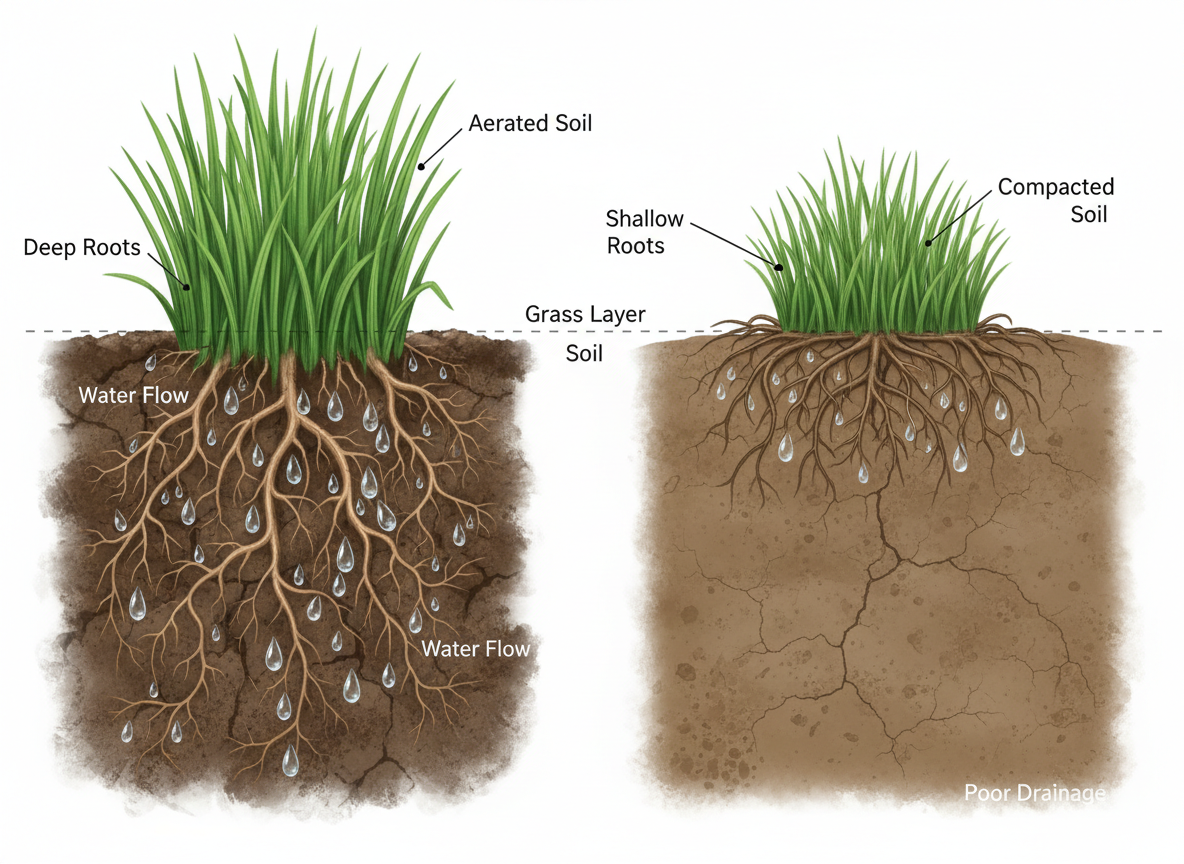
The top layer bakes into an almost concrete-like crust
Water from your irrigation system runs straight off the surface or evaporates before it reaches the roots
Grass roots stay shallow because they physically cannot push through the dense soil below
Fertiliser sits on top doing very little, because the pathways into the root zone are blocked
This is why you'll sometimes see Muscat gardens that are watered every single day yet still look yellow and thin — the problem was never the amount of water, it was the soil's inability to receive it.
Aeration breaks that cycle completely.
The Benefits of Lawn Aeration for Your Garden
Once you aerate, the improvements are noticeable relatively quickly — usually within two to four weeks, depending on the season and grass type.
Water Reaches the Roots
Instead of pooling or running off, irrigation water flows directly into the aeration channels and down to where the roots need it. In Muscat's heat, this is genuinely transformative — your grass is finally getting hydrated at the right depth.
Roots Grow Deeper
Deep roots mean a more resilient lawn. A grass plant with shallow roots suffers immediately when temperatures spike above 42°C. Deep roots access cooler, moister soil layers and survive the worst of summer far better.
Fertiliser Works as It Should
If you've been spending money on lawn fertiliser in Oman and wondering why results are disappointing, aeration is often the missing piece. With open channels, nutrients actually travel to the root zone.
Thatch Breaks Down Faster
Thatch — the layer of dead grass clippings that builds up just above soil level — can become a barrier. Aeration disrupts this layer and encourages the microbial activity that decomposes it naturally.
Your Lawn Recovers Faster After Stress
After the brutal July–August heat in Muscat, an aerated lawn bounces back noticeably faster than a compacted one. The root system is stronger, deeper, and ready to take advantage of cooler September temperatures.
Aeration doesn't just fix your lawn — it makes every other thing you do (watering, fertilising, overseeding) work dramatically better. It's the foundation of healthy lawn care in Oman.
Not sure if your lawn needs aeration? Our team can do a quick soil assessment at your villa — no charge, no obligation.
Get a Free Soil Check →Signs Your Muscat Garden Urgently Needs Aeration
You don't need to wait for your lawn to look completely dead before aerating. Watch for these warning signs that compaction is already causing damage:
Water pools on the surface after irrigation rather than soaking in within a minute or two
The soil feels rock-hard even after watering — you can't push a screwdriver more than 2–3 cm in easily
Grass looks thin, patchy, or yellow despite regular watering and fertilising
You see a thick spongy thatch layer (more than 1.5 cm) when you pull up a small section of turf
Heavy foot traffic areas (children playing, pathways, areas near the car) look noticeably worse than the rest
Many homeowners keep increasing their watering schedule when they see yellow patches — but if the soil is compacted, more water just means more runoff and waste. Fix the soil first, then optimise your irrigation.
Any one of these is a clear signal. Multiple signs together mean you should aerate as soon as possible.
When Is the Best Time to Aerate in Muscat?
Timing matters, and Oman's climate means the timing advice you'll find in UK or American gardening guides doesn't apply directly here.
🗓️ Late February – April
🗓️ October – November
Avoid aerating in June–August if at all possible. The stress combined with extreme heat can overwhelm grass that's already in survival mode. If you absolutely must, do it very early morning and water immediately afterward.
How to Aerate Your Lawn in Muscat: Step by Step
1 Before You Start
Water your lawn thoroughly one to two days before aerating. The soil needs to be moist but not waterlogged. Dry, rock-hard Muscat soil resists aeration tools and you'll get poor results.
Mark any irrigation pipes or electrical conduits in your garden beforehand. Core aerators pull material from the soil, and you don't want to damage underground infrastructure — a real consideration in many newer Muscat residential developments.
2 The Aeration Process
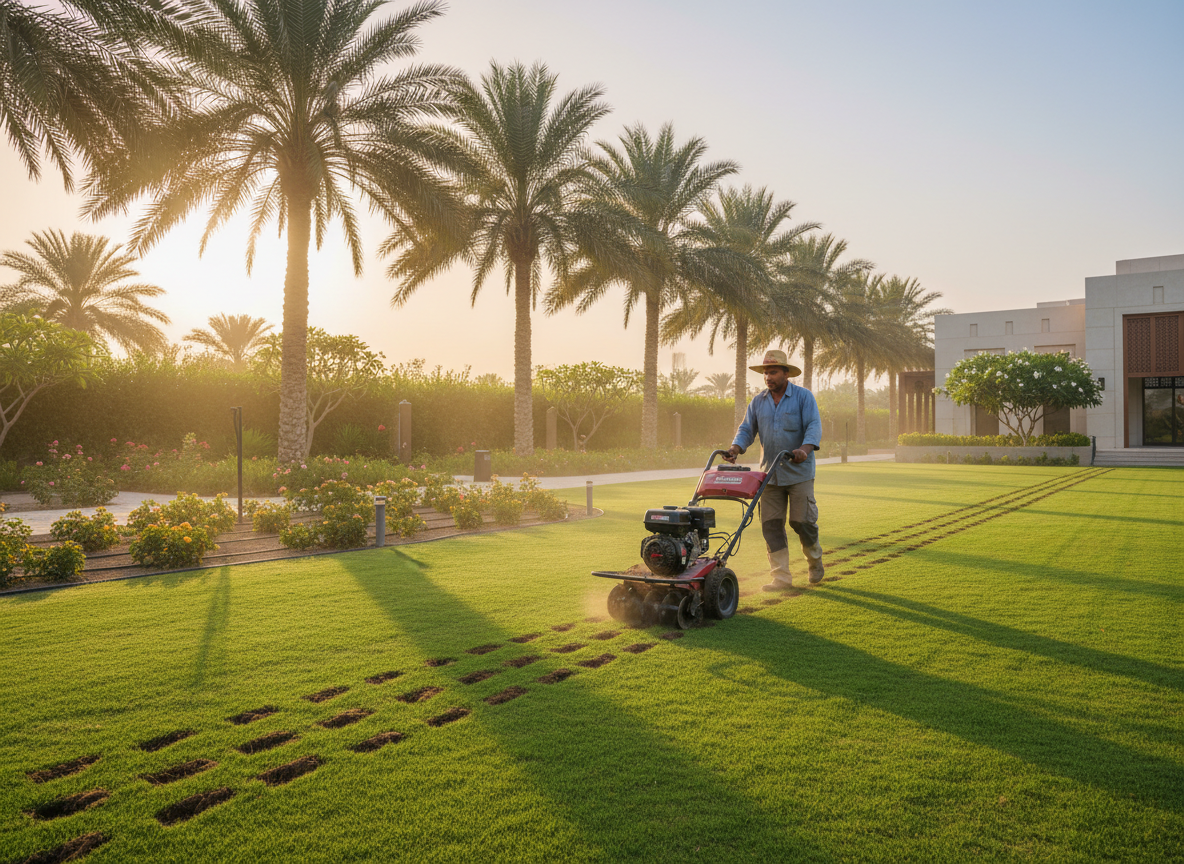
For small to medium gardens, a manual core aerator works adequately. For larger areas, renting or hiring a mechanical drum aerator gives far better coverage and depth.
Work in parallel passes across the lawn, similar to mowing. Overlap slightly on each pass to ensure full coverage.
For seriously compacted soil, make two passes in perpendicular directions.
The soil plugs that come out will sit on the surface — leave them there. They'll break down naturally within a week or two and return organic matter and microbes to the surface.
Manual core aerators are available at garden centres in Oman, or from agricultural supply shops near the Seeb area. For larger properties, many professional garden services in Muscat have mechanical drum aerators available.
After Aeration: What to Do Next
This is when your lawn is most receptive to improvement, so take advantage:
Apply Top Dressing
Use sandy compost or fine-grade sand to fill the channels and improve long-term soil structure. Work it lightly with a broom or rake so it settles into the holes.
Fertilise Within 24–48 Hours
With the channels open, your fertiliser will actually reach the root zone properly — possibly for the first time in years. Use a balanced slow-release fertiliser appropriate for warm-season grasses.
Water Well for the First Week
Keep the soil consistently moist (not waterlogged) to support recovery and encourage root development into the newly opened channels.
Overseed Thin Patches (Optional)
Seed-to-soil contact is dramatically improved immediately after aeration. Many professional lawn services in Oman combine aeration and overseeding into a single treatment.
Can You DIY Lawn Aeration in Muscat?
Absolutely — for small to medium-sized gardens, a manual hollow tine aerator is a perfectly practical tool and costs relatively little. You'll find options at larger garden centres or agricultural supply shops around Muscat.
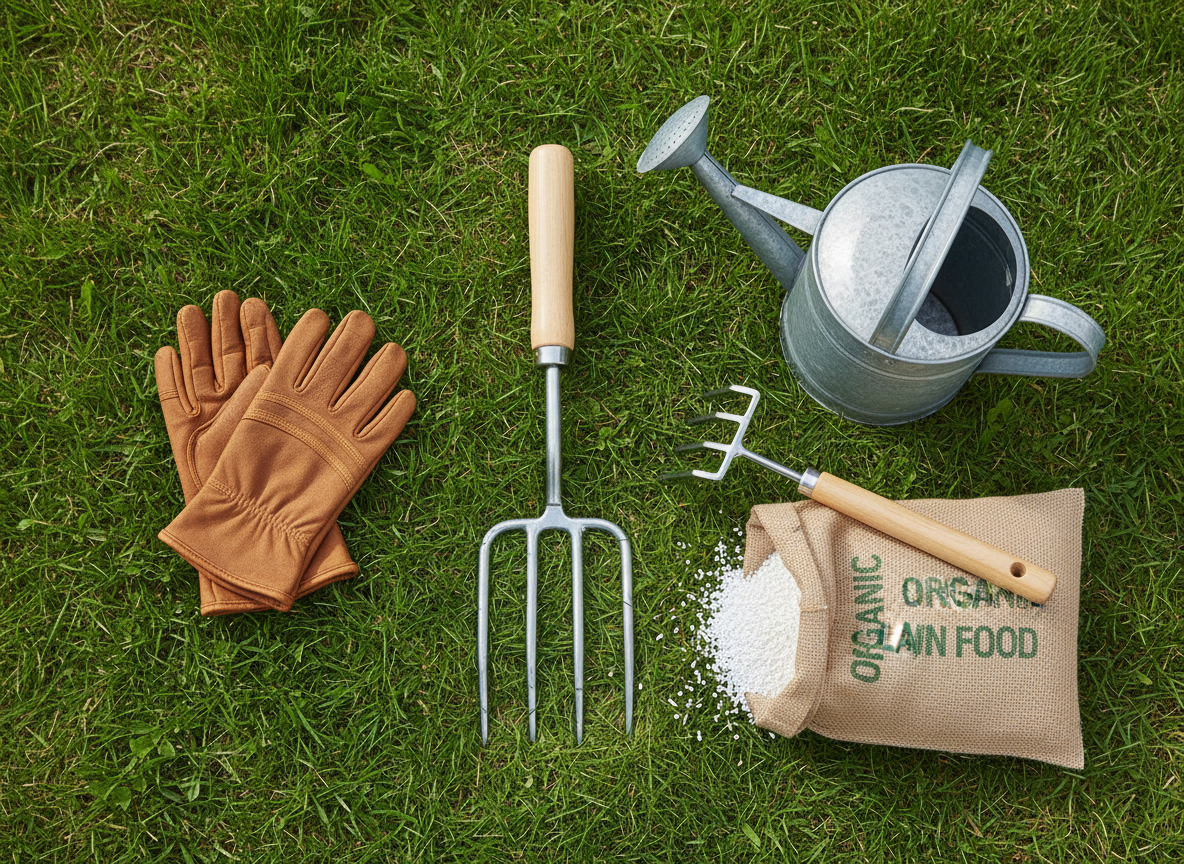
That said, for larger gardens or lawns with severe compaction — which is common in villas across areas like Al Khuwair, Madinat Al Sultan Qaboos, or Al Azaiba — a professional garden maintenance service with mechanical aeration equipment will do a significantly more thorough job in a fraction of the time.
If you're hiring a garden service in Muscat, ask specifically about core aeration (hollow tine) versus spike aeration. Not all services offer true core aeration, and it makes a meaningful difference for compacted Omani soils.
How Often Should You Aerate?
Oman's extreme climate means you'll likely need aeration more often than gardens in moderate climates. Don't rely on international guidelines — base your schedule on your soil's condition and how your lawn responds through the summer months.
✅ Quick Lawn Aeration Checklist for Muscat Homeowners
Final Thoughts
Lawn aeration is one of those garden tasks that gets overlooked almost everywhere in Muscat — but it's also one of the highest-impact things you can do for your garden's long-term health.
If your lawn has been a source of frustration despite regular watering and fertilising, there's a very real chance that compaction has been silently undoing all your effort.
One good aeration session, timed right and followed up properly, can genuinely transform how your garden performs through Oman's challenging summer months. It's not complicated, it doesn't cost a fortune, and the results speak for themselves.
If you're unsure where to start or want advice on the right approach for your specific garden in Muscat, speaking with a local professional garden maintenance service is always a worthwhile first step. A quick soil assessment will tell you exactly what you're dealing with and what your lawn actually needs.
Ready to Transform Your Muscat Garden?
Whether you need a one-time aeration or ongoing garden maintenance, our team at Mariam Gardening knows Muscat's soil like the back of our hands. Get a free garden assessment today.